



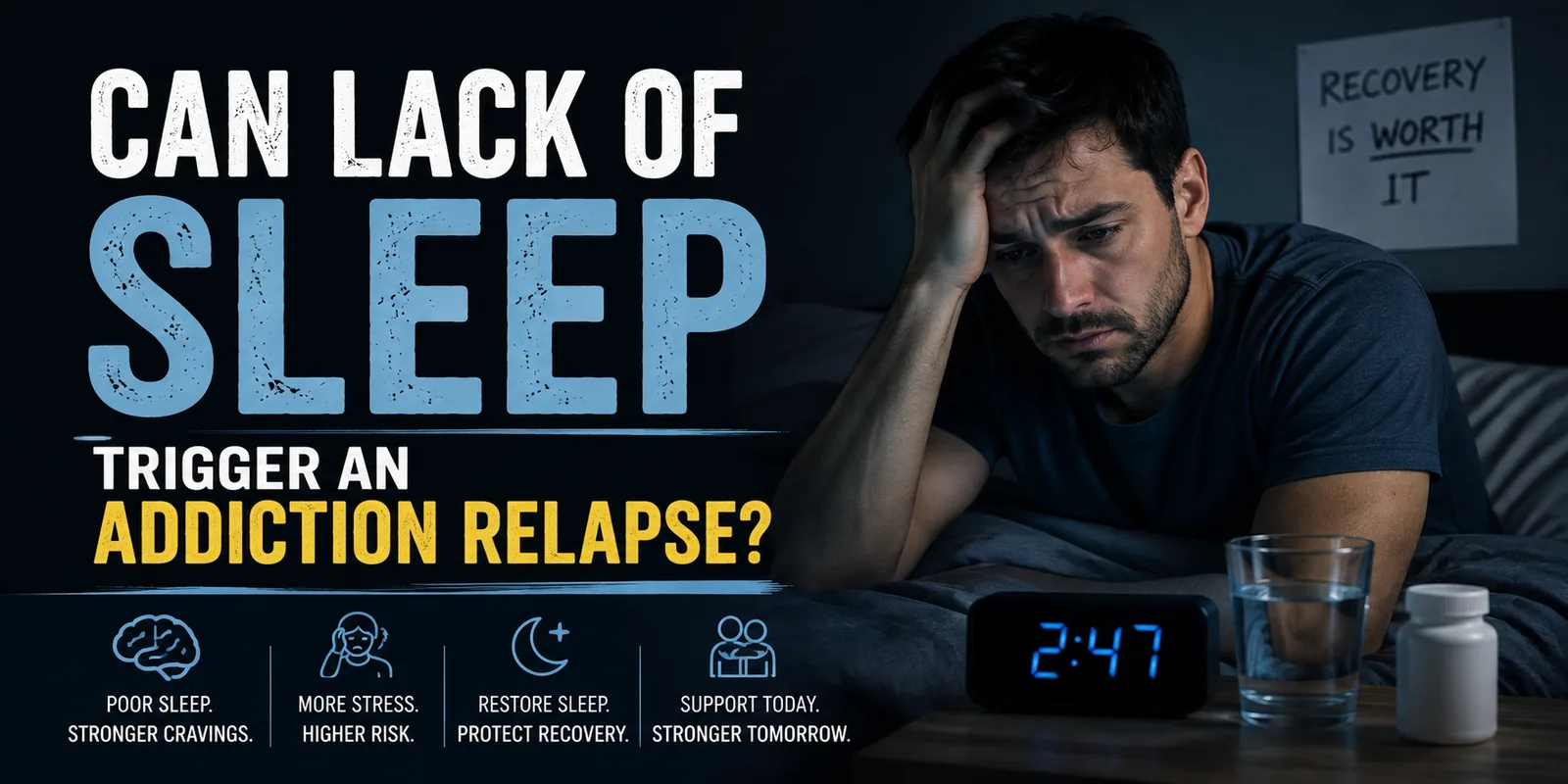


Yes, lack of sleep can increase the risk of an addiction relapse. One bad night does not mean someone will suddenly return to drugs or alcohol, but ongoing insomnia and poor-quality sleep can make recovery much harder.
Research consistently links sleep problems with substance use, stronger cravings, treatment difficulties, and return to use. Sleep disturbance is also extremely common during early recovery and can sometimes continue for weeks or months after someone stops using a substance. (PubMed Central (PMC))
The problem is not simply feeling tired.
When you are exhausted, everything becomes harder.
Stress feels bigger.
Patience disappears.
Your mood changes.
Healthy decisions require more effort.
And something that once helped you fall asleep, relax, or escape may suddenly start looking attractive again.
Why Sleep Matters So Much in Addiction Recovery
Sleep gives the brain and body time to recover.
When sleep becomes poor night after night, concentration, mood, motivation, and emotional control can suffer. For someone recovering from addiction, those changes can weaken the skills they normally use to deal with cravings and stressful situations.
NIDA specifically notes that drug use can cause sleep problems and that sleep problems can, in turn, increase vulnerability to withdrawal symptoms, craving, and relapse. (National Institute on Drug Abuse)
Imagine someone who has been sober for six months.
They normally exercise, attend meetings, go to work, and talk with supportive people.
Then they stop sleeping.
The first night is frustrating.
After three nights, they are irritable.
After a week, they are exhausted and anxious.
They stop exercising because they have no energy.
They skip a meeting because they just want to lie down.
Eventually an old thought appears:
“I know what would make me sleep.”
For someone who once drank heavily at night, that might mean alcohol.
For someone who previously misused Xanax or another benzodiazepine, it may mean pills.
For someone who used marijuana before bed, cannabis may suddenly seem like an easy solution.
That is how a sleep problem can slowly turn into a relapse trigger.
Poor Sleep Can Make Cravings Harder to Handle
Cravings do not happen in isolation.
They often become stronger when someone is stressed, angry, lonely, overwhelmed, or exhausted.
Poor sleep can create several of those conditions at the same time.
You may become:
- More irritable
- More anxious
- Less motivated
- Emotionally overwhelmed
- Less interested in recovery activities
- More impulsive
- More isolated
- More focused on immediate relief
Research involving people receiving treatment for substance misuse has found relationships between poorer daily sleep quality and increased drug craving. Studies of alcohol recovery have also linked insomnia and other sleep disturbances with greater relapse risk. (PubMed)
Someone may know intellectually that using again is a terrible idea.
But after days without good sleep, the brain may start prioritizing:
“I just need relief tonight.”
That thinking deserves attention.
Sleep Problems Can Continue After Drugs or Alcohol Stop
One frustrating part of recovery is that stopping the substance does not always immediately fix sleep.
In fact, sleep may temporarily become worse.
Alcohol can disrupt normal sleep architecture. Stimulants such as cocaine and methamphetamine can completely disrupt the sleep-wake cycle. Opioids and other drugs can also interfere with normal sleep.
During early abstinence, the brain and body may need time to readjust.
For people recovering from alcohol use disorder, research has found that sleep disturbances can persist well beyond the immediate withdrawal period. (PubMed Central (PMC))
This can become emotionally exhausting.
Someone may think:
“I stopped drinking, and now I sleep worse than ever.”
Then the memory appears:
“At least alcohol knocked me out.”
But passing out from alcohol is not the same as getting healthy, restorative sleep.
Returning to the substance may restart the exact cycle recovery was trying to break.
Be Careful About Self-Medicating Insomnia
A major danger occurs when someone begins treating sleep problems on their own.
A person recovering from alcohol addiction may start drinking “just one glass” before bed.
Someone with a history of benzodiazepine misuse may borrow Xanax, Klonopin, or Ativan.
Someone recovering from marijuana addiction may decide cannabis does not count if they only use it for sleep.
The intention may not be to get high.
The intention may genuinely be:
“I need to sleep.”
But once the substance returns, old habits can return with it.
Talk with a healthcare professional about persistent insomnia, particularly if it is severe or interfering with recovery.
Do not begin using someone else’s prescription medication or restart an addictive medication on your own.
What to Do When Poor Sleep Starts Threatening Recovery
Treat sleep problems as part of your relapse-prevention plan rather than waiting until you feel desperate.
Start by telling someone.
Say:
“I haven’t been sleeping, and I’m starting to think about using again because of it.”
That is exactly the kind of warning sign a counselor, sponsor, doctor, or treatment team should know about.
Then work on consistency.
Try waking up at roughly the same time every day.
Get daylight during the morning.
Exercise during the day when possible.
Reduce caffeine later in the day.
Avoid spending hours awake in bed scrolling on your phone.
Create a quiet routine before bedtime.
And if insomnia continues, talk with a healthcare professional about evidence-based treatment rather than trying to sedate yourself with alcohol or drugs.
Sometimes the Sleep Problem Is a Warning Sign
Poor sleep may also indicate that something else in recovery needs attention.
Maybe anxiety has become worse.
Maybe depression is returning.
Maybe stress is overwhelming you.
Maybe cravings have already started.
Maybe you are pulling away from treatment.
Ask yourself:
Why am I not sleeping?
The answer may reveal a larger relapse trigger.
If you are awake because you are worrying about money every night, the problem may not only be sleep.
If trauma symptoms are keeping you awake, treating the trauma matters.
If you are lying in bed thinking about drugs, your recovery plan may need additional support.
Protect Your Sleep to Protect Your Recovery
Getting enough sleep will not guarantee that someone never relapses.
And having insomnia does not mean relapse is inevitable.
But sleep is one of the basic foundations that makes everything else in recovery easier.
When you are rested, you are often better equipped to manage stress, attend treatment, exercise, connect with other people, and make decisions that support long-term recovery.
When you are exhausted, those same choices become harder.
Do not dismiss weeks of poor sleep as something you simply have to tolerate.
If lack of sleep is affecting your mood, increasing cravings, or making alcohol or drugs look attractive again, reach out.
Sometimes preventing relapse begins long before someone picks up a drink or drug.
Sometimes it begins with finally getting help for the nights when you cannot sleep.


