





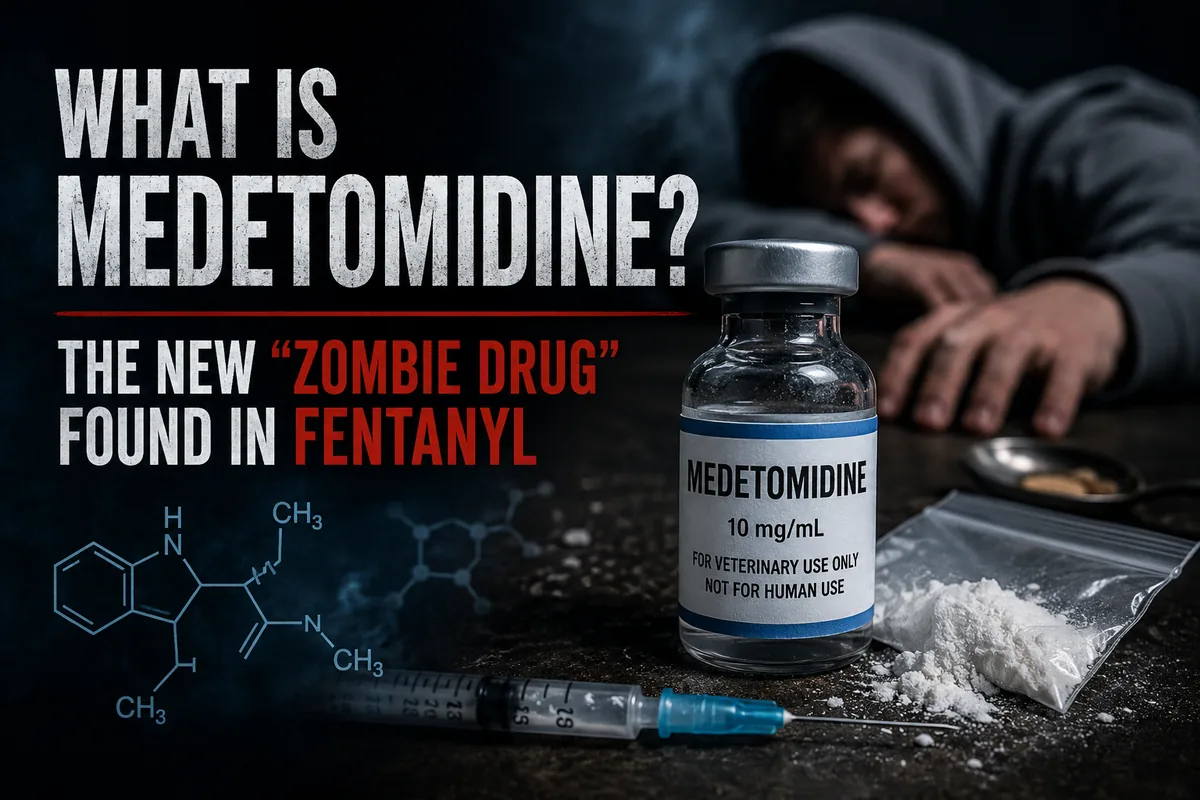
What is medetomidine, and why are health officials warning about it? Medetomidine is a powerful veterinary sedative now appearing in parts of the illegal fentanyl supply. It is not approved for use in people, and someone may consume it without knowing it is present. Combined with fentanyl, it can cause dangerously slow breathing, a very low heart rate, low blood pressure, and deep sedation that may continue after naloxone is given.
The phrase “zombie drug” is a sensational nickname, not a medical term. It refers to the heavy, prolonged sedation that can leave a person slumped over, barely responsive, or unable to stay awake. The label may grab attention, but the real danger is that medetomidine makes an already unpredictable fentanyl supply even harder to survive.
What Is Medetomidine and Why Is It Found in Fentanyl?
Medetomidine is an alpha-2 adrenergic agonist used by veterinarians to sedate animals and relieve pain during certain procedures. It is related to xylazine, another veterinary sedative found in street opioids, but medetomidine is more potent and longer acting. Health officials have not established exactly why it is being added to fentanyl. People generally do not request it and cannot identify it by sight, smell, or taste.
Its spread has been fast. CDC data show that medetomidine reports from law-enforcement drug testing rose from 247 in 2023 to 2,616 in 2024, then to 8,233 in 2025. By late July 2024, it had been detected in at least 18 states and Washington, D.C. It remains most common in the Northeast and Midwest, but detections have occurred across the country.
In Philadelphia, medetomidine appeared in 72% of tested illegal opioid samples during the last four months of 2024. In Chicago, investigators identified 12 confirmed and 26 probable medetomidine-involved overdoses during one week in May 2024. Every medetomidine-positive blood or drug sample also contained fentanyl.
Signs of a Medetomidine and Fentanyl Overdose
A person exposed to fentanyl mixed with medetomidine may show typical opioid-overdose signs plus unusually long sedation. Warning signs include:
- Slow, shallow, or stopped breathing
- Blue, gray, or unusually pale skin
- Pinpoint pupils
- Limpness, snoring, or gurgling
- Inability to wake up
- A dangerously slow heart rate
- Continued unconsciousness after naloxone
In the Chicago cluster, 87% of confirmed or probable patients had a slow heart rate, 84% had altered mental status, and 47% had dangerously low blood oxygen. Nine required intensive care, and five needed a breathing tube.
Naloxone does not reverse medetomidine because medetomidine is not an opioid. However, naloxone should always be given during a suspected overdose because fentanyl is almost always involved. The immediate goal is to restore breathing, not necessarily to make the person fully awake.
Call 911 immediately. Give naloxone and repeat it every two to three minutes if normal breathing does not return. Provide rescue breathing or CPR if trained. Once the person is breathing, place them on their side, keep their airway clear, and stay until emergency help arrives. Do not assume they are safe simply because they begin breathing; medetomidine can keep them deeply sedated.
Medetomidine Withdrawal Can Be Life-Threatening
A person who repeatedly uses fentanyl contaminated with medetomidine may become physically dependent without realizing it. Withdrawal can begin within hours and often peaks 18 to 36 hours after the last exposure.
Symptoms may include dangerously high blood pressure, a racing heart, shaking, agitation, anxiety, chest pain, repeated vomiting, and changing levels of awareness. This condition can be more severe than typical opioid withdrawal and may damage the heart or brain.
From September 2024 through January 2025, three Philadelphia health systems treated 165 patients with severe withdrawal linked to fentanyl exposure and suspected medetomidine. Ninety-one percent required intensive care, and 24% were intubated. Similar cases were also reported in Pittsburgh.
Anyone experiencing chest pain, nonstop vomiting, severe agitation, confusion, or rapidly worsening withdrawal should call 911 or go to an emergency department. Trying to detox alone can be dangerous. Standard opioid-withdrawal treatment may not be enough, and hospital monitoring may be necessary.
Treatment, Harm Reduction, and Hope
There is no safe way to use illicit fentanyl. Pills and powders may contain fentanyl, medetomidine, xylazine, benzodiazepines, or other hidden substances. Carry naloxone, avoid using alone, do not mix opioids with alcohol or sedatives, and use available test strips while remembering that a negative result cannot guarantee safety.
Opioid addiction is treatable. Medications for opioid use disorder, medical care, structured treatment, peer support, and continued recovery services can help people reduce their overdose risk and rebuild their lives.
In one first-person recovery story, Michael describes reaching out, accepting help, and learning that he did not have to face addiction alone. “There’s hope,” he says—a message that matters as the illegal drug supply grows more dangerous.
Medetomidine is a serious new threat, but fear should lead to action, not shame. Learn the warning signs, keep naloxone nearby, call for emergency help, and encourage treatment before another unknown batch becomes someone’s last.


