





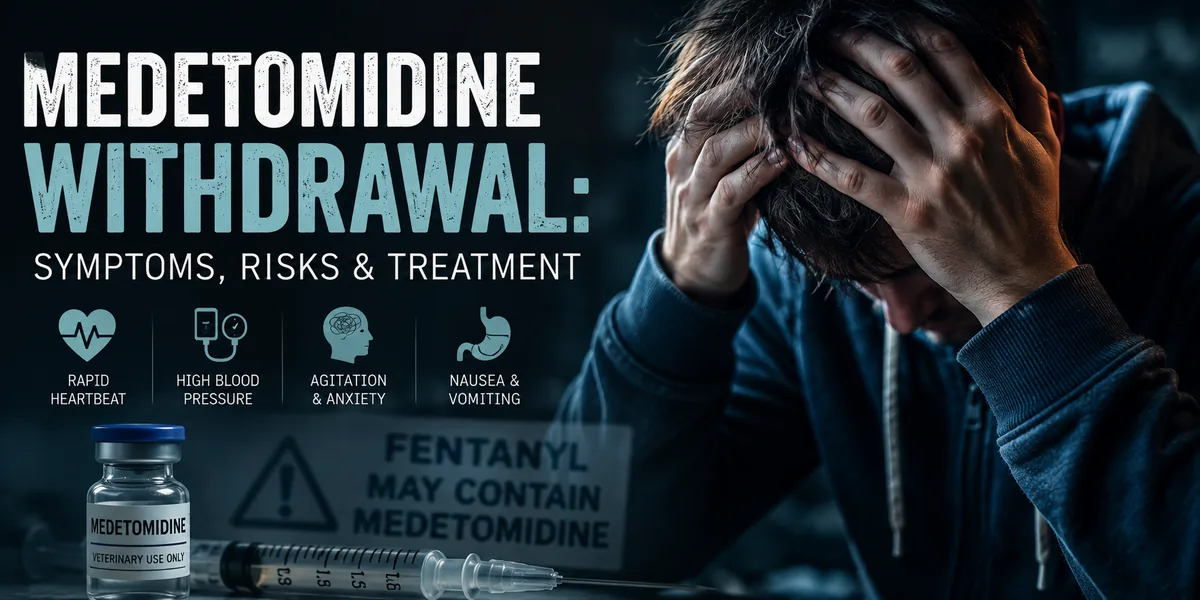
Medetomidine withdrawal is an emerging medical emergency connected to changes in the illegal fentanyl supply. Medetomidine is a powerful veterinary sedative that is not approved for human use, yet it is increasingly being detected in drugs sold as fentanyl. People may use it repeatedly without realizing it is present. When exposure suddenly stops, withdrawal can cause dangerously high blood pressure, a racing heart, severe vomiting, agitation and changes in awareness. Unlike ordinary opioid withdrawal, severe medetomidine withdrawal may require emergency treatment or intensive care.
What Is Medetomidine?
Medetomidine is an alpha-2 adrenergic agonist used to sedate animals and control pain during veterinary procedures. It is related to dexmedetomidine, a medication used under close medical supervision for sedation in human hospitals.
In the illegal drug supply, medetomidine has been found primarily in products containing fentanyl. CDC testing from July through December 2025 found fentanyl in 98% of drug-product samples that tested positive for medetomidine. Reports to federal forensic laboratories increased sharply between 2023 and 2025, showing that exposure is spreading beyond the cities where it was first recognized.
Medetomidine can produce prolonged sedation, low blood pressure and a dangerously slow heart rate. With repeated exposure, the nervous system may adapt to its effects. When the drug is removed, the body can rebound in the opposite direction, producing extreme nervous-system activity.
Medetomidine Withdrawal Symptoms
Medetomidine withdrawal can begin within hours of the last exposure and may peak approximately 18 to 36 hours later. Because people often do not know that fentanyl contains medetomidine, they may assume they are experiencing unusually severe opioid withdrawal.
Possible symptoms include:
- A rapid or pounding heartbeat
- Dangerously high blood pressure
- Severe anxiety, agitation or restlessness
- Tremors or uncontrollable shaking
- Chest pain
- Repeated or uncontrollable vomiting
- Nausea and inability to keep fluids down
- Confusion or fluctuating alertness
- Sweating and physical distress
Someone may move between agitation and reduced awareness. Symptoms may also continue despite medications that would normally improve fentanyl or xylazine withdrawal.
This difference is important. Typical opioid withdrawal often causes sweating, diarrhea, nausea, anxiety, body aches, runny nose and cravings. Medetomidine withdrawal may add severe cardiovascular and neurological symptoms that place the heart and brain at immediate risk.
Why Medetomidine Withdrawal Can Be Dangerous
The greatest danger is severe autonomic hyperactivity. This means the body’s automatic functions—such as heart rate and blood pressure—become dangerously overactive.
In Philadelphia, 165 patients were hospitalized between September 2024 and January 2025 with fentanyl withdrawal complicated by severe autonomic symptoms. Ninety-one percent required intensive care, and nearly one-quarter required a breathing tube. Complications included heart-muscle injury and posterior reversible encephalopathy syndrome, a serious brain condition associated with extreme blood pressure.
Pittsburgh clinicians later reported a similar pattern among people exposed to illegally manufactured opioids. Patients developed severe vomiting, tremors, agitation, rapid heart rates and high blood pressure—sometimes several hours after arriving at the emergency department. Most of the confirmed cases required intensive care and hospital-administered dexmedetomidine. One patient developed severe metabolic abnormalities, cardiac arrest and the need for mechanical ventilation.
These reports show why medetomidine withdrawal should not be treated as something a person simply needs to endure at home.
When to Seek Emergency Care
Call 911 or go to an emergency department immediately when someone who regularly uses fentanyl or other illegal opioids develops:
- Chest pain
- Severe or rapidly worsening agitation
- An extremely fast heartbeat
- Repeated vomiting that will not stop
- Severe shaking or tremors
- Confusion or movement in and out of awareness
- A seizure, collapse or difficulty breathing
- Symptoms that do not improve with standard opioid-withdrawal treatment
The CDC warns that severe withdrawal can escalate quickly and cause damage to the heart or brain. Poison Control can also provide immediate guidance at 1-800-222-1222, but serious symptoms require emergency care.
A person should not drive themselves to the hospital when they are confused, vomiting repeatedly or experiencing chest pain. Have someone call emergency services.
How Medetomidine Withdrawal Is Treated
There is no safe over-the-counter detox kit for medetomidine withdrawal. Treatment depends on the symptoms, blood pressure, heart rate, level of awareness and substances involved.
Hospital care may include continuous heart and blood-pressure monitoring, intravenous fluids, medication for nausea, treatment for agitation and management of opioid withdrawal. Emerging clinical guidance includes the use of alpha-2 agonist medications such as clonidine and, in severe cases, intravenous dexmedetomidine. Blood-pressure treatment may also be needed to prevent organ damage.
In the Philadelphia cases, 83% of patients received dexmedetomidine and improved. However, this is a powerful hospital medication that requires careful monitoring. It is not something a person can safely use at home. Treatment may also require intensive care, gradual medication adjustments and evaluation for heart or neurological complications.
Routine hospital drug screens may not detect medetomidine, and the substance can be difficult to identify once withdrawal begins. Clinicians may diagnose the condition based on symptoms, exposure history and lack of response to ordinary opioid-withdrawal treatment. Patients or family members should mention possible fentanyl, xylazine or medetomidine exposure even when they are not certain.
Recovery After Withdrawal
Treating the immediate withdrawal is only the first step. Because medetomidine is usually found with fentanyl, patients should also be offered evidence-based care for opioid use disorder. Medications such as buprenorphine or methadone can reduce cravings, withdrawal, overdose risk and the likelihood of returning to an unpredictable opioid supply.
Medetomidine withdrawal can be frightening, but it is treatable. The key is recognizing that severe vomiting, chest pain, extreme blood pressure and changing awareness are not signs that someone needs to “tough it out.” They are warning signs that the body may be in serious danger.
Anyone who suspects medetomidine withdrawal should seek medical care early. Waiting for symptoms to peak can turn an already difficult withdrawal into a life-threatening emergency.


