





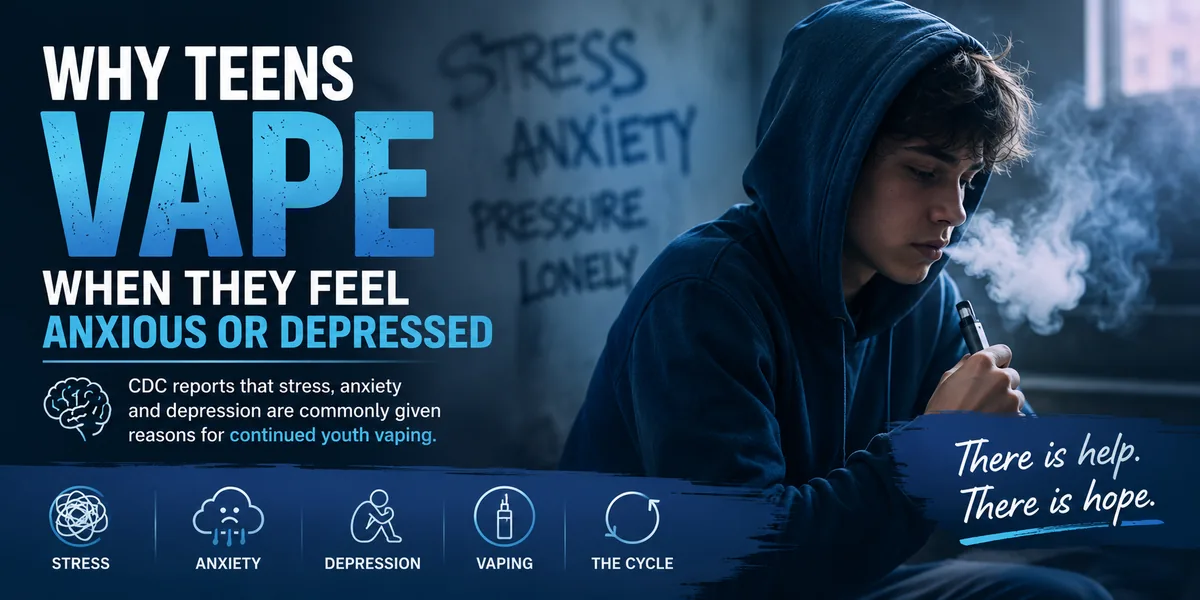
Many teenagers say they vape because they feel anxious, stressed, or depressed. The relief may feel real in the moment. A few puffs can create a brief sense of calm, distraction, or control. However, when a vape contains nicotine, that relief can become part of an addiction cycle that eventually creates more stress.
CDC data show that mental health and youth vaping are closely connected. In 2024, 42.1% of middle and high school students who currently vaped reported moderate-to-severe symptoms of depression and anxiety. Among students who did not currently vape, the figure was 21%. This does not prove that vaping caused every student’s mental health symptoms, but it shows how often the two problems occur together.
Why Vaping Can Feel Calming at First
Teenagers face pressure from school, friendships, family conflict, social media, bullying, body image, loneliness, and uncertainty about the future. When those feelings become difficult to manage, vaping may seem like a fast escape.
Nicotine changes activity in the brain and can produce a temporary feeling of pleasure, alertness, or relaxation. Vaping also gives the teen something physical to do. Taking a break, inhaling deeply, and stepping away from a stressful situation may feel soothing.
There is also a social benefit for some children and teenagers. Vaping can become a way to fit in, connect with friends, or avoid feeling left out. CDC research shows that having a friend who vapes is a common reason young people first try an e-cigarette. Appealing flavors, discreet devices, advertising, and easy access can add to that pressure.
What begins as curiosity or an attempt to cope can quickly become a routine. A teen may start vaping only at parties, then during lunch, after school, while studying, and eventually soon after waking.
The Nicotine and Anxiety Cycle
The calm produced by vaping may not last long. As nicotine leaves the body, a dependent user can begin experiencing withdrawal. Symptoms may include irritability, restlessness, anxiety, sadness, poor concentration, sleep problems, and strong cravings. These feelings can resemble the stress or depression the teen was trying to escape.
Taking another hit may temporarily stop the withdrawal symptoms. The teen then believes vaping is treating the anxiety when it may actually be relieving discomfort created by nicotine dependence.
This creates a repeating cycle:
The teen feels stressed and vapes. Nicotine provides brief relief. Nicotine levels fall. Withdrawal causes more tension or irritability. The teen vapes again to feel normal.
Over time, the brain becomes used to nicotine. The person may need to vape more often or use a stronger product to get the same effect. Young people can develop signs of nicotine addiction quickly, sometimes before they begin vaping every day. The adolescent brain is especially vulnerable because the areas involved in learning, attention, mood, decision-making, ADHD and impulse control are still developing.
What the CDC Found About Mental Health and Vaping
The CDC’s analysis of the 2024 National Youth Tobacco Survey provides a clearer picture of why some teens continue vaping.
Among young people who currently vaped and reported moderate-to-severe depression and anxiety symptoms, 51% said feeling anxious, stressed, or depressed was a reason they currently used e-cigarettes. Only 25.2% of young people with no-to-mild symptoms gave that reason.
Teens with greater depression and anxiety symptoms also reported stronger signs of nicotine dependence. About 37.6% reported strong cravings, compared with 22.4% of teens with fewer symptoms. They were also more likely to want to vape within 30 minutes of waking.
These results suggest that some teens are trying to self-medicate emotional pain. At the same time, nicotine addiction and withdrawal may worsen the very feelings they are trying to manage.
Researchers cannot always determine which came first. Anxiety or depression may make a teen more likely to start vaping. Vaping may then contribute to stress, dependence, sleep disruption, and mood problems. Both can also be influenced by other factors, such as trauma, family stress, bullying, or substance use.
Why Telling a Teen to “Just Stop” May Not Work
Adults may see vaping as a bad choice that can be corrected through punishment. A teenager may experience it as the only coping tool that works.
Taking away the vape without addressing anxiety, depression, or stress can leave the teen with untreated emotional pain and nicotine withdrawal at the same time. Shame and harsh punishment may also make the teen hide the behavior instead of asking for help.
A better conversation begins with curiosity. Parents and caregivers can ask:
“What does vaping do for you?”
“When do you feel the strongest urge to vape?”
“Have you been feeling anxious, sad, overwhelmed, or alone?”
“What would make quitting feel more possible?”
The goal is not to approve of vaping. It is to understand the reason behind it. A teen who vapes to fit in may need different support than one who is managing panic attacks, depression, trauma, or severe family conflict.
Helping Teens Quit Without Ignoring Their Mental Health
Most young people who vape want to stop. In the CDC’s 2024 analysis, 69.4% of current youth e-cigarette users had attempted to quit during the previous year. More than half had not used any quitting resource.
A strong quit plan should address both nicotine and mental health. That may include counseling, a pediatrician or mental health evaluation, family support, school resources, exercise, improved sleep, breathing techniques, and healthier ways to respond to stress.
Teens can also identify their vaping triggers and plan alternatives. A student who vapes before a test might practice slow breathing or text a supportive person. Someone who vapes with friends may need help preparing a response or spending time in a different setting while quitting.
Withdrawal can temporarily cause irritability, anxiety, sadness, and difficulty concentrating. These symptoms usually improve as the brain adjusts to being without nicotine. Persistent depression, severe anxiety, or thoughts of self-harm should always be taken seriously and addressed promptly by a qualified professional.
Teen vaping is not simply a discipline problem. For many young people, it is connected to emotional pain, social pressure, and nicotine addiction. Helping a teen stop means doing more than removing the device. It means helping them find safer ways to cope, treating mental health concerns for an adolescent, and showing them that they do not have to manage stress or depression alone.


