





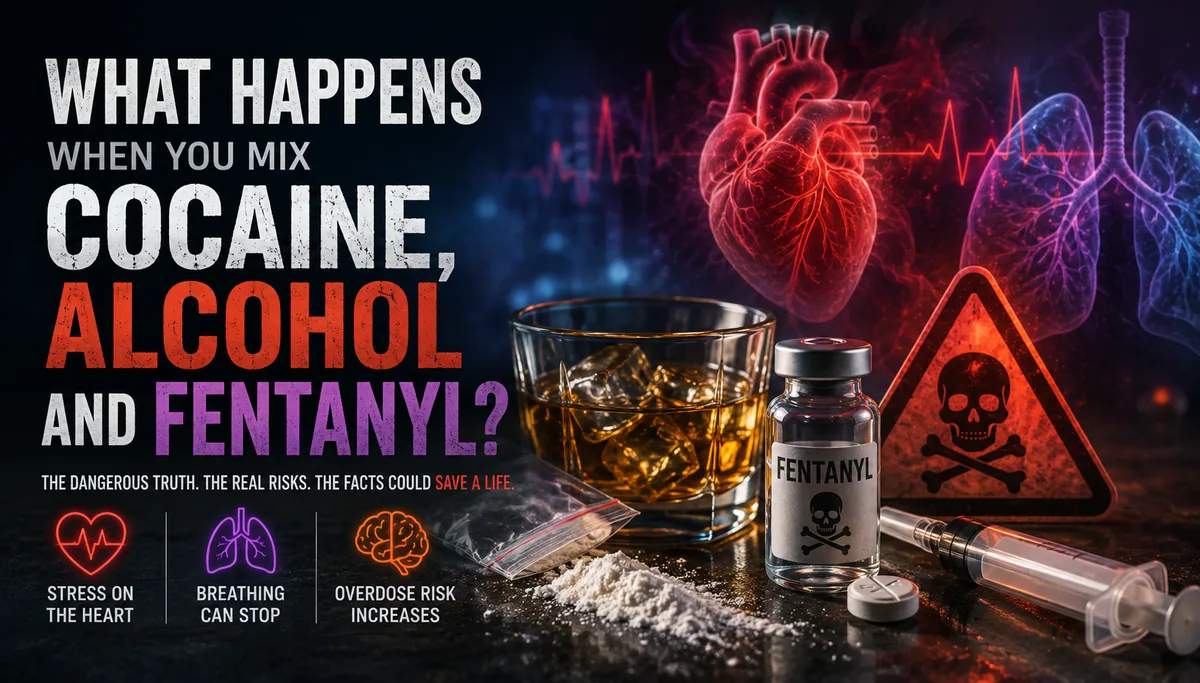
Mixing cocaine, alcohol and fentanyl places the heart, brain and lungs under competing and unpredictable pressures. Cocaine stimulates the body. Alcohol slows parts of the nervous system. Fentanyl can severely suppress breathing. These effects do not balance one another or make the combination safer.
Instead, one drug may hide the warning signs of another until a medical crisis is already underway. A person may feel alert from cocaine while their breathing is becoming dangerously slow from fentanyl. Alcohol can further increase sedation and impair the person’s ability to recognize an overdose or call for help.
This risk is not theoretical. Among U.S. overdose deaths in 2023, approximately 69% involved synthetic opioids, primarily illegally manufactured fentanyl, while 28% involved cocaine. CDC research shows that recent increases in cocaine-related overdose deaths have largely been driven by deaths involving cocaine and opioids together.
Cocaine and Alcohol Create a Third Drug in the Body
When cocaine and alcohol are used together, the liver creates a new substance called cocaethylene. This does not happen when either drug is used alone.
Cocaethylene produces stimulant effects similar to cocaine, but it remains in the body longer. Research suggests that it may also be more harmful to the heart and liver than cocaine alone. The combination can produce greater increases in heart rate and may raise blood cocaine concentrations.
Possible complications include:
- Rapid or irregular heartbeat
- High blood pressure
- Chest pain
- Heart attack
- Seizure
- Stroke
- Liver injury
- Sudden cardiac arrest
In one emergency-department study, people exposed to cocaethylene experienced cardiac arrest more often than people exposed to cocaine without alcohol.
Alcohol can also make someone feel less anxious or uncomfortable while using cocaine. Cocaine may temporarily make an intoxicated person feel more awake. However, feeling alert does not mean the alcohol has left the body. Judgment, coordination and reaction time can remain impaired, increasing the risk of injuries, violence, unsafe driving and taking additional drugs.
Adding Fentanyl Can Stop Breathing
Fentanyl is a powerful synthetic opioid. Its most immediate overdose danger is respiratory depression, meaning breathing becomes dangerously slow, shallow or completely stops.
Alcohol can also suppress the central nervous system. Combining alcohol with fentanyl may therefore increase sedation, loss of consciousness, choking and breathing problems.
Cocaine does not protect someone from an opioid overdose. Its stimulating effects may temporarily hide sleepiness or weakness, but fentanyl can continue slowing breathing underneath those effects. As cocaine wears off, the opioid’s effects may become more obvious and overwhelming.
At the same time, cocaine increases heart rate, blood pressure and the heart’s need for oxygen. Fentanyl may reduce the oxygen reaching the heart because the person is not breathing normally. The heart may be forced to work harder while receiving less oxygen.
The result can be a heart attack, abnormal rhythm, cardiac arrest, brain injury or death. CDC guidance warns that mixing stimulants and depressants does not cancel their effects. The combination can instead hide overdose symptoms and make the body’s response more unpredictable.
Fentanyl Exposure May Be Unintentional
Some people knowingly combine cocaine and opioids. Others believe they are using cocaine alone and do not know that fentanyl is present.
Illegally manufactured fentanyl may be added to cocaine or introduced through contaminated equipment and handling. Because fentanyl is extremely potent and may be unevenly distributed, one portion of a powder may contain more fentanyl than another.
A person with little or no opioid tolerance is especially vulnerable. They may not recognize opioid overdose symptoms, carry naloxone or expect breathing to stop after using what they believed was only a stimulant.
Fentanyl test strips can help identify fentanyl in a tested sample, but they cannot determine the exact amount or prove that every part of the supply is safe. They also cannot identify every dangerous additive.
No cocaine obtained outside a regulated medical or pharmaceutical system should be assumed to be free from fentanyl.
Signs of a Cocaine, Alcohol or Fentanyl Emergency
A mixed-drug overdose may not look like a typical opioid overdose. The person could be extremely sleepy, severely agitated or move between the two states.
Warning signs include:
- Slow, irregular or stopped breathing
- Blue, gray or pale lips and fingertips
- Pinpoint pupils
- Inability to wake up
- Gurgling, snoring or choking sounds
- Chest pain
- Racing or irregular heartbeat
- Severe confusion or panic
- Very high body temperature
- Seizure
- Sudden collapse
Treat these symptoms as a medical emergency. Do not assume the person simply needs to sleep.
Call 911 immediately. Give naloxone when fentanyl or another opioid could be involved. Naloxone can reverse the opioid portion of an overdose, but it will not reverse cocaine toxicity, alcohol poisoning or cocaethylene’s effects. Additional naloxone doses may be needed according to the product instructions while emergency help is on the way.
Support breathing with rescue breaths or CPR when trained to do so. Place a breathing but unconscious person on their side to reduce choking risk. Stay with them until emergency responders arrive.
Recovery Requires Treating the Whole Pattern
Regularly mixing cocaine, alcohol and fentanyl may indicate more than one substance use disorder. Treating only one drug problem can leave the other triggers and risks untouched.
A complete treatment plan may include medically supervised withdrawal care, medications for opioid or alcohol use disorder, behavioral treatment, mental health support, overdose-prevention education and naloxone access. Housing, trauma, chronic pain and social support may also need attention.
Someone does not have to wait for a heart attack or overdose to seek help. Mixing these three substances can turn one episode of use into a fatal emergency, even when the person has survived the combination before.
Survival in the past does not create protection. The strength, purity and contents of the illegal drug supply can change from one dose to the next. Recovery begins with recognizing that the combination is unpredictable—and that effective treatment and support are available.


