





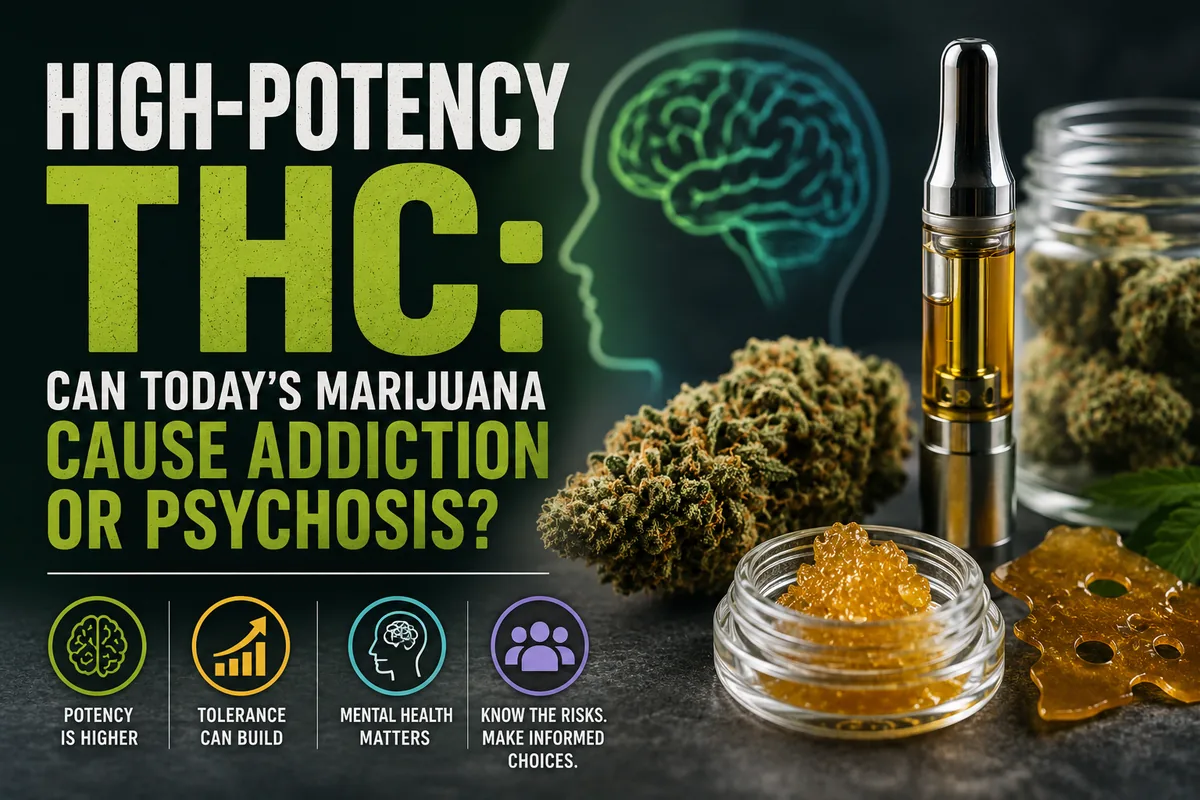
High-potency THC products are very different from the marijuana many people remember from decades ago. Modern dispensaries may sell strong flower, vape carts, wax, shatter, live resin, and dabs that deliver large amounts of THC quickly. This does not mean everyone who uses cannabis will become addicted or experience psychosis. However, high THC cannabis addiction is a real concern, especially among people who use frequently, begin during adolescence, or regularly consume concentrated products. The CDC estimates that approximately three in ten people who use cannabis have cannabis use disorder.
What Does High-Potency THC Mean?
THC, short for tetrahydrocannabinol, is the main chemical responsible for cannabis intoxication. Potency refers to how much THC a product contains.
The strength of cannabis flower has risen over time. CDC data show that average THC concentration in research samples increased from about 9% in 2008 to 17% in 2017. A separate review of products sold by online dispensaries in three states found an average concentration of 22%, with some flower testing as high as 45%.
Concentrates can deliver much more THC than flower. These products may be labeled wax, shatter, budder, live resin, butane hash oil, or extract. A “dab” is a small amount of concentrate heated and inhaled. Vape cartridges, commonly called carts, contain cannabis oil that is heated inside a vaping device.
Because vaping and dabbing can deliver THC rapidly, it may be easier to consume more than intended. CDC researchers also note that vaping and dabbing are especially common among young adults ages 18 to 24.
High THC Cannabis Addiction and Tolerance
Cannabis use disorder occurs when someone has difficulty controlling cannabis use even though it is harming their health, responsibilities, or relationships. The condition can range from mild to severe.
Possible warning signs include:
- Using more cannabis than intended
- Trying to quit but being unable to stop
- Spending significant time using or recovering
- Experiencing strong cravings
- Giving up hobbies or social activities
- Using despite problems at work, school, or home
- Driving or taking other risks while intoxicated
- Needing more THC to feel the same effects
That final sign is known as tolerance. Someone who initially felt strong effects from one or two inhalations may gradually require longer sessions, stronger flower, or concentrated carts and dabs. Higher tolerance does not mean the brain is protected from THC. It means the body has adapted to repeated exposure.
The CDC reports that the risk of cannabis use disorder is higher among people who begin using during adolescence and those who use more frequently. High-concentration products may also increase the risk of overconsumption because their effects can be stronger and less familiar.
When a dependent person stops, cannabis withdrawal may cause irritability, anxiety, sleep problems, reduced appetite, restlessness, depressed mood, headaches, sweating, or stomach discomfort. These symptoms are generally not life-threatening, but they can be uncomfortable enough to push someone back toward use.
Can High-Potency Marijuana Cause Psychosis?
Psychosis describes a loss of contact with reality. Symptoms can include hallucinations, intense paranoia, delusional beliefs, confused speech, or severely disorganized behavior.
A very high dose of THC can cause a short-term episode of paranoia, panic, or psychotic symptoms, especially in someone with little tolerance. In some cases, symptoms fade as the intoxication wears off. In others, they continue and require emergency psychiatric care.
High-potency cannabis does not cause psychosis in every person who uses it. The relationship is influenced by dose, frequency, age, genetics, mental health history, sleep deprivation, and other substance use. Researchers must also separate cause from association because people who are developing psychiatric symptoms may be more likely to use cannabis.
Still, the evidence shows a meaningful connection. A 2025 systematic review examined 99 studies involving more than 221,000 participants. High-concentration THC products were consistently associated with unfavorable outcomes involving psychosis or schizophrenia and cannabis use disorder. The authors also cautioned that most included studies had a moderate or high risk of bias, meaning more high-quality research is needed.
Earlier research found that daily cannabis use was associated with higher odds of a psychotic disorder than never using cannabis, with the strongest association among daily users of high-potency products. This does not prove that cannabis alone caused every case, but it supports a dose-related pattern: frequent exposure to stronger THC appears to carry greater risk.
Young people may be particularly vulnerable because the brain continues developing into the mid-20s. Regular or heavy cannabis use during adolescence is associated with greater concerns involving attention, memory, learning, cannabis use disorder, and mental health.
Reducing the Risks of Concentrates, Carts, and Dabs
The lowest-risk choice is not using THC, particularly for adolescents, pregnant people, and anyone with a personal or family history of psychosis or schizophrenia.
Adults who choose to use cannabis can reduce risk by avoiding concentrates, choosing lower-THC products, using less frequently, and not mixing cannabis with alcohol or other drugs. Taking smaller amounts and allowing time before using more can help prevent accidental overconsumption.
People should also avoid driving while impaired. Vape carts from informal or unregulated sources may contain contaminants or additives that are not listed on the packaging. CDC investigations have previously connected harmful additives in some THC vaping products with serious lung injuries.
Seek immediate medical help if cannabis use is followed by severe confusion, hallucinations, violent behavior, chest pain, a seizure, loss of consciousness, or thoughts of self-harm. A person experiencing paranoia should be moved to a calm environment and spoken to without arguing about what they believe.
Treatment and Recovery Are Possible
Cannabis addiction is a health condition, not a lack of willpower. Treatment may include cognitive behavioral therapy, motivational enhancement therapy, contingency management, family support, and care for anxiety, depression, trauma, or other conditions that may be contributing to use. There is currently no FDA-approved medication specifically for cannabis use disorder, but behavioral treatments can help people reduce or stop using.
Today’s marijuana can be much stronger than older forms of cannabis. That does not justify panic or shame. It does justify paying attention to potency, frequency, age of first use, tolerance, and changes in behavior. When someone cannot cut back or begins experiencing paranoia or other mental health symptoms, seeking help early can prevent the problem from becoming more severe.


