



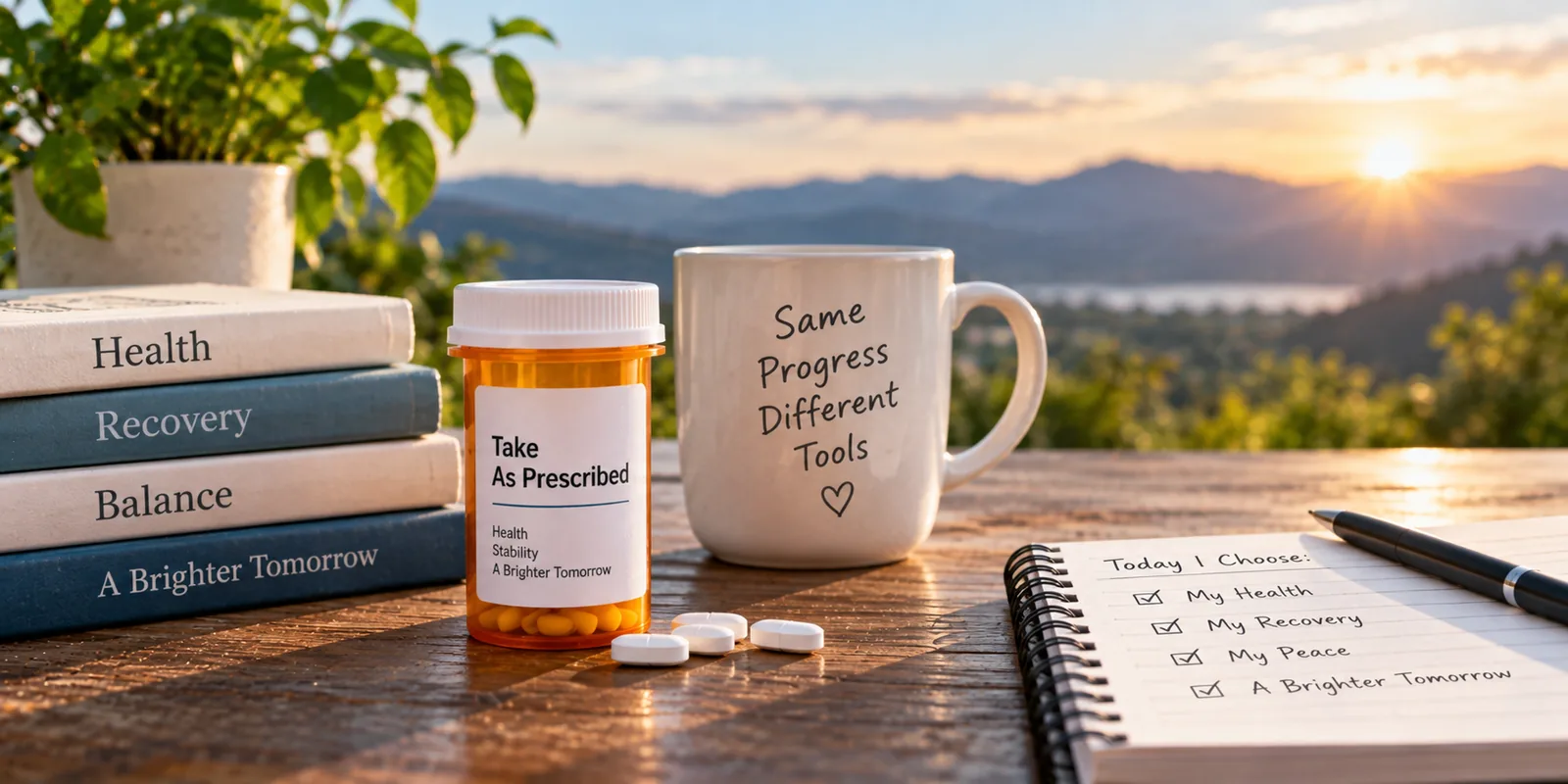


Can you take prescription medication and still be sober? In most cases, yes. Sobriety does not normally mean refusing medications that are medically necessary and taken exactly as prescribed.
Someone in addiction recovery may still need medication for depression, anxiety, ADHD, pain, diabetes, seizures, infections, high blood pressure, or many other health conditions.
The real issue is not simply whether a drug comes from a pharmacy.
It is how the medication is being used.
Some prescription drugs have little or no potential for addiction. Others—including opioids, benzodiazepines, and certain stimulants—can be misused and require additional caution for someone with a history of substance use disorder.
Understanding prescription drug use, misuse, and addiction can help you distinguish legitimate medical treatment from behaviors that could threaten recovery.
Does Taking Medication Mean You’re Not Sober?
Not automatically.
Imagine someone who has been sober from alcohol for five years and takes an antidepressant every morning.
Most people would not consider that a relapse.
The same could be said for antibiotics, blood pressure medication, insulin, seizure medications, or countless other treatments.
The debate becomes more complicated when a medication can produce intoxication, physical dependence, or addiction.
That is where recovery communities sometimes disagree.
Some people use very strict definitions of sobriety, while others focus on whether medications are medically appropriate and taken exactly as directed.
Our guide to sober vs. clean explains why these recovery labels can mean different things to different people.
A medication bottle does not determine whether someone is living in recovery.
Behavior matters.
What About Suboxone and Methadone?
Medications used to treat opioid use disorder often create the most controversy.
Suboxone contains buprenorphine and naloxone. Methadone is another medication used to treat opioid addiction.
Both can help reduce opioid cravings and withdrawal while allowing people to build greater stability.
Some people still argue that taking an opioid-related medication means someone is not truly sober.
Modern addiction medicine does not treat recovery that simply.
Our articles asking whether taking Suboxone is considered sober and whether methadone is considered clean explore these debates in greater detail.
Someone taking medication as prescribed to prevent a return to fentanyl or heroin is very different from someone compulsively using illicit opioids.
Medication can be part of recovery rather than evidence that recovery has failed.
Which Prescription Drugs Require Extra Caution?
Some medications deserve additional attention when someone has an addiction history.
Prescription opioids can produce euphoria and physical dependence.
Benzodiazepines such as alprazolam, lorazepam, or diazepam can also lead to physical dependence and misuse.
Certain prescription stimulants used for ADHD may have misuse potential as well.
That does not mean someone in recovery can never receive these medications.
It means the prescriber should know about the person’s addiction history so risks and alternatives can be considered.
Someone prescribed a controlled medication should follow directions carefully and avoid:
- Taking larger doses than prescribed
- Taking doses more often than directed
- Using another person’s medication
- Mixing medication with alcohol or other drugs without medical guidance
- Hiding medication use from treatment providers
- Seeking multiple prescriptions from different providers
- Using medication specifically to feel high
Benzodiazepines require another important caution: after regular use, they should not be stopped suddenly without medical guidance. Abrupt withdrawal can cause severe symptoms, including seizures.
Recovery should never require someone to make unsafe medication changes on their own.
When Does Prescription Use Become a Threat to Recovery?
Pay attention to your relationship with the medication.
Are you taking it because you need treatment?
Or are you beginning to chase how it makes you feel?
Maybe you start taking an extra pill on difficult days.
Then you begin taking medication earlier than scheduled.
You think about your next dose constantly.
You become anxious when your supply gets low.
You hide how much you are taking.
Those behaviors deserve attention.
Other possible warning signs of addiction relapse include secrecy, cravings, reconnecting with old substance-use behaviors, abandoning recovery support, and convincing yourself that previous boundaries no longer matter.
Talk with your prescriber before the situation becomes a crisis.
Your healthcare professional may be able to adjust the medication, change the dose, consider another treatment, increase monitoring, or help create a safer plan.
You Don’t Have to Choose Between Health and Sobriety
People in recovery sometimes feel pressure to prove themselves by refusing medication.
That can become harmful.
A person should not have to leave depression untreated, endure unnecessary medical problems, or discontinue an effective medication merely because someone else has a rigid definition of sobriety.
Recovery is supposed to make your life healthier.
At the same time, addiction history should not be ignored.
A physician treating someone in recovery should ideally know about previous substance misuse, especially before prescribing medications with abuse or dependence potential.
Honest communication matters.
So does taking medication exactly as prescribed.
If you ever feel yourself losing control over a medication, tell someone early. Asking for help does not erase your recovery.
It protects it.
Sobriety Is About More Than What’s in Your Medicine Cabinet
Recovery is not a contest to see who takes the fewest medications.
It is about creating a healthier and more stable life.
Someone can take antidepressants and be sober.
Someone can receive medication for ADHD and be in recovery.
Someone can take Suboxone or methadone as prescribed while rebuilding a life after opioid addiction.
And someone can also misuse a legally prescribed medication in ways that threaten recovery.
The difference comes down to medical need, honesty, behavior, and how the medication is being used.
If you’re unsure whether a prescription is compatible with your recovery plan, speak openly with the clinician prescribing it and with any addiction professionals involved in your care.
Explore more information about creating sustainable addiction recovery.
You do not have to choose between treating your health and protecting your sobriety.
The goal is to do both safely.


