



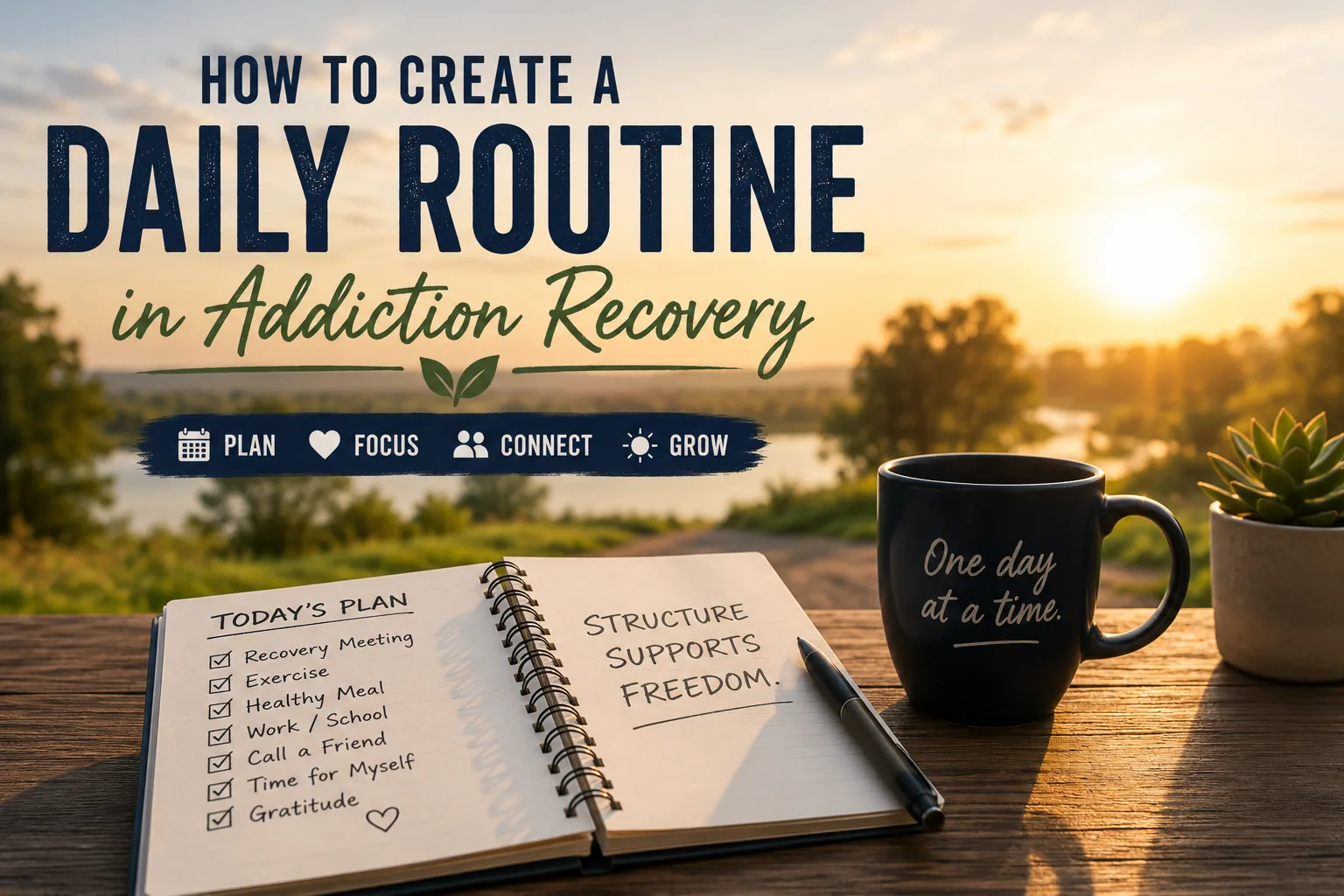


Creating a daily routine in addiction recovery can make life feel more stable, predictable, and manageable. In early recovery, many people suddenly have more time on their hands, stronger emotions, changing sleep patterns, and fewer familiar ways to cope with stress. Without structure, that extra time can turn into boredom, isolation, or exposure to old habits.
A healthy recovery routine does not need to be complicated.
It needs to give your day enough structure that you know what comes next.
Wake up at a consistent time. Eat. Go to work. Attend treatment. Exercise. Call someone. Go to bed.
Those simple habits may not sound dramatic, but over time they can create stability.
And stability can help protect recovery.
Why Routine Matters in Addiction Recovery
Active addiction can make life unpredictable.
Sleep may happen at random times. Meals may be skipped. Work may become inconsistent. Relationships may revolve around substance use. Days can begin to blur together.
Recovery requires a different rhythm.
A daily routine can help reduce chaos and give your brain fewer decisions to make when you are tired, stressed, or emotionally overwhelmed.
Instead of waking up and thinking:
“What am I supposed to do today?”
you already have a plan.
That plan can create a sense of control.
Routine can also support other important areas of recovery, including:
- Better sleep
- More consistent nutrition
- Improved physical health
- Medication adherence
- Treatment attendance
- Work or school responsibilities
- Reduced boredom
- Stronger relationships
- Better stress management
- Relapse prevention
Routine does not eliminate cravings or difficult emotions.
It simply gives you healthier places to go when those moments happen.
Start With Sleep and Wake Times
One of the best places to begin is sleep.
Substance use can disrupt healthy sleep patterns, and early recovery can sometimes make sleep even more difficult.
Try going to bed and waking up at roughly the same time each day.
You do not have to be perfect.
The goal is consistency.
Waking up at a regular time can help anchor the rest of your day. It makes it easier to eat regular meals, arrive at appointments on time, exercise, and maintain responsibilities.
A predictable nighttime routine can help too.
Turn off screens.
Lower stimulation.
Avoid staying up for hours with nothing planned.
If sleep problems continue, talk with a healthcare professional rather than trying to solve the problem with alcohol, drugs, or unapproved medications.
Build Recovery Activities Into Your Schedule
Recovery should not be something you try to squeeze into your day after everything else is finished.
Put it on the schedule.
That might include:
- Outpatient treatment
- Counseling
- Recovery meetings
- Medication appointments
- Calls with a sponsor
- Recovery coaching
- Family counseling
- Support groups
If a meeting happens every Tuesday at 7 p.m., treat it like an important appointment.
If you know afternoons are difficult, plan a recovery-related activity during that time.
This is especially helpful when creating a relapse prevention plan.
A routine makes it easier to recognize when something changes.
If you usually attend three meetings each week and suddenly stop going, that may be worth paying attention to.
Changes in routine can sometimes become early relapse warning signs.
Make Time for Physical Health
Your body is part of recovery too.
Regular meals, hydration, movement, and sleep may improve how you feel physically and emotionally.
You do not need an extreme fitness plan.
A 20-minute walk counts.
Stretching counts.
Going to the gym counts.
Riding a bike counts.
The important thing is movement.
Exercise can also fill time that might otherwise become boring or triggering.
Try scheduling meals rather than waiting until you are starving.
Hunger, exhaustion, stress, and irritability can make cravings harder to manage.
Basic self-care may seem obvious, but it becomes much harder to handle emotional problems when your body is depleted.
Plan for Boredom Before It Happens
Boredom can be one of the most underestimated problems in early addiction recovery.
During active addiction, drugs or alcohol may have occupied enormous amounts of time.
Once that disappears, evenings and weekends can suddenly feel empty.
Do not wait until you are bored to decide what to do.
Create options in advance.
You might:
- Watch a movie
- Read
- Cook
- Exercise
- Go hiking
- Play video games
- Learn something new
- Volunteer
- Attend a meeting
- Spend time with family
- Call a sober friend
- Work on a hobby
The activity itself is less important than having healthy choices available.
Over time, you may begin discovering what you actually enjoy.
Include Connection Every Day
Isolation can quietly weaken recovery.
You do not need to socialize constantly, but your routine should include some form of healthy connection.
That might mean texting a friend in recovery.
Calling your sponsor.
Eating dinner with family.
Talking with a counselor.
Attending a support group.
A strong recovery support system is easier to maintain when connection becomes routine instead of something you only seek during a crisis.
Do not wait until you are overwhelmed to reach out.
Connection works best when it is already part of your life.
Leave Room for Flexibility
A recovery routine should create structure, not become another source of stress.
Life happens.
Appointments get moved.
Children get sick.
Work runs late.
You miss the gym.
That does not mean the entire day is ruined.
Avoid all-or-nothing thinking.
If your morning goes badly, restart at lunch.
If you miss a meeting, attend another one.
If you sleep late, continue with the rest of your routine instead of giving up on the day.
Recovery requires consistency, not perfection.
A Simple Daily Recovery Routine
Your schedule might look something like this:
Morning: Wake up, eat breakfast, take medications, review your goals, and prepare for work or treatment.
Afternoon: Work, attend appointments, eat lunch, and take a short walk.
Evening: Exercise, attend a meeting, spend time with supportive people, eat dinner, and prepare for tomorrow.
Night: Reduce screen time, reflect on the day, practice gratitude or journaling, and go to bed at a consistent time.
Your routine does not need to look like anyone else’s.
Build one that supports your life.
Routine Creates Stability
A healthy daily routine cannot guarantee that recovery will always be easy.
But it can make difficult days more manageable.
You know where you are supposed to be.
You know who you can call.
You know when you eat, sleep, work, and connect with others.
Over time, those routines become habits.
And those habits become part of your recovery capital.
At first, you may need to plan almost every part of the day.
Eventually, many healthy choices begin feeling normal.
That is one of the quiet signs that recovery is growing stronger.
You are no longer just trying to avoid your old life.
You are building a new one, one day at a time.


