



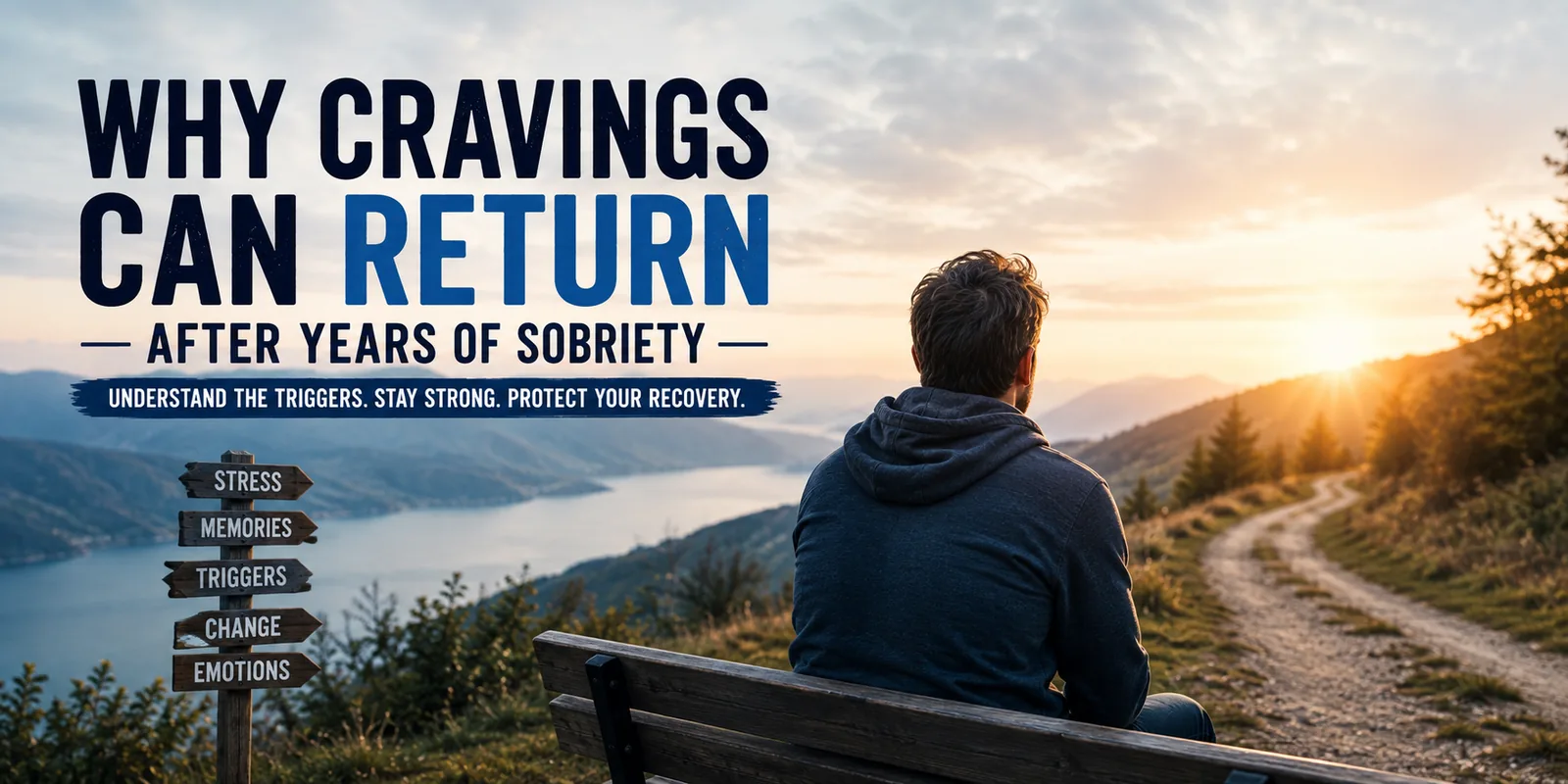


Cravings can return after years of sobriety, sometimes so suddenly that they frighten people who thought that part of recovery was long behind them. Someone may have five, ten, or even twenty years without alcohol or drugs and suddenly find themselves thinking about using again.
That does not mean recovery has failed.
It does not mean you secretly wanted to relapse all along.
And it does not erase the years you spent building a healthier life.
Addiction can create powerful connections between substances and certain people, places, emotions, and experiences. Those associations can remain buried for years. Under the right circumstances, an old trigger can bring a craving back almost instantly.
The important thing to remember is simple:
A craving is not a relapse. It is a signal to pay attention.
Your Brain Can Remember Old Drug and Alcohol Cues
Repeated substance use can teach the brain to connect certain experiences with alcohol or drugs.
A person who drank every Friday after work may connect payday, coworkers, or the drive home with drinking.
Someone who used cocaine at clubs may associate certain music, neighborhoods, or people with getting high.
A person who misused prescription pills during stressful periods may connect anxiety with the relief they once felt after taking the medication.
Those associations may become much weaker during recovery, but they do not always disappear completely.
Years later, something unexpected can bring them back.
You walk into an old restaurant.
A particular song plays.
Someone opens a bottle of liquor.
You smell cigarette smoke outside a bar.
An old friend sends you a message.
Suddenly, there it is.
The thought:
“I remember how that felt.”
The craving may last only a few moments, or it may remain longer.
Either way, having the thought does not mean you have to act on it.
Major Life Stress Can Wake Up Old Cravings
Stress is another reason cravings may return after years of sobriety.
Someone may have successfully handled ordinary stress for a long time. Then life changes dramatically.
A spouse dies.
A relationship ends.
A parent becomes sick.
Someone loses a job.
Money becomes tight.
Chronic pain appears.
Retirement creates too much unstructured time.
The person suddenly feels emotions they have not experienced this intensely in years.
The brain may remember an old solution.
“Alcohol used to shut this off.”
“Pills would calm me down.”
“Getting high would make me forget for a while.”
That memory can surprise someone who has not seriously considered using in years.
Stress does not erase recovery. It may simply expose a part of the recovery plan that needs more support.
Nostalgia Can Make the Past Look Better Than It Was
Memory is selective.
After years of sobriety, the worst parts of addiction may become less vivid.
You remember the laughter at the bar but forget waking up sick.
You remember feeling confident on cocaine but forget the paranoia and financial problems.
You remember how quickly Xanax stopped anxiety but forget dependence and withdrawal.
You remember the people you partied with but forget how lonely addiction eventually became.
This is sometimes called romanticizing substance use.
The brain focuses on the immediate reward while pushing the consequences into the background.
When that happens, deliberately remember the entire story.
Not just the first drink.
Remember the tenth.
Not just getting high.
Remember coming down.
Not just the relief.
Remember what the substance eventually cost you.
Recovery becomes vulnerable when addiction is remembered as something better than it actually was.
Positive Events Can Trigger Cravings Too
Relapse triggers are not always negative.
Celebrations can create cravings.
A wedding.
Vacation.
Promotion.
Retirement.
Concert.
Holiday.
Family reunion.
Someone may suddenly think:
“It would be nice to have one drink to celebrate.”
Positive emotions can be powerful because they may remind someone of the social or exciting parts of past substance use.
Another thought may follow:
“It has been ten years. Surely I can control it now.”
Time sober does not automatically change how someone previously responded to an addictive substance.
If losing control was part of the problem before, testing whether you can now use normally can carry enormous risk.
What Should You Do When an Old Craving Returns?
First, do not panic.
Having a craving does not reset your sobriety.
Then tell someone.
You can say:
“This is strange. I haven’t wanted to drink in years, but I’m having a strong craving today.”
Talking about it removes secrecy.
Next, identify what happened before the craving.
Ask yourself:
- Am I under unusual stress?
- Did something remind me of my past use?
- Have I been sleeping poorly?
- Am I lonely?
- Have I stopped doing things that support my recovery?
- Am I dealing with grief or depression?
- Have I been around alcohol or drugs more often?
- Am I starting to romanticize my past?
Then respond to the trigger.
Call someone.
Attend a meeting.
Schedule counseling.
Leave the environment.
Exercise.
Eat.
Sleep.
Spend time with supportive people.
Sometimes the craving simply needs time to pass.
Long-Term Recovery Still Needs Maintenance
Someone with fifteen years of sobriety may not need the same level of treatment they needed during their first fifteen days.
But long-term recovery still needs attention.
Recovery does not necessarily mean spending every day thinking about addiction.
It means knowing what keeps you healthy and noticing when those things begin disappearing.
Maybe your recovery today includes family, exercise, faith, therapy, friendships, volunteering, meetings, medication, hobbies, or simply maintaining a stable routine.
Protect those things.
If several parts of your life begin falling apart at once, do not wait until substance use starts sounding reasonable before asking for help.
A Craving After Years Sober Is Not Starting Over
One of the worst reactions to an unexpected craving is shame.
Someone thinks:
“After all these years, why am I still thinking about this?”
Because you are human, and your brain remembers.
The years of recovery still matter.
You have years of experience handling difficult emotions without using.
You have built relationships.
You have learned coping skills.
You have evidence that cravings can pass.
Use everything recovery has taught you.
Cravings can return after years of sobriety, but they do not control what happens next.
Recognize the trigger.
Talk about it.
Strengthen your support.
Remember the full reality of where addiction once took you.
A craving is a moment.
Your recovery is everything you have built around it.


