



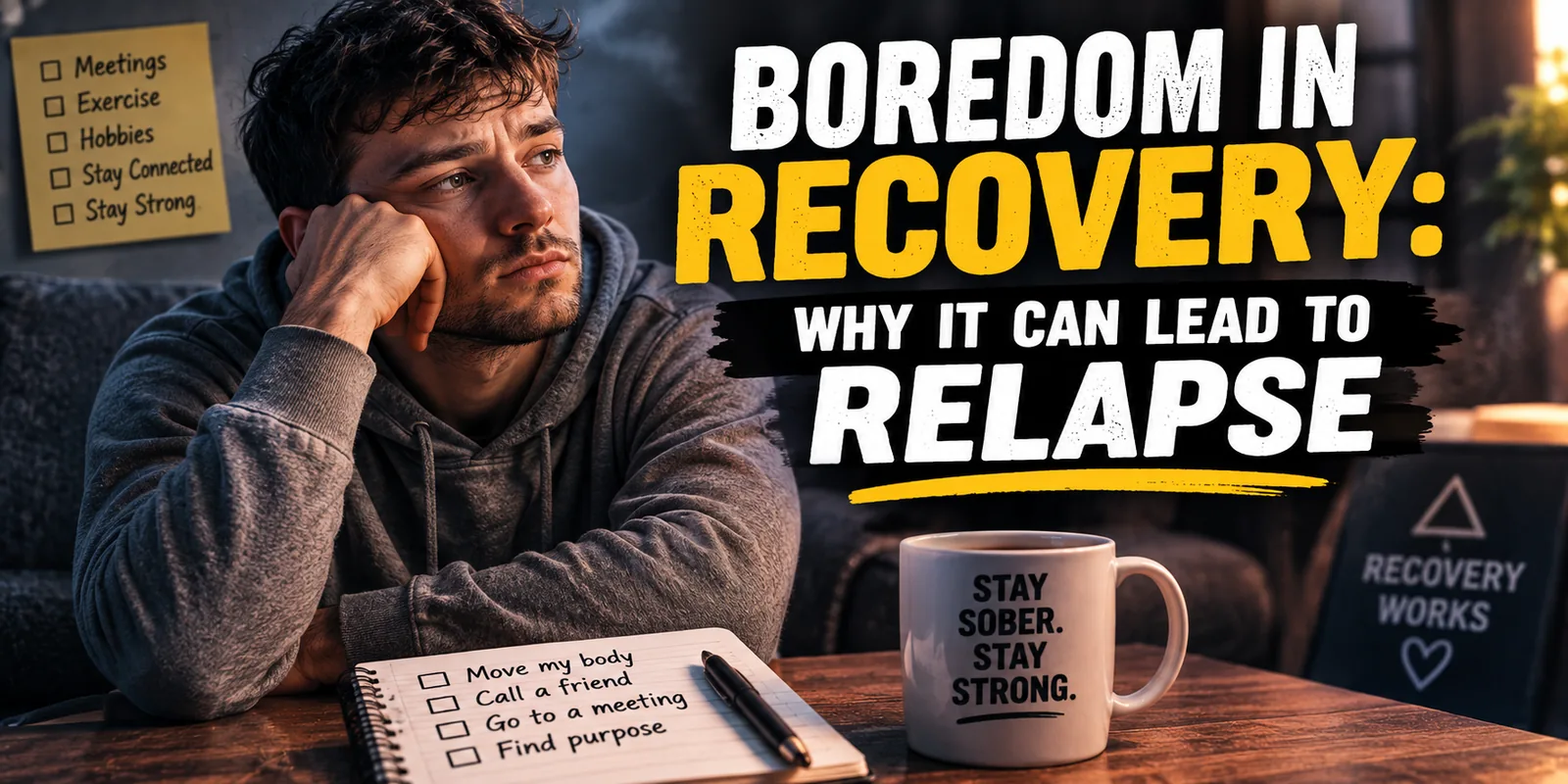


Boredom in recovery can become a surprisingly powerful relapse trigger. When someone first stops drinking or using drugs, they may expect cravings, stress, or difficult emotions to be the biggest challenges. What they may not expect is how empty life can suddenly feel.
Hours that were once spent drinking, using drugs, recovering from being high, finding substances, or spending time with people who used now have to be filled with something else.
At first, sobriety can feel exciting. There are appointments, meetings, treatment programs, goals, and milestones. But as life settles down, the excitement can fade.
Then comes a dangerous thought:
“What am I supposed to do now?”
Boredom does not mean recovery is failing. But when boredom turns into loneliness, restlessness, frustration, or romanticizing past drug use, it can become a serious relapse warning sign.
Why Boredom Feels Different in Early Recovery
Addiction can consume an enormous amount of time and attention.
A person’s day may have revolved around getting a substance, using it, hiding the use, recovering from it, or figuring out when they could use again.
Remove the substance, and suddenly there can be large gaps in the day.
Someone might wake up on Saturday morning and realize they have nothing planned.
Before recovery, Saturday might have meant drinking with friends, getting high, going to bars, or spending the entire day recovering from the night before.
Now there is silence.
At first, that silence can feel uncomfortable.
Someone may think:
“Life was more exciting when I was using.”
That thought can be dangerous because it usually remembers only one part of the past.
The brain remembers the excitement.
It forgets the arguments.
The missed work.
The money problems.
The withdrawal.
The lying.
The overdoses.
The treatment.
The people who were hurt.
Boredom can make the past look better than it really was.
When Boredom Turns Into a Relapse Trigger
Being bored for an afternoon is not the problem.
The bigger concern is what happens when boredom becomes a lifestyle.
Someone may start spending most of their time alone.
They stop going to meetings.
They quit exercising.
They scroll through social media for hours.
They stop making plans.
Nothing feels interesting.
Eventually, thoughts about alcohol or drugs begin returning.
“At least I had fun when I was drinking.”
“I could smoke just once.”
“Going to the bar doesn’t mean I have to drink.”
“Maybe I can handle it now.”
This is where boredom begins changing into mental relapse.
The person is no longer simply looking for something to do. They are beginning to imagine substance use as entertainment.
Another danger is impulsivity.
When someone feels restless and has no plan for the evening, accepting an invitation from an old drinking friend may seem harmless.
Then they are sitting in the same place, around the same people, with the same substances available.
The relapse may feel spontaneous.
But boredom helped create the opportunity.
Recovery Needs More Than Removing Drugs and Alcohol
One of the biggest mistakes in recovery is focusing entirely on what you cannot do.
Do not drink alcohol.
Do not use drugs.
Do not go to the old bar.
Do not call the dealer.
Do not hang out with certain people.
Those boundaries may be necessary, especially early in recovery.
But removing everything without replacing it can leave a giant hole.
Recovery needs something to move toward, not only something to run away from.
Ask yourself:
What did addiction take away from me?
Maybe you stopped playing music.
Maybe you used to fish.
Maybe you loved working on cars.
Maybe you wanted to travel.
Maybe you lost touch with family.
Maybe you stopped exercising.
Maybe you always wanted to learn how to cook.
Recovery creates an opportunity to rebuild those parts of life.
It does not need to happen all at once.
Sometimes it starts with trying something for an hour.
Create Structure Before Boredom Takes Over
Unplanned time can be risky for some people, particularly early in recovery.
A simple schedule can help.
That does not mean every minute needs to be productive.
It means having enough structure that you are not repeatedly sitting around wondering what to do.
A recovery-friendly week might include:
- Work or school
- Counseling appointments
- Recovery meetings
- Exercise
- Time outdoors
- Meals with supportive people
- Hobbies
- Volunteer work
- Household projects
- Reading
- Movies or games
- Faith or spiritual activities
- Sleep routines
Keep a short list of things you can do when boredom suddenly hits.
It could include calling someone, walking the dog, going to the gym, cooking something, visiting a family member, cleaning the garage, playing a game, or attending a meeting.
The activity itself does not need to change your life.
Sometimes you simply need to get through the next hour without allowing boredom to turn into a craving.
Learn the Difference Between Boredom and Depression
Sometimes what feels like boredom is something deeper.
If nothing feels enjoyable anymore, motivation has disappeared, sleep or appetite has changed, and you feel hopeless or emotionally numb, depression may be involved.
This deserves attention.
Many people in addiction recovery also struggle with depression, anxiety, trauma, or other mental health conditions.
Ignoring those symptoms can weaken recovery.
Talk with a healthcare or mental health professional if boredom begins feeling more like persistent emptiness or loss of interest in life.
The answer is not simply:
“Stay busy.”
Sometimes the underlying mental health problem needs treatment.
Build a Life You Do Not Need to Escape From
Recovery can feel boring at first because chaos was once normal.
Drama can feel exciting.
Intoxication can feel exciting.
Staying out all night can feel exciting.
But excitement and happiness are not the same thing.
Over time, recovery can replace chaos with something much more valuable: stability.
You wake up knowing where you are.
You remember conversations.
You can trust yourself with money.
Your family knows which version of you is coming home.
You can make plans for next month because you are not constantly cleaning up yesterday’s damage.
That kind of life may feel quieter.
Quiet does not mean empty.
A boring evening at home can eventually become something completely different:
peace.
If boredom is starting to make alcohol or drugs look attractive again, take it seriously.
Call someone.
Make plans.
Get out of isolation.
Try something new.
Reconnect with treatment if you have drifted away.
Most importantly, begin building a recovery that includes more than simply not using.
Boredom can become a relapse trigger when substance use starts looking like the only exciting option. The answer is not returning to the chaos. It is building a life where getting high is no longer the most interesting thing you can imagine.


