



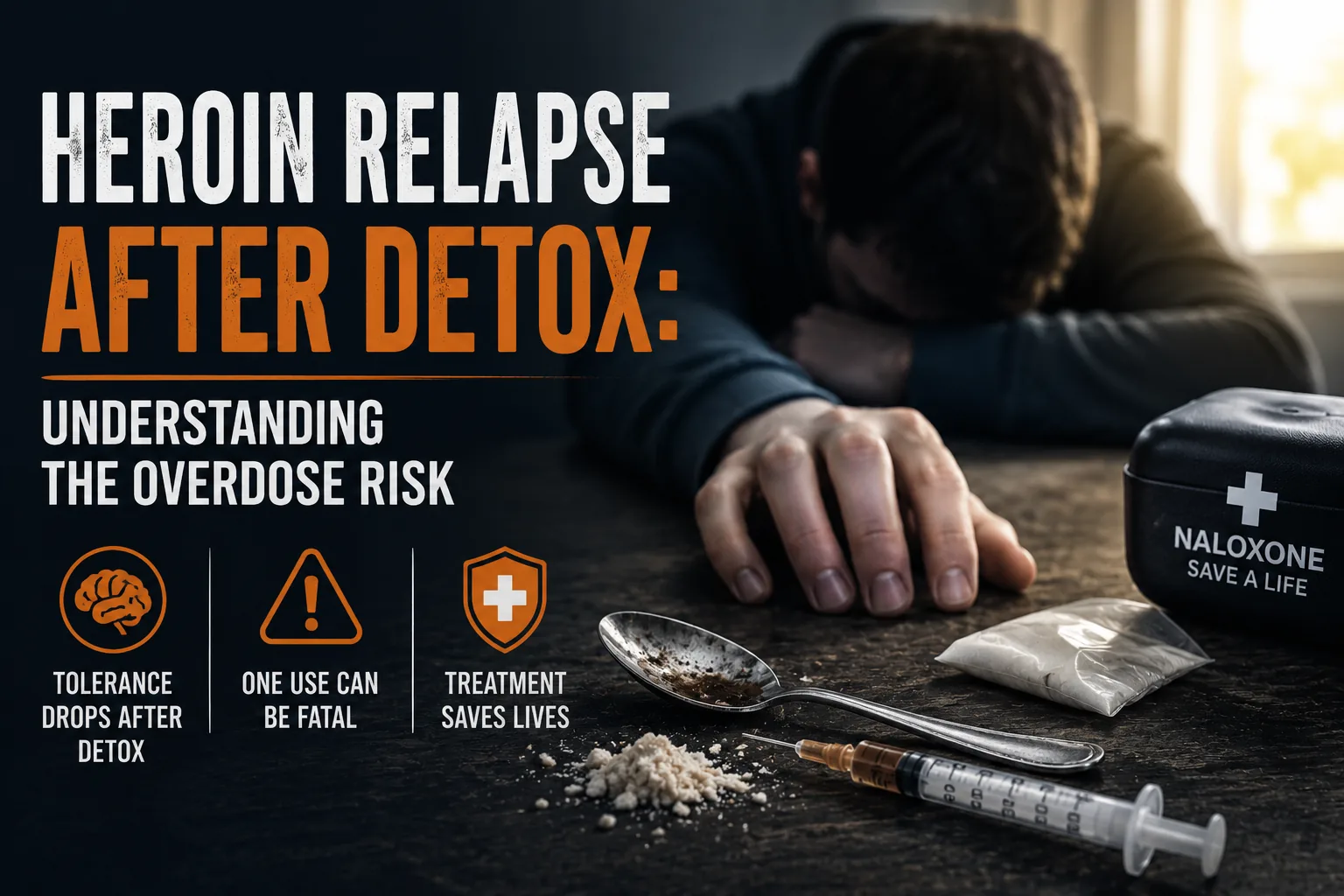


A heroin relapse after detox can be far more dangerous than many people realize. After even a short period without opioids, the body begins losing the tolerance it built during regular heroin use. If someone returns to the amount they used before detox, that old dose may now be enough to slow or stop breathing.
This is one of the cruel realities of opioid addiction: a person may leave detox physically healthier but become more vulnerable to overdose if they return to heroin. The National Institute on Drug Abuse warns that people who relapse and use the same amount they used before quitting can overdose because their bodies are no longer adapted to that level of opioid exposure.
The danger is even greater today because the U.S. heroin supply has changed. According to the CDC, most heroin currently available in the United States is combined with illegally manufactured fentanyl.
That means a person returning to heroin after detox may face two dangers at once: lower tolerance and a much more unpredictable drug supply.
Why Heroin Tolerance Drops After Detox
Tolerance develops when repeated opioid use causes the body to respond less strongly to the same dose. Over time, someone may need larger amounts of heroin to produce the effect they once experienced from smaller amounts.
Detox interrupts that exposure.
After heroin is removed from the body, tolerance can begin to decrease. The person may still remember exactly how much heroin they once used, but their body has changed.
This creates a dangerous mismatch between memory and physical tolerance.
Someone might think:
“I used this amount every day before treatment.”
“I know what I can handle.”
“This dose never caused an overdose before.”
But past experience is no longer a reliable measure of safety.
The CDC specifically identifies periods after addiction treatment and other periods of abstinence as times of increased overdose risk because opioid tolerance may have decreased.
That is why heroin relapse after detox can become fatal even when the person does not intentionally take more than usual.
Fentanyl Makes a Heroin Relapse Even More Dangerous
Today, someone buying what they believe is heroin may actually be exposed to fentanyl or a mixture containing both drugs.
The CDC reported in 2025 that heroin has largely been replaced by illegally manufactured fentanyl in the U.S. illegal drug supply and that most heroin currently available is combined with illicit fentanyl.
Fentanyl is extremely potent. Its presence makes predicting the strength of an illicit opioid dose even harder.
A person may buy from the same source, use the same amount, or believe the product looks the same as before detox. None of those things guarantee that the drug contains the same substances or potency.
The risk becomes even greater when heroin or fentanyl is combined with alcohol, benzodiazepines, or other sedating drugs. The CDC warns that combining heroin with other drugs or alcohol increases overdose risk.
Using alone also creates a serious problem. If breathing stops and nobody is nearby, there may be no one available to administer naloxone or call for emergency help. CDC overdose guidance recommends having naloxone available and warns about the danger of using drugs alone.
Recognizing and Responding to a Heroin Overdose
Heroin overdose primarily becomes deadly because opioids suppress breathing. Someone may become unconscious while their breathing becomes slow, shallow, irregular, or stops completely.
Warning signs may include:
- The person cannot be awakened.
- Breathing is extremely slow or has stopped.
- The body becomes limp.
- Lips or skin appear blue, gray, or unusually pale.
- Pupils become very small.
- The person makes choking, snoring, or gurgling sounds.
- They lose consciousness and do not respond.
Do not assume someone is simply sleeping.
Call 911 immediately if an opioid overdose is suspected.
Give naloxone if it is available. Naloxone blocks opioid effects and can restore breathing during an overdose involving heroin or fentanyl. The CDC advises giving one dose and checking for a response after two to three minutes; another dose may be needed if normal breathing does not return.
Stay with the person until emergency services arrive.
Naloxone can save a life, but it does not replace emergency medical care. Overdose symptoms can return after naloxone wears off, and potent illicit opioids may sometimes require additional doses.
Anyone recovering from heroin or other opioid use should consider keeping naloxone nearby. Family members, friends, and roommates should also know where it is and how to use it.
Detox Is the Beginning, Not the End of Heroin Treatment
One of the most important ways to reduce overdose risk after detox is to continue treatment.
Detox helps someone get through withdrawal, but detox alone is not treatment for opioid use disorder. NIDA states that detoxification without continued treatment commonly leads to resumed drug use.
For opioid addiction involving heroin or fentanyl, medications should generally be considered a first-line treatment, usually together with counseling or behavioral support. Evidence-based medications include methadone, buprenorphine, and extended-release naltrexone.
Treatment may also include outpatient care, residential treatment, behavioral therapy, recovery housing, peer support, and relapse-prevention planning.
If someone uses heroin again after detox, do not treat the relapse as proof that recovery failed. NIDA explains that relapse can signal that treatment needs to be resumed, modified, or replaced with another approach.
What matters is acting quickly.
Contact the treatment provider. Tell someone you trust. Make naloxone available. Discuss medications for opioid use disorder and whether a higher level of care is necessary.
Heroin relapse after detox is especially dangerous because the person may feel familiar with the drug while their body is no longer familiar with the dose.
Add fentanyl to that equation, and one return to use can become an overdose.
Detox can open the door to recovery, but continued treatment helps keep that door open. After heroin detox, protecting reduced tolerance and staying connected to treatment can literally save a life.


