



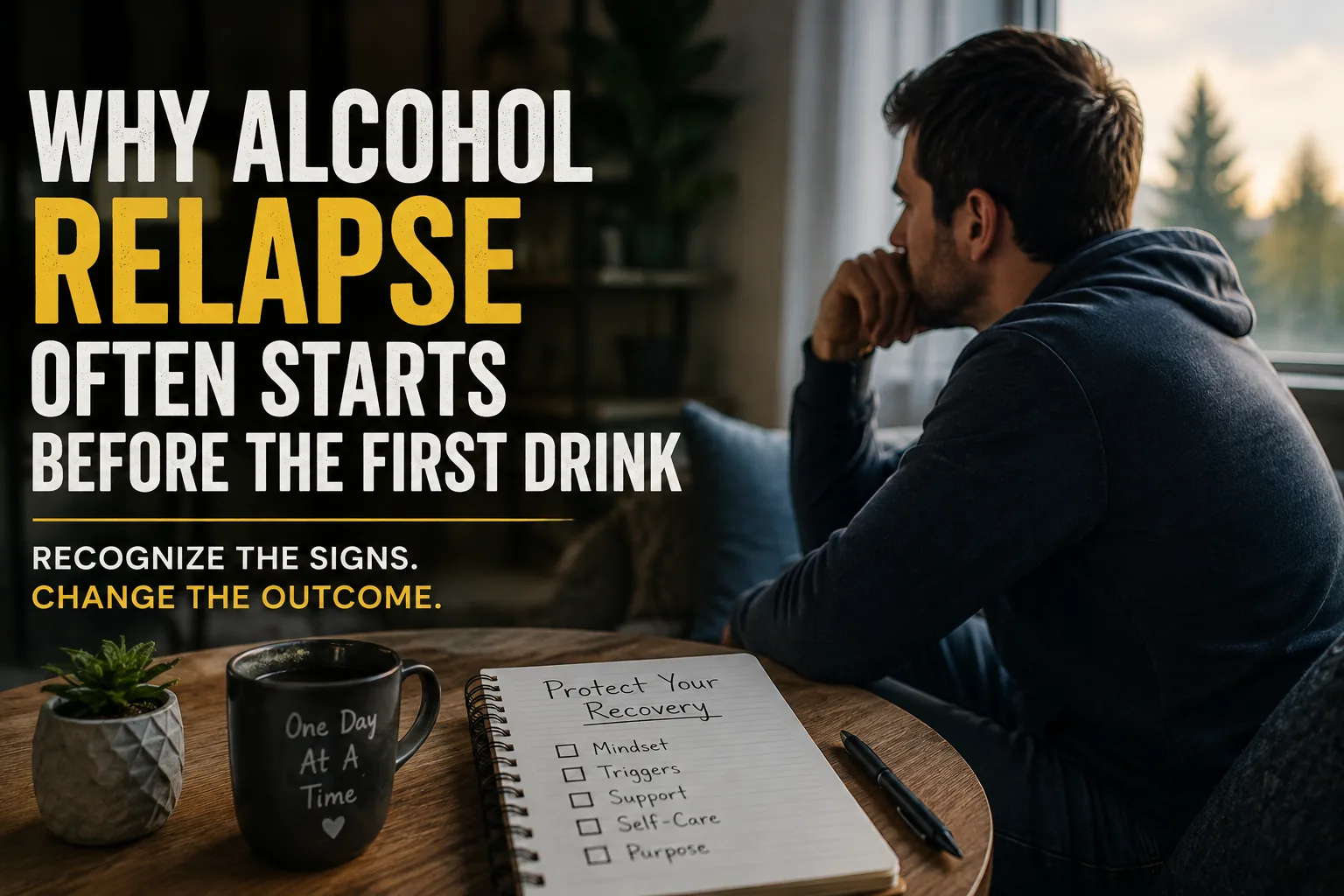


An alcohol relapse often starts before the first drink. The moment someone picks up alcohol may be the most visible part of relapse, but changes in thoughts, emotions, routines, and relationships can begin much earlier.
Someone may stop attending meetings, isolate from supportive people, sleep poorly, become overwhelmed by stress, or start remembering drinking as more enjoyable than it really was. Eventually, thoughts such as “Maybe I can handle one drink now” can begin to feel reasonable.
That is why learning to recognize the early warning signs of alcohol relapse is so important. If relapse is viewed as a process instead of a single event, there may be opportunities to interrupt it before alcohol is used.
The National Institute on Alcohol Abuse and Alcoholism (NIAAA) reports that people are particularly vulnerable to returning to drinking during periods of stress or when exposed to people and places associated with previous alcohol use. Behavioral treatment can help people recognize and respond to these triggers before they lead back to drinking.
Relapse Can Begin With Emotional Changes
One of the earliest signs of trouble may have nothing to do with consciously wanting alcohol.
A person may become increasingly anxious, angry, lonely, exhausted, or depressed. They may stop taking care of themselves, sleep poorly, skip meals, or withdraw from others.
Stress is especially important. NIAAA identifies external stress as a major risk factor for returning to alcohol use during recovery. Alcohol may have been used for years as a way to escape uncomfortable emotions, so intense stress can reactivate an old coping pattern.
Warning signs may include:
- Increased irritability or mood swings
- Isolation from friends and family
- Poor sleep
- Feeling overwhelmed by everyday problems
- Missing counseling or recovery meetings
- Losing interest in healthy routines
- Keeping emotions bottled up
- Feeling hopeless or emotionally exhausted
The person may still have no intention of drinking.
That is exactly why these signs matter.
If emotional distress continues without support, the brain may begin looking for familiar ways to find relief. For someone with a history of alcohol addiction, alcohol can begin to look like an answer again.
Thinking About Alcohol Can Be the Next Warning Sign
As relapse risk increases, thoughts about alcohol may begin changing.
Someone who once clearly remembered the damage caused by drinking may begin remembering only the good parts. They may think about parties, relaxation, confidence, or temporary relief while forgetting the hangovers, arguments, lost opportunities, withdrawal, or treatment that followed.
This is sometimes called romanticizing alcohol.
Other warning thoughts may include:
“Maybe I wasn’t really that bad.”
“I have been sober long enough to control it now.”
“I only had a problem with liquor. Beer would be fine.”
“Everyone else gets to drink.”
“One night won’t hurt anything.”
Cravings may also become stronger. NIAAA lists craving—a strong desire or urge to drink—as one of the recognized symptoms associated with alcohol use disorder.
A person may begin planning situations where drinking could happen while telling themselves they have no intention of actually drinking. They may visit a bar “just to see friends,” reconnect with old drinking buddies, or intentionally keep alcohol nearby.
At this point, the physical act of drinking has not happened, but the recovery plan is becoming weaker.
Changes in Recovery Behavior Can Signal Trouble
Relapse can also show itself through what someone stops doing.
During stable recovery, a person may attend counseling, take prescribed medication, talk with sober friends, exercise, maintain a schedule, or participate in recovery meetings.
As relapse develops, those protective habits may disappear one by one.
Someone might miss one meeting and then another. They stop returning phone calls. They quit talking honestly with their counselor. They spend more time alone.
Eventually, alcohol becomes easier to reach while support becomes harder to reach.
This does not mean every bad mood or missed meeting leads to relapse. Everyone in recovery has difficult days.
Look for patterns.
Several changes occurring together—especially isolation, cravings, increased stress, secrecy, and reconnecting with alcohol-related environments—deserve attention.
NIAAA explains that people can remain vulnerable to alcohol-related cues even after they stop drinking because changes associated with alcohol addiction can persist and contribute to future urges.
How to Stop Alcohol Relapse Before the First Drink
The best time to respond to relapse is before alcohol is used.
If you notice warning signs in yourself, tell someone immediately. Call a counselor, sponsor, recovery coach, family member, or sober friend.
Do not wait until you are certain you are going to drink.
Return to the parts of recovery that were working. Attend your appointments. Go back to meetings. Avoid bars and drinking environments. Remove alcohol from your home. Get enough sleep and rebuild your daily routine.
Ask yourself:
What changed recently?
Maybe work became more stressful. Perhaps a relationship ended. Maybe you stopped taking prescribed medication, became isolated, or started spending time around people who drink heavily.
Identifying the change can help you decide what needs to be strengthened.
Professional treatment may also need to change. Behavioral therapies can help people develop strategies for handling stress and alcohol-related triggers, while medications may help some people reduce cravings or prevent a return to drinking.
If you have already started drinking again, contact your treatment provider rather than trying to hide it. NIAAA recommends reassessing and adjusting treatment after relapse when necessary.
If drinking has become heavy or prolonged, do not assume suddenly stopping on your own is safe. Alcohol withdrawal can cause serious symptoms, including seizures, and severe withdrawal can be life-threatening. Some people require medically supervised withdrawal treatment.
Catch Relapse Early
The first drink may be the final step in a relapse process that has been developing for days or weeks.
That is actually hopeful news.
It means there may be multiple chances to change direction.
A stressful week can become a phone call instead of a drink. Isolation can become a recovery meeting. A craving can become a conversation with a counselor. Thoughts about “just one drink” can become a warning that additional support is needed.
Recovery is not protected only by saying no when alcohol is sitting in front of you. It is protected by paying attention to your emotional health, thoughts, routines, relationships, and triggers every day.
The earlier you recognize that something is changing, the more time you have to act.
Alcohol relapse may start before the first drink—but recovery can start again before that drink ever happens.


