



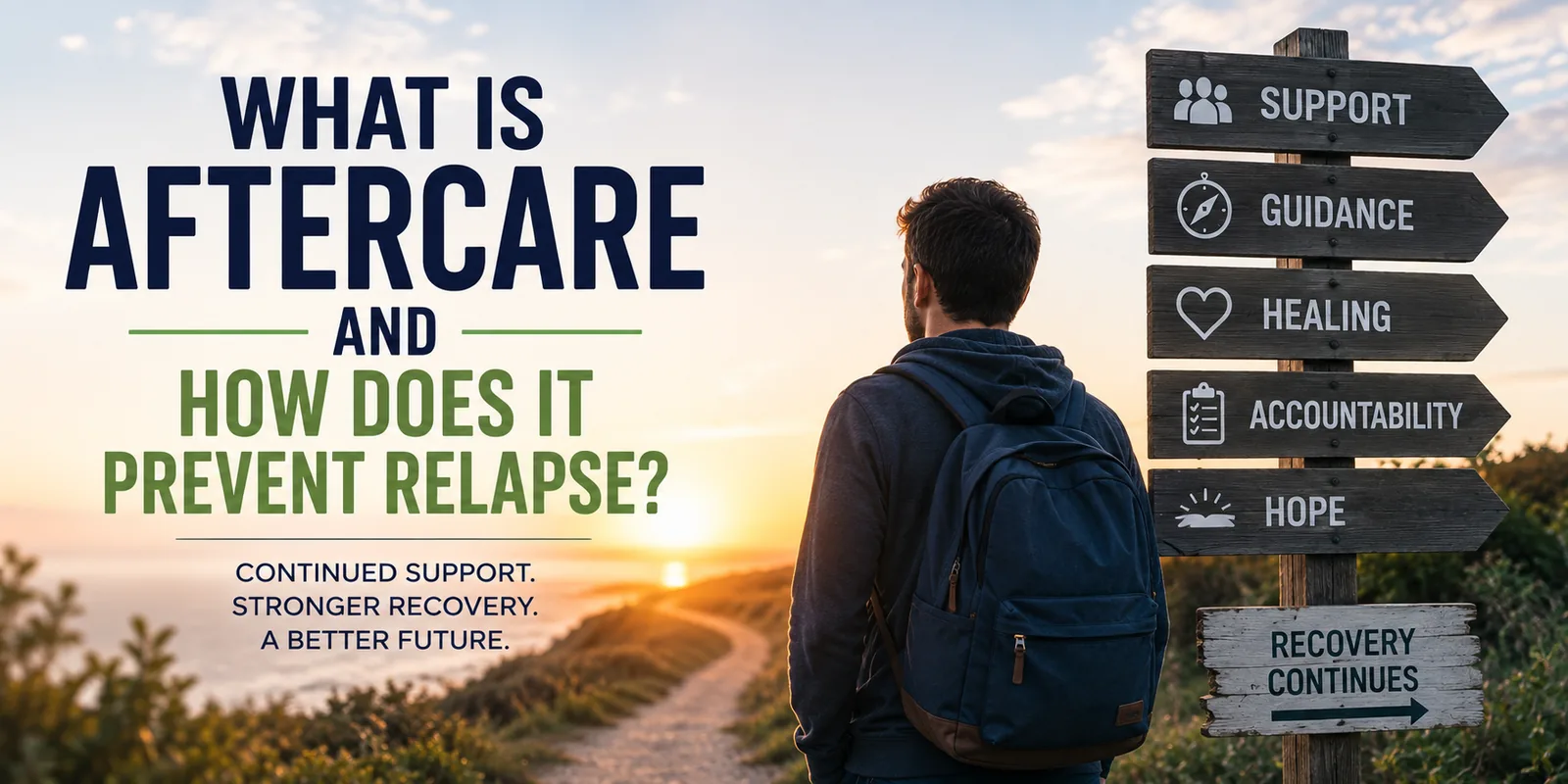


What is aftercare? Aftercare is the continued treatment and recovery support a person receives after completing detox, residential rehab, or another intensive addiction program. Also called continuing care, addiction aftercare programs help people take the skills they learned in treatment and use them in everyday life.
Leaving rehab can be both exciting and frightening. Inside treatment, the environment is structured and substances are restricted. At home, a person may face stress, relationship problems, cravings, bills, familiar places, and people connected to past substance use. Aftercare creates a bridge between the protection of treatment and the challenges of independent recovery.
Aftercare does not guarantee that relapse will never happen. However, it gives people ongoing support, accountability, treatment, and a clear plan for responding when recovery becomes difficult. NIAAA identifies continuing recovery support and a plan for responding to relapse as important signs of quality addiction care.
What Does Addiction Aftercare Include?
Aftercare is not one specific program. It is a personalized combination of services based on a person’s substance use, health, mental health, home environment, and recovery goals.
A typical aftercare plan may include:
- Outpatient counseling
- Intensive outpatient treatment
- Medication management
- Peer-recovery support
- Mutual-help meetings
- Sober or recovery housing
- Family counseling
- Case management
- Employment or education support
- Regular medical appointments
- Drug or alcohol testing when appropriate
- A written relapse-prevention plan
Some people step down from residential treatment into a partial hospitalization or intensive outpatient program. Others may attend weekly counseling while working, going to school, or caring for family. A person with opioid or alcohol use disorder may continue taking prescribed medication as part of the plan.
Recovery can involve clinical treatment, medication, peer support, family support, faith-based resources, self-care, and other approaches. The right combination depends on the individual rather than a single definition of recovery.
Aftercare should be planned before a person leaves treatment. Important appointments should already be scheduled, prescriptions should be arranged, and the person should know whom to call if cravings or mental health symptoms become worse.
How Aftercare Helps Prevent Relapse
The first benefit of aftercare is continued connection. People may feel highly motivated when they leave rehab, but motivation can change when stress returns. Regular appointments create opportunities to discuss cravings, triggers, relationship problems, and warning signs before they become a crisis.
Aftercare also creates accountability. A counselor, sponsor, recovery coach, doctor, or peer-support worker may notice changes that the person does not recognize. Missing meetings, isolating, becoming dishonest, sleeping poorly, or romanticizing past substance use can signal that recovery is weakening.
Peer support can be especially valuable because it connects people with others who understand the challenges of recovery. SAMHSA reports that peer-support workers can help people remain engaged in recovery and reduce the likelihood of relapse.
Continued treatment also gives people time to practice coping skills. In rehab, someone may learn how to identify triggers, manage stress, communicate clearly, and refuse offers of drugs or alcohol. Aftercare gives them a place to discuss what happened when they tried those skills in real situations.
A person may discover that certain strategies are not enough. Their counselor can then help develop a different response. Treatment may include cognitive behavioral approaches, mindfulness-based relapse prevention, medication, and other evidence-based services that help people respond to triggers without automatically returning to substance use.
Aftercare Supports More Than Sobriety
Recovery involves more than avoiding drugs or alcohol. Many people leave treatment needing help with housing, employment, transportation, relationships, medical care, or legal problems. These pressures can increase stress and make recovery harder.
Case managers and community programs may help connect people with practical resources. Family counseling can improve communication and help loved ones develop healthier boundaries. Recovery housing can provide a substance-free environment for someone who is not ready to return home.
Aftercare should also address mental health. Depression, anxiety, trauma, grief, and other conditions can increase vulnerability when they are untreated. Quality treatment considers both substance use and accompanying mental health concerns rather than assuming that one will disappear when the other improves.
Healthy routines are another important part of continued recovery. Sleep, exercise, nutrition, meaningful work, hobbies, and supportive relationships can help a person create a life that no longer revolves around substance use.
How Long Does Aftercare Last?
There is no single timeline that works for everyone. Some people may need structured aftercare for several months, while others benefit from some form of continuing support for years.
The intensity of care may change over time. Someone might begin with treatment several days each week, later move to weekly counseling, and eventually attend monthly appointments while remaining connected to peer support.
NIAAA notes that treatment and continuing care for alcohol use disorder may be measured in months or years rather than only the few days needed for detox. Recovery support should be adjusted as risks, needs, and life circumstances change.
A good aftercare plan should be reviewed regularly. If cravings increase, appointments are missed, mental health worsens, or substance use returns, the plan may need to become more intensive. A relapse does not mean every part of treatment failed. It means the person should reconnect with professionals and adjust the plan quickly.
Aftercare helps prevent relapse by keeping recovery active. It provides treatment, connection, structure, and support during the transition back to everyday life. Rehab may help someone stop using and begin healing, but aftercare helps protect that progress when real-world challenges return.
Recovery does not end when someone leaves a treatment center. In many ways, that is when the next stage begins.


