



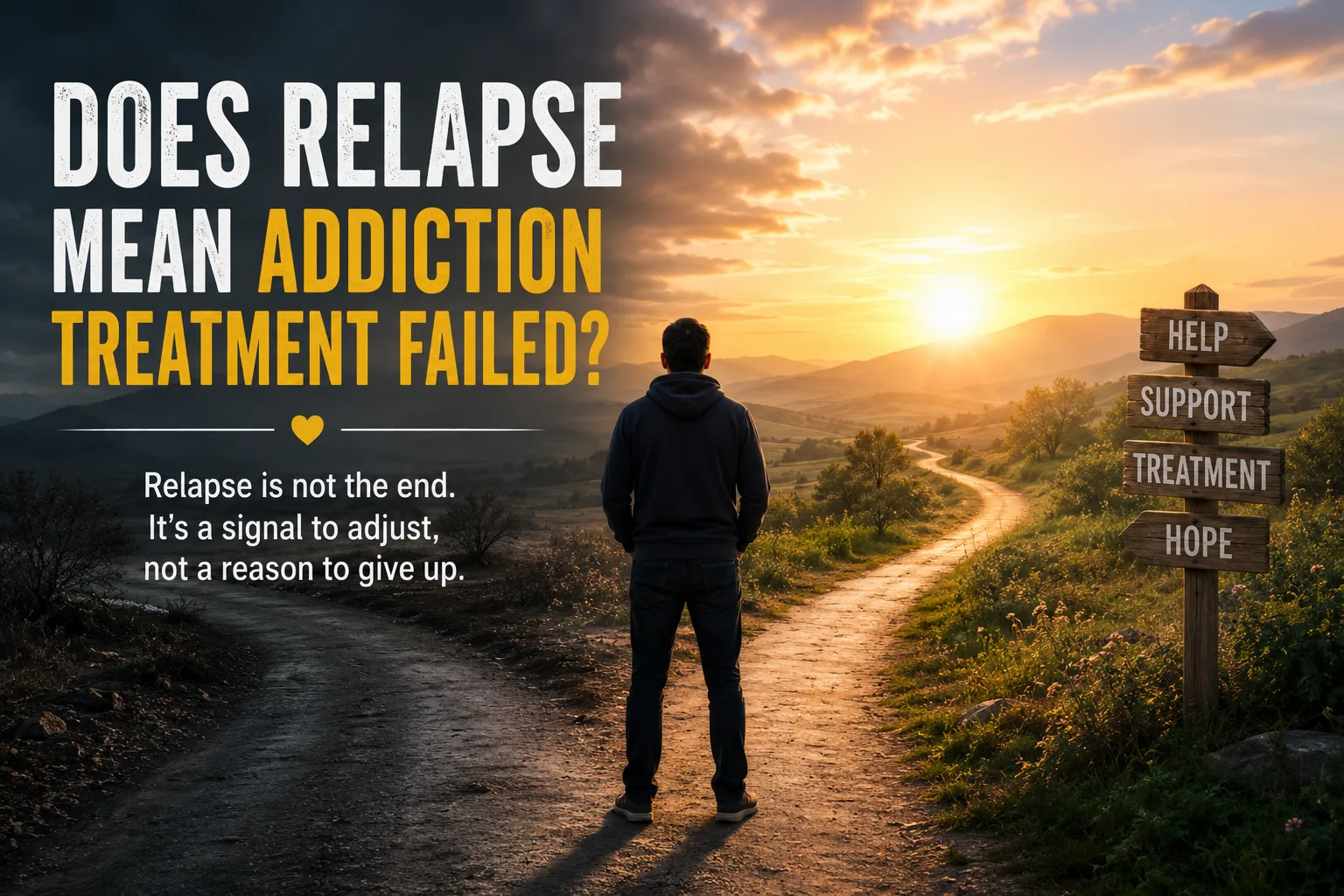


Does relapse mean addiction treatment failed? No. A return to drugs or alcohol can be frightening and dangerous, but it does not erase the progress a person made in treatment. Relapse often means the current recovery plan needs to be reviewed, adjusted, or strengthened.
Substance use disorder is a treatable health condition that can require ongoing care. One stay in rehab does not always resolve every trigger, mental health concern, relationship problem, or behavior connected to addiction. SAMHSA explains that relapse is common and does not mean treatment has failed. Treatment should be matched to the person and updated as their needs change.
Relapse should never be treated as harmless or unavoidable. Some people recover without returning to substance use. However, when relapse happens, the right response is not shame. It is immediate safety, honesty, and renewed treatment.
What Relapse Really Means
Relapse is a return to substance use after a period of stopping or significantly reducing use. It may involve one brief episode, several days of use, or a complete return to an earlier pattern.
A single use is sometimes called a lapse, while repeated or uncontrolled use may be described as a relapse. The exact label matters less than the response. Any return to substance use can become dangerous quickly, especially when opioids, alcohol, benzodiazepines, or multiple substances are involved.
Relapse often begins before the person takes a drink or drug. Emotional and behavioral warning signs may appear first. A person might isolate, stop attending treatment, hide their feelings, reconnect with people who use, romanticize past substance use, or become less committed to daily recovery habits.
The eventual return to use may show that these warning signs were not recognized or that the person did not have enough support to manage them. It can also reveal problems that were not fully addressed during treatment, such as trauma, depression, anxiety, chronic pain, family conflict, housing instability, or intense cravings.
Why Relapse Does Not Erase Treatment Progress
Treatment success should not be measured by one moment alone. During treatment, a person may have learned how addiction works, practiced coping skills, repaired relationships, improved physical health, found stable housing, or experienced months or years without substance use.
A relapse does not remove those gains. The person still has knowledge and experience that can help them return to recovery.
Treatment for substance use disorder may need to change over time. A person who completed residential rehab may later need outpatient counseling, medication, recovery housing, peer support, or another period of structured care. ASAM uses a multidimensional assessment process to help professionals match patients with the least intensive level of care that can safely meet their needs.
Think of relapse as information. It may show that:
- Treatment ended too soon.
- The person needs a higher level of care.
- Their home environment is unsafe.
- Cravings are not being managed.
- A mental health condition needs treatment.
- Medication should be considered or adjusted.
- The relapse prevention plan was incomplete.
- The person became disconnected from support.
None of these problems means recovery is impossible. They show where the treatment plan may need to become stronger.
What Should Happen After a Relapse?
The first priority is safety. Call 911 if the person cannot be awakened, has stopped breathing, is breathing very slowly, experiences a seizure, becomes severely confused, or talks about suicide.
Opioid relapse is especially dangerous after a period of abstinence because tolerance may be lower. An amount that was previously used can cause an overdose after time away from opioids. Naloxone should be given when an opioid overdose is suspected, but emergency services must still be contacted.
Once the immediate danger has passed, the person should contact a treatment provider as soon as possible. They should be honest about what they used, how much they used, how long the relapse lasted, and whether they can stop safely.
People who regularly drink large amounts of alcohol or use benzodiazepines should not assume they can suddenly stop without medical help. Withdrawal from these substances can become dangerous and may require supervised detox.
The treatment team can then decide whether the person needs medical detox, residential rehab, partial hospitalization, intensive outpatient care, medication, counseling, or stronger community support. NIAAA notes that after a relapse, a healthcare professional should adjust the treatment plan when needed.
Medications may also be part of the new plan. FDA-approved options are available for alcohol and opioid use disorders. Medication can reduce cravings, support stability, and help some people remain engaged in care. Treatment choices should be based on the individual’s medical history, substance use, goals, and preferences.
When Treatment May Need to Change
A relapse does not prove that all treatment failed, but it may show that the previous approach was not enough.
Someone may need more structure if they repeatedly return to use, cannot remain safe at home, stop attending appointments, experience severe cravings, or continue spending time around substances. Treatment should also address co-occurring mental health conditions rather than focusing only on drug or alcohol use.
The person should review what happened before the relapse. Did they stop calling supportive people? Were they sleeping poorly? Did they become overwhelmed by stress? Were they exposed to a familiar trigger? Did they believe they were “cured” and no longer needed recovery support?
The answers can be used to build a stronger relapse prevention plan. That plan may include more frequent appointments, medication, support meetings, sober living, family counseling, new coping strategies, and clear steps to follow when warning signs return.
Relapse Is a Signal to Act, Not a Reason to Give Up
Relapse can bring guilt, fear, and embarrassment. Those feelings often cause people to hide what happened and avoid treatment. That delay can allow a brief return to use to grow into a much more dangerous situation.
The better response is to ask for help immediately.
Relapse does not mean addiction treatment failed, but it does mean something must change. Recovery remains possible when the person returns to care, learns from what happened, and builds a plan that provides greater protection.
The progress made before the relapse still counts. Treatment can be restarted. Support can be strengthened. A setback does not have to become the end of someone’s recovery story.


