



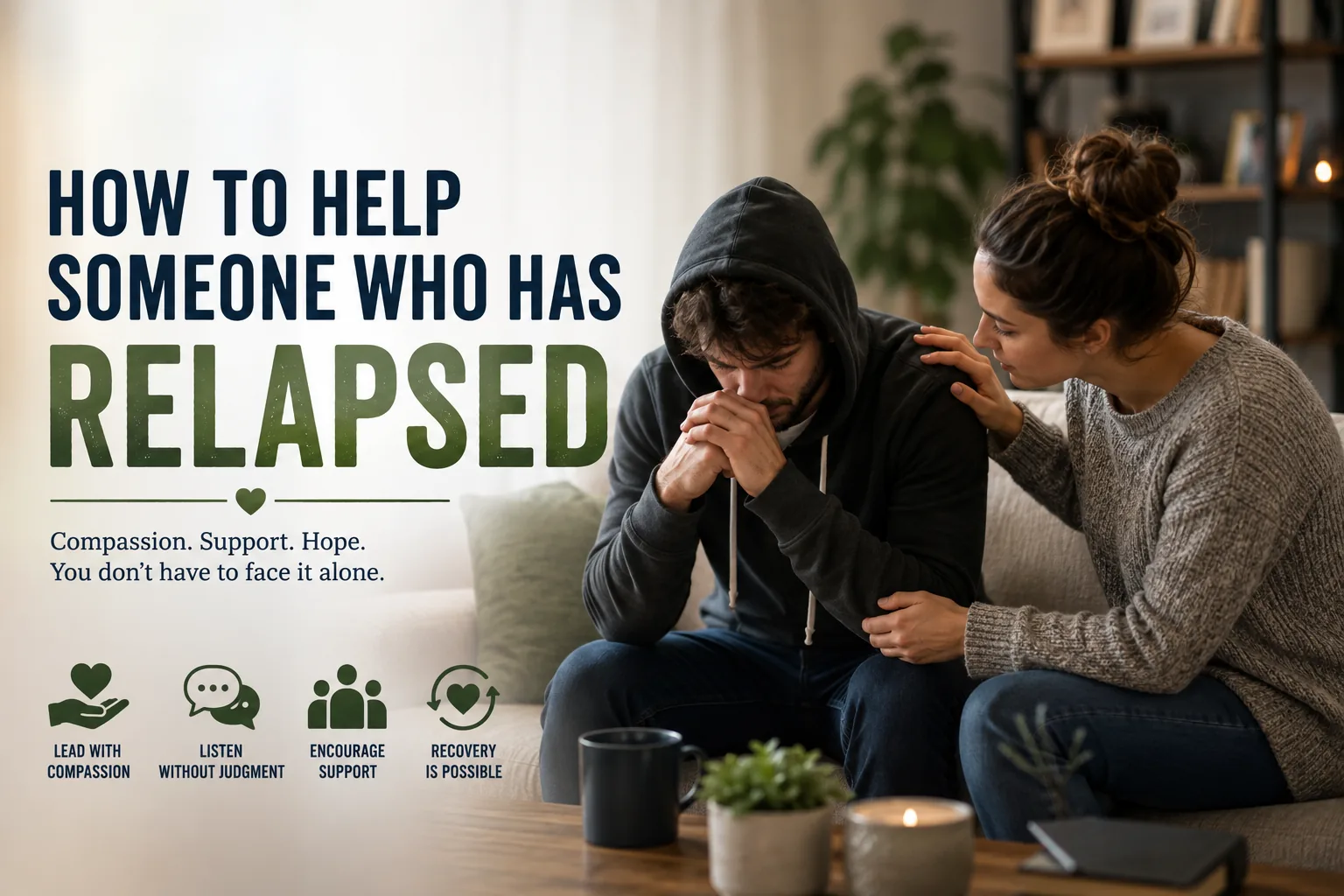


Learning how to help someone who has relapsed can feel overwhelming. You may be scared, angry, disappointed, or unsure whether helping will make the problem better or worse. The most important thing to understand is that relapse is serious, but it does not mean recovery is over.
A return to drugs or alcohol often signals that the person’s recovery plan needs to be restarted, changed, or strengthened. Addiction treatment may require ongoing care, just like treatment for other long-term health conditions. Relapse is not proof that treatment failed, but it should never be ignored.
Your role is not to cure the addiction yourself. You can help the person reach safety, reconnect with treatment, and take responsibility for the next step.
Check for an Immediate Emergency
Before discussing treatment or consequences, determine whether the person is medically safe. Call 911 immediately if the person cannot be awakened, has a seizure, is severely confused, has blue or gray lips, or is breathing slowly, irregularly, or not at all.
An opioid overdose may look like deep sleep, but the person may be dying. Warning signs include pinpoint pupils, limpness, choking or gurgling sounds, discolored lips or fingernails, and an inability to wake up.
Give naloxone when an opioid overdose is suspected and the medication is available. Call 911, place the person on their side, and remain with them until emergency help arrives. Naloxone can restore breathing, but more than one dose may be needed when fentanyl or another powerful opioid is involved.
Overdose risk can be especially high after treatment, incarceration, detox, or another period without opioid use. Tolerance may fall during abstinence, making a previously used amount potentially fatal.
Talk Without Shaming or Attacking Them
Once the person is safe and sober enough to have a conversation, speak calmly and directly. Avoid beginning the conversation while they are intoxicated unless you are responding to an emergency.
You might say, “I care about you, and I am worried about what happened. I want to help you find support today.”
Focus on what you have observed rather than using labels or accusations. For example, say, “You missed work and used again after treatment,” instead of, “You have ruined everything.”
A nonjudgmental tone does not mean pretending the relapse is acceptable. It means creating a conversation in which the person is more likely to tell the truth. NIAAA recommends choosing an appropriate time, preparing what you want to say, and approaching treatment conversations with empathy rather than judgment.
Listen to what happened before the relapse. Stress, isolation, cravings, untreated depression, relationship conflict, exposure to triggers, and leaving treatment early may have contributed. Understanding the cause can help professionals decide what needs to change.
Help Them Reconnect With Treatment
Encourage the person to contact their previous treatment center, counselor, doctor, sponsor, peer-support worker, or recovery coach immediately. Offer to sit with them while they make the call or drive them to an appointment.
Do not wait for the situation to become “bad enough.” A brief relapse can quickly become a longer return to active addiction.
Treatment does not always mean returning to the same residential rehab program. Depending on the person’s needs, options may include:
- Medical detox
- Residential treatment
- Partial hospitalization
- Intensive outpatient treatment
- Individual or group counseling
- Recovery housing
- Peer-support programs
- Medication for alcohol or opioid use disorder
Medications such as buprenorphine, methadone, and naltrexone may be used as part of treatment for opioid use disorder. Medication options are also available for alcohol use disorder. These treatments can reduce cravings, support continued recovery, and lower overdose risk.
The right level of care depends on the substance involved, withdrawal risk, mental health, medical needs, home environment, and whether the person can stop using safely.
Support Recovery Without Enabling Addiction
Helping does not require protecting someone from every consequence of their substance use. There is a difference between supporting recovery and making continued use easier.
Healthy support may include helping the person find treatment, attending a family session, caring for children while they attend an appointment, or removing alcohol from a shared home.
Enabling may include giving money that could be used for drugs, lying to an employer, repeatedly paying legal expenses without conditions, allowing substance use in your home, or ignoring dangerous behavior.
Set boundaries that are clear, realistic, and focused on safety. You might say, “I will help you get to treatment, but I will not give you cash,” or, “You cannot use drugs in this home.”
Do not make threats you cannot enforce. Boundaries work best when they explain what you will do, not when they attempt to control every decision the other person makes.
Encourage a New Relapse Prevention Plan
After the immediate crisis, help the person review what led to the relapse. The goal is not to interrogate them. It is to identify warning signs and close gaps in the recovery plan.
They may need more frequent counseling, a different provider, medication, sober living, additional meetings, stronger mental health care, or distance from people who use substances.
Encourage them to create a written plan that includes personal triggers, early warning signs, emergency contacts, coping strategies, treatment appointments, and safe places to go. Peer-support workers can also help people remain engaged in recovery outside a clinical setting.
Finally, take care of yourself. Loving someone with an addiction can affect your sleep, finances, relationships, and mental health. Consider family counseling or a support group for relatives of people with substance use disorders. Family members need support too, and receiving it can help you respond with greater clarity and consistency.
You cannot force someone to recover, but your response still matters. Stay calm, act quickly, protect your boundaries, and keep directing the person toward professional help. A relapse is a dangerous setback, but with the right response, it can also become the moment someone returns to treatment and begins rebuilding recovery.


