





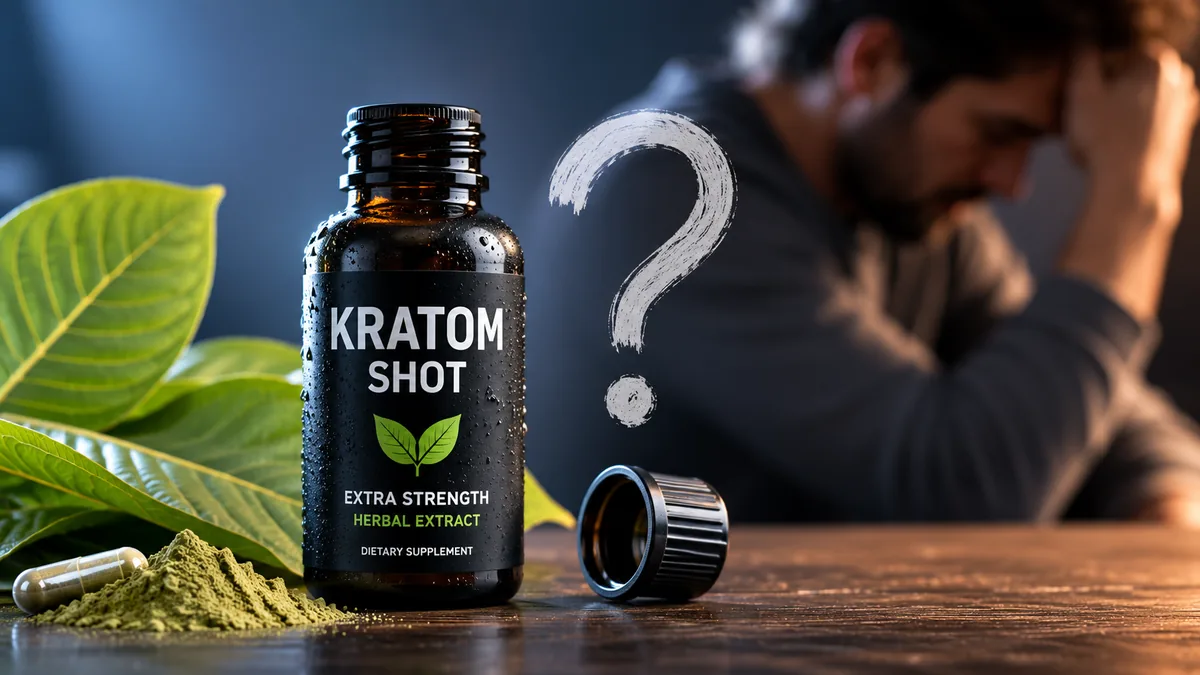
Can you become addicted to kratom shots? Yes. Regular use of concentrated kratom extracts can lead to tolerance, physical dependence, cravings, withdrawal, and a pattern of continued use despite harmful consequences. Kratom shots are often marketed as natural products for energy, pain, mood, or opioid withdrawal, but “natural” does not mean nonaddictive. Some liquid shots contain far more active alkaloids than traditional kratom leaf, and others may contain concentrated 7-hydroxymitragynine, or 7-OH, which the FDA describes as a potent opioid product.
What Is in a Kratom Shot?
Kratom comes from the leaves of Mitragyna speciosa, a tree native to Southeast Asia. Traditional use generally involved chewing fresh leaves or brewing them into tea. The plant’s main active compound is mitragynine, which can produce stimulant-like effects at some amounts and opioid-like effects at others.
A commercial kratom shot is usually a small bottle of concentrated liquid extract. The label may advertise energy, focus, relaxation, pain relief, or an “extra-strength” experience. However, products can vary greatly in strength and ingredients.
Some shots contain a broad extract of the kratom plant. Others contain enhanced alkaloids or concentrated 7-OH. Natural kratom leaf contains only trace amounts of 7-OH, while manufactured products may contain much larger amounts. The FDA has warned that concentrated 7-OH is sold in shots, gummies, tablets, and drink mixes and can cause addiction, seizures, gastrointestinal distress, insomnia, and withdrawal.
Recent recalls have also involved liquid products containing undeclared mitragynine or mitragynine pseudoindoxyl, another opioid-like kratom compound. This means the name “kratom shot” may describe several very different products.
How Kratom Shot Addiction Develops
Kratom’s active compounds interact with opioid receptors in the brain. With repeated exposure, the brain and body may adapt. The person may then need more of the product—or a stronger extract—to experience the same effect. This is called tolerance.
Physical dependence occurs when the body begins relying on the substance to feel normal. A dependent person may wake up feeling anxious, achy, restless, or sick and take another shot to stop the symptoms.
The FDA has documented cases of kratom-related substance use disorder involving:
- Taking more kratom than intended
- Using it for longer than planned
- Experiencing strong cravings
- Needing increasing amounts
- Continuing despite health or relationship problems
- Experiencing withdrawal after stopping
Dependence and addiction are related but not identical. Someone can be physically dependent without meeting the full criteria for addiction. Addiction usually includes loss of control, compulsive use, and continued use despite harm.
Warning signs may include buying shots every day, carrying several bottles, hiding use, spending more than intended, switching to stronger products, or repeatedly failing to cut back. Someone may also begin organizing work, travel, sleep, and social plans around having access to kratom.
What Does Kratom Withdrawal Feel Like?
People who regularly use kratom may experience withdrawal when they reduce their dose or stop. Possible symptoms include:
- Restlessness and anxiety
- Irritability or depressed mood
- Insomnia
- Sweating or chills
- Muscle and body aches
- Runny nose or watery eyes
- Nausea, diarrhea, or stomach cramps
- Low energy
- Strong cravings
Withdrawal severity can vary. It may be more intense after daily use, large doses, long-term use, or repeated use of concentrated shots. The FDA reports that concentrated 7-OH gummies have caused withdrawal symptoms including body aches, fatigue, irritability, restlessness, and cold sweats.
People who use several shots per day or do not know exactly what their product contains should consider speaking with a medical professional before stopping suddenly. A clinician can evaluate other medications, opioid use, mental health symptoms, dehydration, and the possibility that the shot contains more than ordinary kratom extract.
Can You Overdose on Kratom Shots?
Fatal overdose from natural kratom alone appears to be rare, but serious poisoning can occur. Reported effects include seizures, high blood pressure, liver problems, severe vomiting, confusion, and extreme sedation. Many deaths associated with kratom have also involved opioids, alcohol, benzodiazepines, or other substances, making the exact contribution of kratom difficult to determine.
Concentrated products add uncertainty because the amount listed on the label may not reflect the product’s true strength. Mixing kratom shots with fentanyl, prescription opioids, alcohol, Xanax, sleeping pills, gabapentin, or other sedatives may increase the risk of unconsciousness and breathing problems.
Call 911 immediately if someone cannot be awakened, has slow or difficult breathing, experiences a seizure, collapses, becomes severely confused, or develops blue or gray lips. Give naloxone when opioid exposure is possible, but do not delay emergency care. Keep the product bottle so medical professionals can review its ingredients.
Getting Help for Kratom Shot Addiction
There is no FDA-approved medication specifically for kratom addiction. Treatment should be based on the person’s symptoms, product use, medical health, and whether opioids or other drugs are involved.
Care may include medical monitoring, treatment for withdrawal symptoms, behavioral therapy, recovery support, and evaluation for opioid use disorder. People who began using kratom to stop fentanyl, heroin, or prescription opioids should be offered proven treatments such as buprenorphine or methadone rather than being shamed for trying to manage withdrawal on their own.
Kratom research is continuing, and scientists are studying whether purified compounds may eventually have medical value. That research does not make concentrated retail shots safe or predictable.
The clearest answer is that kratom shots can become addictive—especially when they contain strong extracts, 7-OH, or undeclared opioid-like compounds. When daily use begins feeling necessary rather than optional, it is time to seek help.


