



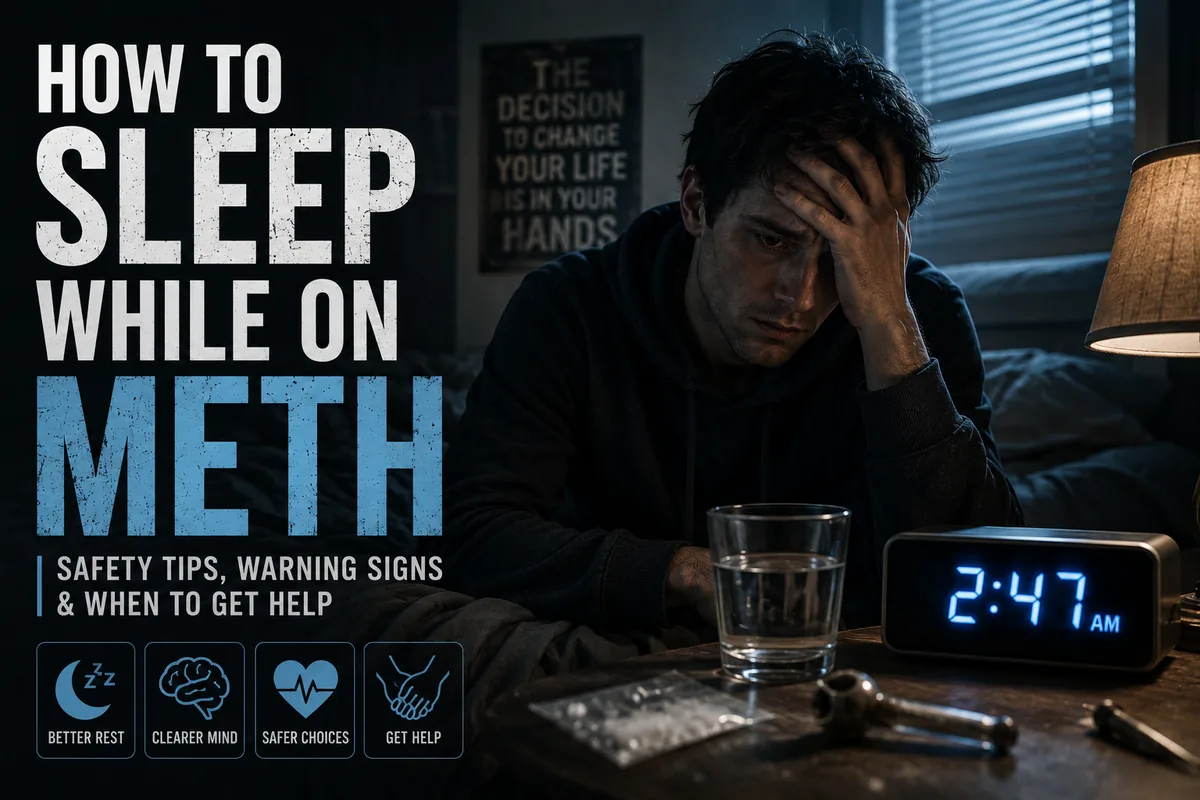


Searching for how to sleep while on meth often means your body is exhausted, but your brain will not slow down. Methamphetamine is a powerful stimulant that can cause severe insomnia, restlessness, sweating, rapid heart rate, high blood pressure, and elevated body temperature. There is no reliable home remedy that can safely “cancel out” meth or force your body to sleep. The safest goal is not to knock yourself unconscious. It is to stop using more meth, reduce stimulation, watch for dangerous symptoms, and get medical help when needed.
Why Meth Makes Sleep So Difficult
Meth increases activity in the brain and central nervous system. It can cause greater alertness, energy, movement, wakefulness, and physical activity. At the same time, it may increase heart rate, breathing, blood pressure, and body temperature. This can leave someone feeling physically drained but mentally unable to rest.
Street meth can also vary in strength or contain other substances. This makes it difficult to predict how long the effects will last or how severe they may become.
As sleep deprivation continues, a person may become anxious, confused, paranoid, or detached from reality. Long-term or heavy meth use has been connected to severe insomnia, delusions, extreme paranoia, and major mood changes. Someone may feel exhausted but continue pacing, talking, checking windows, or focusing on frightening thoughts.
Taking more meth to avoid the “crash” only extends the cycle. It also places greater stress on the heart, brain, kidneys, and the body’s temperature controls. Sleep usually becomes possible only after the stimulant effects begin wearing off.
Navigating This Guide
This hub page serves as the entry point for deeper exploration. Use the links below to dive into specific areas of meth addiction:
How to Sleep While on Meth More Safely
The first step is to stop taking more meth. Move away from the drug and anything connected with using it. Do not drive, walk near traffic, cook over an open flame, or do anything that requires good judgment and coordination.
Move to a quiet, cool, familiar place. Lower the lights, turn off loud music, and reduce screen use. Limit the number of people in the room, especially if you feel anxious or suspicious. Sit or lie somewhere safe, even if you cannot immediately fall asleep. Resting your body is still better than continuing to move around.
Sip water or an electrolyte drink. Do not quickly drink a huge amount of water. If you can eat, choose something simple, such as toast, soup, fruit, crackers, or a sandwich. Avoid coffee, energy drinks, nicotine, and stimulant-containing cold medications because they may make your heart race or make sleep even harder.
Ask a trusted sober person to stay nearby or check on you. Tell them what you took, how you used it, and approximately when you took it. This information could help emergency responders if your condition suddenly changes.
Most importantly, do not attempt to force a meth comedown by mixing substances. Avoid alcohol, opioids, benzodiazepines, sleeping pills, and medication prescribed to someone else. Combining drugs can create a second emergency or hide signs that meth toxicity is getting worse. Only take a sleep medication if a medical professional who knows about the meth use says it is safe.
When Sleeplessness Becomes an Emergency
Being unable to sleep is not the only danger. Meth toxicity can become life-threatening.
Call 911 immediately if someone experiences:
- Chest pain or difficulty breathing
- A seizure, collapse, or loss of consciousness
- A very high body temperature
- A severe headache or one-sided weakness
- A dangerously fast or irregular heartbeat
- Extreme agitation or violent behavior
- Severe confusion, hallucinations, or paranoia
- An inability to recognize familiar people
These symptoms can be associated with heart attack, stroke, kidney damage, dangerous overheating, abnormal heart rhythms, or meth-induced psychosis. Getting medical treatment quickly can improve the chance of recovery.
Do not argue with someone who is severely paranoid or hallucinating. Speak calmly, give them space, and remove dangerous objects only when you can do so safely.
During a seizure, move hard objects away and protect the person’s head. Turn them onto their side if possible. Do not hold their arms or legs down, and never place anything in their mouth.
In the United States, Poison Control provides free and confidential guidance at 1-800-222-1222. You can call even when you are unsure whether the situation is serious. Poison specialists are available 24 hours a day and can tell you whether emergency treatment is needed.
Call or text 988 if meth use, sleep deprivation, or the crash causes suicidal thoughts, hopelessness, or fear that you may hurt yourself or someone else.
What Happens During a Meth Crash?
After meth wears off, a person may sleep for a long time and then experience exhaustion, depression, anxiety, irritability, hunger, poor concentration, and strong cravings. Sleep may remain irregular after repeated use. The emotional crash can be intense, so someone experiencing severe depression, paranoia, or suicidal thinking should not be left alone.
A medical or addiction-treatment professional can check for dehydration, heart problems, infections, mental health symptoms, and exposure to other drugs. There is currently no FDA-approved medication specifically for stimulant addiction, but effective behavioral treatments are available. Contingency management is especially effective for stimulant use disorders and rewards measurable progress such as treatment attendance or reduced drug use.
Learning how to sleep while on meth should not become a routine survival plan. Repeated nights without sleep are a warning that meth is taking greater control.
SAMHSA’s National Helpline offers free, confidential treatment referrals at 1-800-662-HELP (4357), 24 hours a day. Getting help before the next binge can prevent another sleepless night from becoming a heart attack, psychotic episode, or fatal emergency.


