



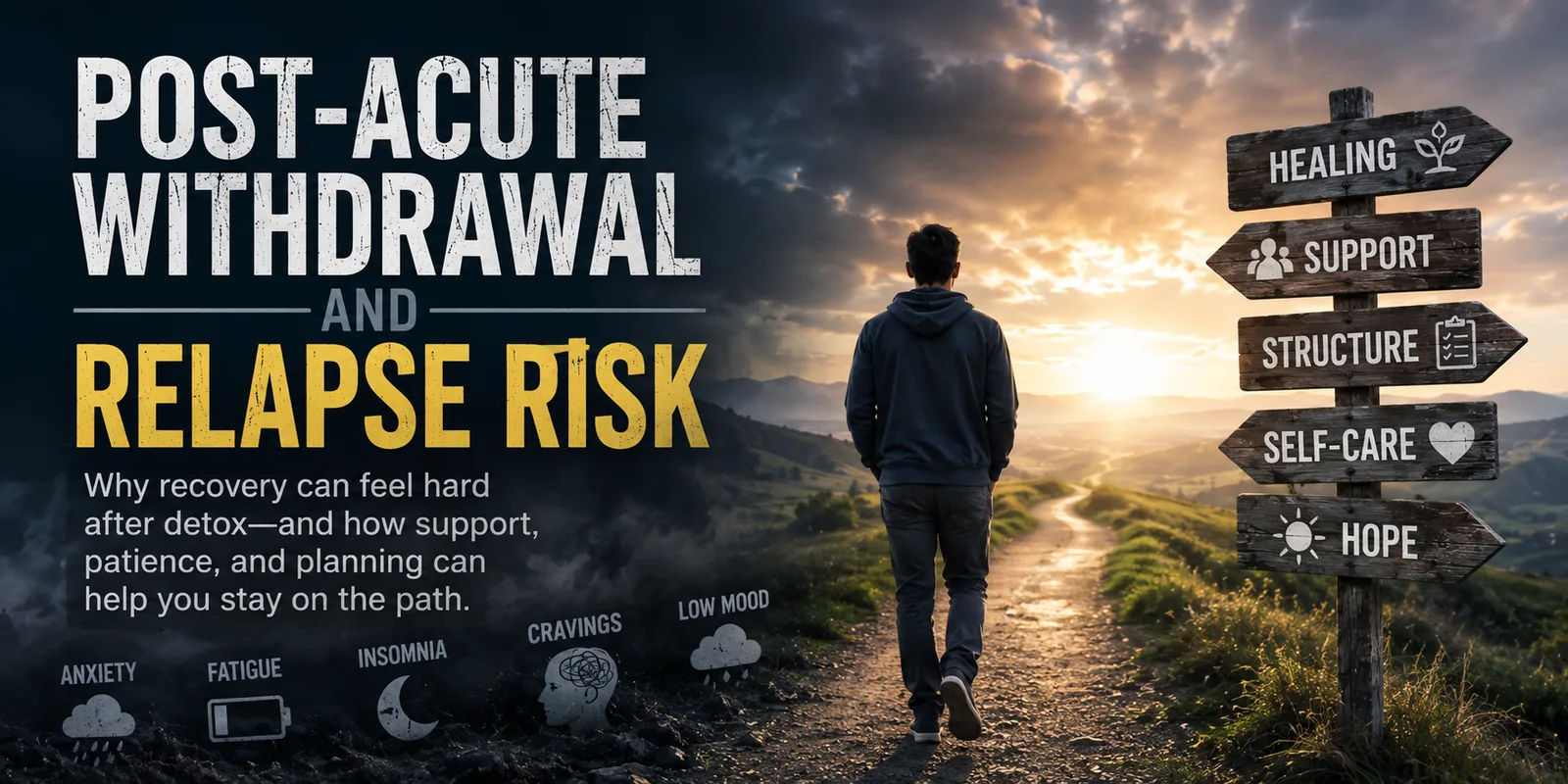


You stopped using. You made it through detox. The worst physical withdrawal symptoms are finally easing.
Then something confusing happens.
You still cannot sleep.
You feel anxious for no obvious reason.
Nothing seems enjoyable.
Your concentration is terrible.
One day you feel almost normal. The next day you feel exhausted, irritable, or overwhelmed.
And a dangerous thought appears:
“If this is what sobriety feels like, why am I doing this?”
These longer-lasting symptoms are often called Post-Acute Withdrawal Syndrome (PAWS) or protracted withdrawal. PAWS is not a single standardized medical diagnosis, and experiences vary significantly between people and substances. However, prolonged withdrawal-related symptoms are recognized in addiction treatment and can create a difficult period during early recovery.
Understanding what may be happening can be important because uncomfortable symptoms can increase relapse risk—especially when someone believes they should already feel completely better.
What Is Post-Acute Withdrawal Syndrome?
Acute withdrawal happens relatively soon after someone stops or significantly reduces a substance their body has adapted to.
Post-acute or protracted withdrawal refers to symptoms that continue, change, or sometimes appear after the expected acute withdrawal period.
These symptoms are often less dramatic than the first days of withdrawal, but they can still interfere with everyday life.
Someone may experience:
- Sleep problems
- Anxiety
- Irritability
- Low mood
- Fatigue
- Trouble concentrating
- Poor motivation
- Reduced ability to feel pleasure
- Emotional ups and downs
- Drug or alcohol cravings
Not everyone experiences these symptoms, and there is no universal PAWS timeline.
The substance used, length and intensity of use, overall health, mental health conditions, medications, sleep, stress, and other factors may all affect how someone feels after stopping.
That is why persistent symptoms should not automatically be blamed on PAWS. Depression, anxiety, sleep disorders, medication effects, and other medical conditions can produce similar symptoms and may need professional evaluation.
Why PAWS Can Increase Relapse Risk
One of the hardest parts of prolonged withdrawal is that people often expect recovery to move in a straight line.
They imagine:
Day 10 should feel better than Day 5.
Month 3 should feel better than Month 2.
Real recovery may be much less predictable.
Someone might have several excellent days followed by a week of poor sleep and anxiety.
That can become discouraging.
The person starts thinking:
“I’m three months sober. Why do I still feel terrible?”
Then they remember something that could make them feel different immediately:
The substance.
Alcohol may seem like a fast way to sleep.
Benzodiazepines may seem like a solution for anxiety.
Opioids may seem like relief from emotional or physical discomfort.
Stimulants may seem like an answer to exhaustion and lack of motivation.
The person may not necessarily be craving the lifestyle of addiction.
They may simply want the symptoms to stop.
That makes education about prolonged withdrawal an important part of relapse prevention.
The “Nothing Feels Good” Stage Can Be Difficult
One symptom that can be especially frustrating is anhedonia, or difficulty experiencing pleasure.
Things that should feel rewarding may temporarily seem boring.
Food does not taste as exciting.
Music feels flat.
Hobbies are not interesting.
Sex may feel different.
Socializing feels like work.
Someone may wonder:
“Is this just who I am sober?”
Not necessarily.
Recovery involves adjusting to life without repeatedly using a substance to produce powerful changes in mood, reward, energy, or relaxation.
Improvement can take time.
This is one reason boredom can become dangerous during early recovery. Someone remembers the intensity associated with substance use while ordinary life feels unusually dull.
The answer is not necessarily to chase constant excitement.
Instead, recovery may involve slowly rebuilding normal sources of reward: exercise, relationships, hobbies, accomplishment, healthy routines, recreation, and connection.
Sleep Problems Can Make Everything Harder
Poor sleep deserves special attention because it can affect nearly every other part of recovery.
After several nights of bad sleep, people may become more irritable.
Anxiety feels stronger.
Concentration gets worse.
Minor problems become overwhelming.
Cravings can become harder to manage.
Eventually someone may tell themselves:
“I just need one drink so I can sleep.”
That can reopen a door they worked hard to close.
If sleep problems continue, discuss them with a healthcare professional rather than trying to self-medicate with alcohol, recreational drugs, or medications that were not prescribed for you.
Do Not Suddenly Stop Alcohol or Benzodiazepines on Your Own
There is an important difference between discussing PAWS and managing acute withdrawal.
Withdrawal from alcohol and benzodiazepines such as Xanax, Ativan, or Klonopin can become medically dangerous in some people. Severe withdrawal can include seizures and other serious complications.
If someone has been regularly using large amounts of alcohol or has developed physical dependence on benzodiazepines, suddenly stopping without medical guidance can be unsafe.
Detox should not become a test of willpower.
Medical supervision may be necessary, and benzodiazepines often require an individualized gradual taper rather than abrupt discontinuation.
How to Get Through Post-Acute Withdrawal Without Relapsing
One of the biggest mistakes is assuming uncomfortable symptoms mean recovery is failing.
They may mean you need additional support.
Keep your recovery structure in place, particularly during difficult periods.
Talk openly with your treatment team about sleep, anxiety, depression, cravings, concentration problems, and emotional changes.
Continue connecting with supportive people.
Eat regularly.
Exercise when medically appropriate.
Protect your sleep schedule.
Avoid old drug-using environments.
And pay attention when your thoughts begin changing.
“I deserve to use.”
“One time would make me feel better.”
“Maybe I wasn’t really addicted.”
“I can’t keep feeling like this.”
Those thoughts can be early warnings that discomfort is beginning to threaten recovery.
Recovery Can Improve Even When Progress Feels Slow
Perhaps the most important thing to understand about post-acute withdrawal is that recovery does not always feel like improvement while it is happening.
Some days may be difficult.
Some symptoms may disappear and return.
Other symptoms may have nothing to do with withdrawal and need separate treatment.
That uncertainty can be frustrating.
But frustration does not require a return to alcohol or drugs.
If you are struggling months after stopping a substance, you do not have to simply suffer through it alone. Talk with an addiction professional or healthcare provider about what you are experiencing.
Detox gets the substance out of your immediate system. Recovery is the much larger process of learning how to live without needing it to feel okay.
And when difficult symptoms appear, getting more support is a stronger response than going back to the substance that created the problem in the first place.
Medical framing for this article was checked against SAMHSA guidance on protracted withdrawal, current benzodiazepine tapering guidance, and clinical material on prolonged stimulant withdrawal. (library.samhsa.gov)


