



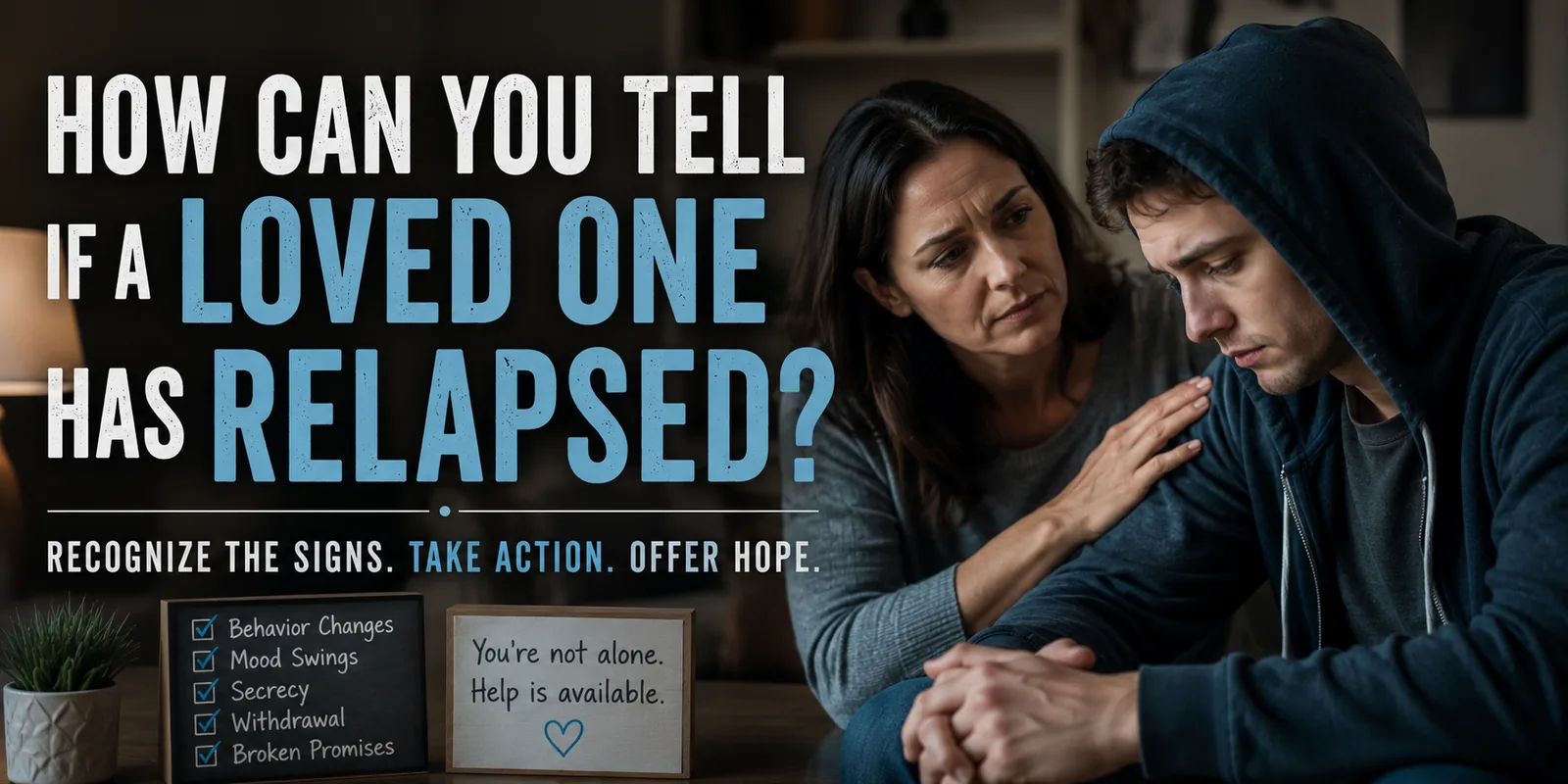


Relapse is not always obvious.
Sometimes someone returns to alcohol or drugs and the people around them know almost immediately. Other times, the changes are gradual.
They stop answering calls.
They miss work.
They seem unusually tired or agitated.
Money starts disappearing.
They reconnect with old friends.
They stop going to meetings or treatment.
When someone you love has struggled with addiction, these changes can leave you wondering:
There is no single sign that proves someone has returned to substance use. Stress, depression, relationship problems, illness, and other life changes can cause similar behaviors.
But when several warning signs appear together—especially secrecy, disappearing recovery habits, and major changes in behavior—it may be time to intervene.
Common Signs a Loved One May Have Relapsed
Behavior is often one of the first things families notice.
Someone who had been open and dependable may suddenly become secretive.
They may disappear for long periods, become protective of their phone, lock doors, or give explanations that do not seem to add up.
Their routine may also change.
They stop attending counseling.
Recovery meetings become less important.
They avoid supportive friends or family.
They begin spending time with people associated with past substance use.
Other possible signs include:
- Missing work, school, or appointments
- Frequently borrowing money
- Selling belongings
- Neglecting hygiene
- Staying awake all night or sleeping excessively
- Becoming unusually irritable or withdrawn
- Losing interest in responsibilities
- Driving or leaving the house at strange hours
- Becoming defensive when asked about substance use
Any one of these signs could have another explanation.
The concern increases when several changes happen at the same time.
Physical and Emotional Changes Can Be Warning Signs
Different substances produce different effects.
Alcohol may cause slurred speech, poor balance, unusual odor, or memory problems.
Opioids may cause heavy sleepiness, slowed movement, or repeatedly nodding off.
Stimulants such as cocaine or methamphetamine may cause extreme energy, agitation, rapid speech, anxiety, or long periods without sleep.
Other possible physical changes include bloodshot eyes, changes in pupils, sweating, tremors, appetite changes, weight changes, poor coordination, or unexplained injuries.
Emotional changes can matter too.
Someone may suddenly become angry, anxious, depressed, paranoid, withdrawn, or unpredictable.
They may react strongly to ordinary questions.
“Why are you interrogating me?”
“I told you I’m fine.”
Defensiveness does not prove relapse.
But when it is combined with secrecy, financial problems, disappearing recovery support, and physical changes, families should take the situation seriously.
Sometimes Relapse Begins Before Anyone Sees Drug Use
A loved one may begin moving toward relapse before actually using a substance.
They stop talking about recovery.
They isolate.
They complain that treatment is unnecessary.
They romanticize their old lifestyle.
They start saying:
“I wasn’t really that bad.”
“I could probably control it now.”
“I don’t need meetings anymore.”
“One drink wouldn’t hurt me.”
These can be important warning signs.
You do not have to wait until someone is intoxicated, hospitalized, arrested, or in a full addiction crisis before doing something.
Early intervention can be much easier than waiting for consequences to become severe.
How to Talk to Someone You Think Has Relapsed
Start with what you have observed rather than immediately making accusations.
Instead of:
“You’re using again. Stop lying.”
try:
“You’ve missed work several times, you’re barely sleeping, and you’ve stopped going to treatment. I’m worried about you. Have you started using again?”
Stay as calm as possible.
The goal is not to force a confession.
The goal is to understand what is happening and move toward help.
If they admit to using, avoid turning the conversation into shame.
Statements such as:
“You ruined everything.”
or
“I knew you would fail.”
may make the person more defensive and less willing to accept help.
A better response is:
“I’m glad you told me. Let’s figure out what needs to happen now.”
Relapse is serious, but it does not erase all previous progress.
When Should a Family Consider an Intervention?
Sometimes a conversation is not enough.
A person may repeatedly deny there is a problem, refuse treatment, become increasingly unstable, or continue using despite obvious consequences.
That may be when a more organized intervention becomes appropriate.
An intervention is not simply a group of family members confronting someone.
A good intervention is planned around one goal:
Helping the person accept treatment.
Family members and close friends may come together to clearly explain what they have observed, how the addiction is affecting them, and what help is available.
Each person should focus on specific behaviors rather than insults.
For example:
“You have missed work six times this month, and twice we found you unconscious on the couch. We are scared you are going to die.”
That is very different from:
“You’re selfish and ruining everyone’s life.”
Whenever possible, families may benefit from working with an addiction professional or trained interventionist who can help structure the conversation and prepare for different responses.
Plan Treatment Before the Intervention
One of the biggest mistakes families can make is holding an intervention without knowing what happens next.
If the person says:
“Fine. I’ll get help.”
the answer should not be:
“Okay, we’ll start looking for somewhere tomorrow.”
Treatment options should ideally already be identified.
That might include detox, residential treatment, outpatient treatment, medication for addiction when appropriate, psychiatric care, counseling, or another level of care recommended by professionals.
Transportation should also be considered.
The goal is to reduce the time between accepting help and entering care.
Motivation can disappear quickly.
Boundaries Matter During an Intervention
Families sometimes unintentionally protect addiction from its consequences.
They pay overdue bills.
Call employers with excuses.
Provide cash.
Allow drug use in the home.
Repeatedly rescue the person from situations caused by substance use.
An intervention may include clear boundaries.
For example:
“We love you and will help you enter treatment, but we will no longer give you money that may be used for drugs.”
A boundary is different from punishment.
It describes what the family will or will not do.
The purpose is to stop participating in patterns that make continued addiction easier.
Know When Relapse Is a Medical Emergency
Some relapses require immediate medical help rather than an intervention.
Call emergency services if someone is unconscious, difficult to wake, breathing very slowly, turning blue or gray, having a seizure, experiencing severe chest pain, or showing dangerous confusion.
Opioid relapse can be especially dangerous because tolerance may drop during periods of abstinence.
A dose someone previously survived may become fatal after time away from opioids.
If opioid overdose is possible and naloxone is available, give it and call emergency services.
Do not assume someone can simply sleep it off.
You Do Not Need Absolute Proof to Speak Up
Families sometimes wait because they are afraid of being wrong.
You do not need laboratory proof before telling someone:
“I’m worried about you.”
Look for patterns rather than one isolated behavior.
Is secrecy increasing?
Are responsibilities disappearing?
Has their personality changed?
Are recovery supports gone?
Are there signs of intoxication?
If the answer to several of those questions is yes, start the conversation.
And if repeated conversations go nowhere while the situation gets worse, a structured intervention may be the next step.
The most useful question is not:
“How could they relapse after everything we’ve been through?”
It is:
“What can we do now to help them become safe and reconnect with recovery?”
Recognizing relapse early, setting healthy boundaries, and preparing treatment before a crisis can give a loved one a better chance of getting back on track.


