



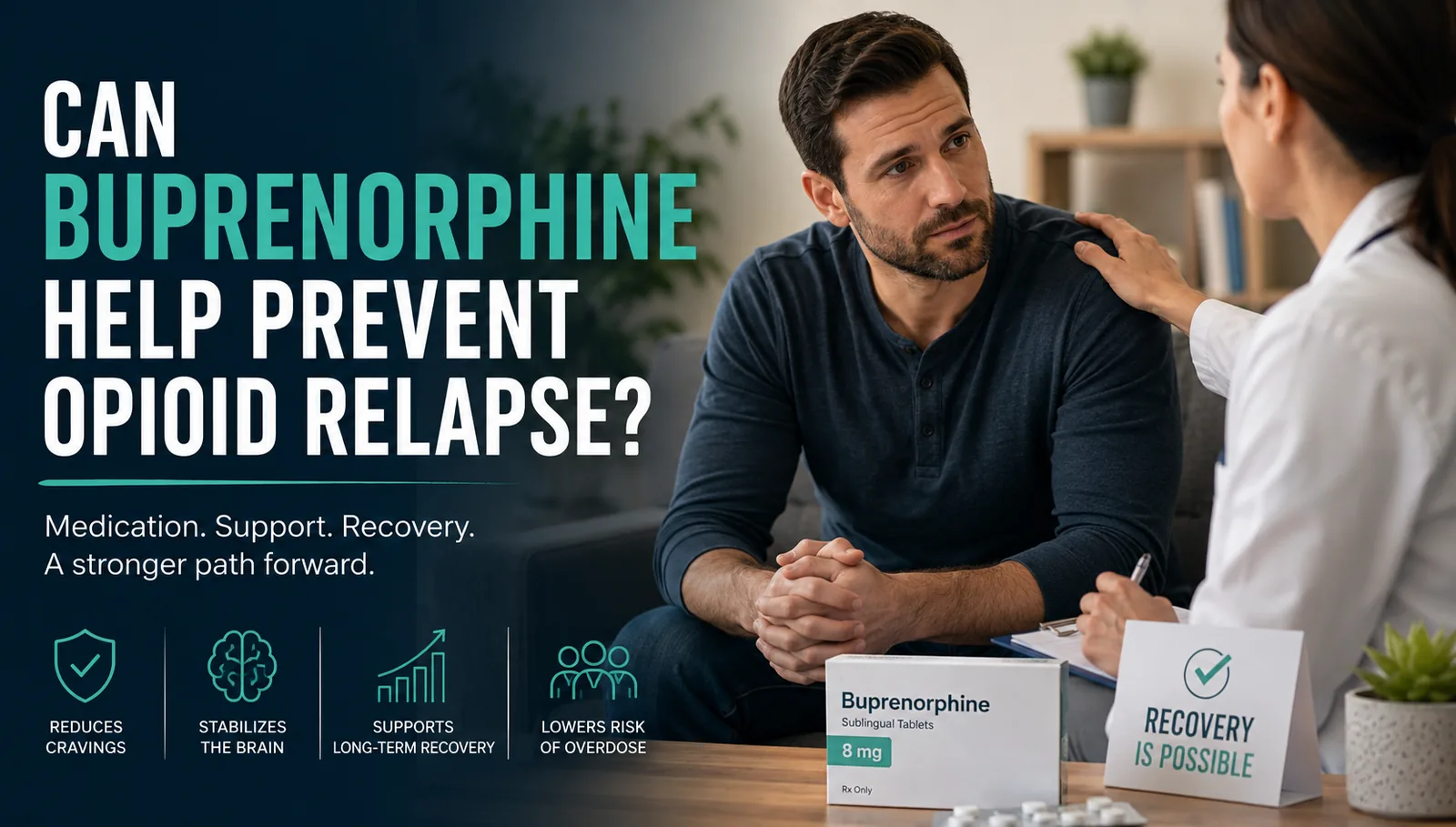


Can buprenorphine help prevent opioid relapse? Yes. For many people with opioid use disorder, buprenorphine can reduce withdrawal symptoms and cravings, help people remain in treatment, and lower the risk of returning to heroin, fentanyl, or other opioids.
Buprenorphine is one of three medications approved by the FDA to treat opioid use disorder, along with methadone and naltrexone. The FDA considers medications for opioid use disorder safe and effective evidence-based treatments.
That does not mean buprenorphine guarantees that someone will never relapse. Recovery still requires an individualized treatment plan. But for people who repeatedly struggle with cravings or returning to opioids, medication can provide a powerful layer of protection.
How Does Buprenorphine Work?
Buprenorphine is a partial opioid agonist. It attaches to opioid receptors in the brain, but it does not activate them in exactly the same way as full opioid agonists such as heroin or fentanyl.
When prescribed appropriately, buprenorphine can:
- Reduce opioid withdrawal symptoms
- Reduce cravings for opioids
- Help stabilize daily functioning
- Support continued participation in treatment
- Reduce the likelihood of illicit opioid use
- Lower overdose risk
SAMHSA specifically states that buprenorphine can diminish withdrawal symptoms and cravings associated with opioid dependence.
This matters because withdrawal and cravings are two major reasons people return to opioid use.
Imagine someone who has stopped using fentanyl but wakes up every morning fighting nausea, anxiety, body aches, insomnia, and intense cravings. Even if that person desperately wants recovery, the physical drive to use can be overwhelming.
Buprenorphine can reduce that pressure, giving the person more room to focus on rebuilding their life rather than constantly fighting withdrawal.
Does Buprenorphine Actually Reduce Overdose Risk?
Medication treatment for opioid use disorder is associated with a lower risk of overdose and death.
The CDC states that medications for opioid use disorder—particularly buprenorphine and methadone—substantially reduce overdose-related and overall mortality.
That protection is especially important today because fentanyl dominates much of the illicit opioid supply. Someone who relapses after a period of abstinence may have reduced tolerance, making an unexpected return to fentanyl particularly dangerous.
Research involving U.S. veterans also found that people receiving buprenorphine had substantially lower risk of suicide or overdose compared with periods when they were not receiving the medication. Risk increased following discontinuation.
The goal is not simply to replace one opioid with another. The goal is to stabilize opioid receptors enough that withdrawal and cravings become manageable while reducing the harmful cycle of intoxication, withdrawal, craving, and repeated illicit opioid use.
Is Taking Buprenorphine Really Being in Recovery?
Yes.
Buprenorphine is a legitimate medical treatment for opioid use disorder.
Someone taking medication exactly as prescribed is not “cheating” at recovery. They are receiving treatment for a health condition.
The FDA identifies buprenorphine, methadone, and naltrexone as approved treatments for opioid use disorder and describes medication treatment as an evidence-based approach.
Recovery does not have to mean enduring untreated cravings simply to prove that you can.
For some people, medication is temporary. Others may remain on buprenorphine for a much longer period. Treatment length should be based on the individual’s needs rather than pressure to stop medication before they are ready.
Stopping buprenorphine suddenly can also cause withdrawal because physical dependence can develop during ongoing treatment. FDA labeling warns that abrupt discontinuation or rapid tapering may cause withdrawal symptoms.
Medication changes should therefore be discussed with the prescribing healthcare professional.
What Forms of Buprenorphine Are Available?
Buprenorphine treatment is available in several formulations.
FDA-approved options include medications containing buprenorphine alone or buprenorphine combined with naloxone, including sublingual tablets and films. Long-acting injectable forms are also available.
You may recognize brand names such as Suboxone, Sublocade, Brixadi, or Zubsolv.
Some products combine buprenorphine with naloxone. The naloxone component is intended in part to discourage certain forms of misuse while allowing buprenorphine to work when the medication is taken correctly.
The best formulation depends on the person’s treatment history, current opioid use, medical needs, preferences, access to care, and ability to take medication consistently.
Starting Buprenorphine at the Right Time Matters
Buprenorphine should be started under appropriate medical guidance.
Because it binds strongly to opioid receptors, starting certain forms of buprenorphine too soon after using a full opioid agonist may trigger precipitated withdrawal—a rapid and sometimes severe onset of withdrawal symptoms. SAMHSA’s clinical guidance warns that buprenorphine can precipitate withdrawal in people who still have other opioids actively affecting their receptors.
This is particularly important for people using fentanyl because individual patterns of opioid exposure can complicate the transition.
Do not attempt to determine the right starting dose or timing based only on advice from friends or information online. A healthcare professional experienced in treating opioid use disorder can determine an appropriate induction strategy.
Buprenorphine Works Best as Part of a Recovery Plan
Medication can address cravings and withdrawal, but recovery may require much more.
Treatment can also include:
- Counseling
- Behavioral therapy
- Peer recovery support
- Sober housing
- Mental health treatment
- Family support
- Relapse-prevention planning
- Case management
SAMHSA recommends using buprenorphine within a comprehensive treatment approach that addresses the person’s broader recovery needs.
Naloxone should also remain available. Taking buprenorphine does not mean overdose prevention is no longer necessary, particularly if there is a possibility of returning to fentanyl or other opioids.
Buprenorphine Can Be a Powerful Relapse-Prevention Tool
Buprenorphine does not remove every trigger or solve every problem connected to addiction.
What it can do is reduce two of the strongest forces pushing someone back toward opioid use: withdrawal and cravings.
For someone cycling between detox, short periods of abstinence, and dangerous fentanyl or heroin relapse, medication treatment may dramatically change the recovery equation.
If opioid cravings are becoming difficult to control, relapse has already occurred, or someone repeatedly returns to fentanyl or heroin after treatment, talk with a healthcare professional about medications for opioid use disorder.
Recovery does not have to depend on willpower alone. Buprenorphine can give some people the stability they need to stay in treatment, avoid illicit opioids, and keep moving forward.


