





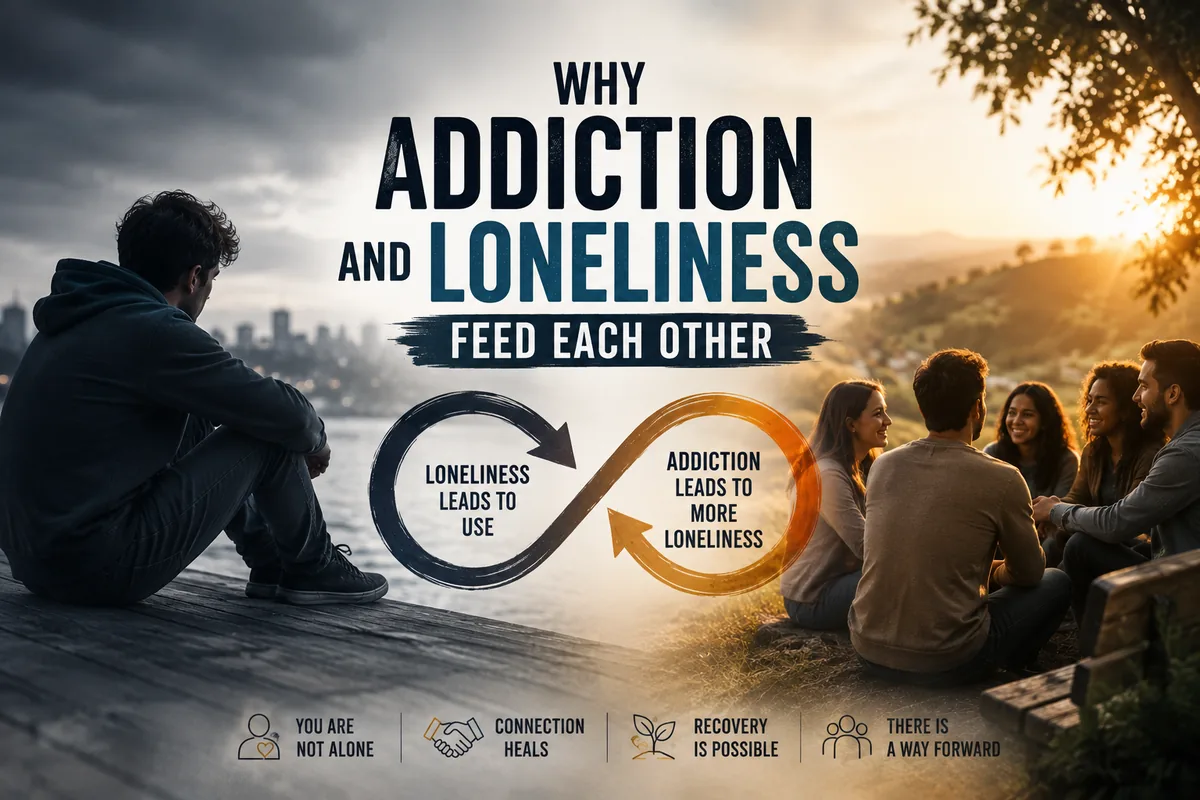
Addiction and loneliness often form a painful cycle. A person may use alcohol or drugs to escape feeling unwanted, misunderstood, or disconnected. The substance provides temporary relief, but continued use can damage relationships and increase isolation. That deeper loneliness can then create stronger cravings and another reason to use.
Loneliness is not simply being alone. It is the distressing feeling that the connection someone needs is missing. A person can feel lonely in a crowded home, at work, or even while surrounded by friends. Social isolation is different: it describes having few relationships or limited contact with other people.
Research consistently links loneliness with substance use problems, poor mental health, stigma, and relationship difficulties. However, the relationship can move in both directions. Loneliness may increase vulnerability to substance use, while addiction can make loneliness worse.
Why Substances Can Feel Like Relief From Loneliness
People are built for connection. When someone feels rejected or emotionally alone, the distress can create anxiety, sadness, restlessness, and a sense of emptiness. Alcohol or drugs may seem to offer immediate relief.
A drink might reduce social anxiety. Opioids may create warmth or emotional comfort. Stimulants may provide energy and confidence. Marijuana may help someone temporarily disconnect from painful thoughts. The substance can begin to feel like a dependable companion because its effects arrive faster and seem more predictable than human relationships.
That relief is temporary. Addiction involves changes in brain reward, motivation, and stress systems. As dependence develops, using the substance becomes less about feeling good and more about escaping withdrawal, stress, or emotional discomfort. Researchers describe addiction as a cycle that includes intoxication, withdrawal and negative emotions, and anticipation or craving.
Someone may eventually use not because they are celebrating or having fun, but because they feel lonely, anxious, ashamed, or unable to tolerate being inside their own thoughts.
How Addiction Creates More Isolation
Substance use can gradually push away the very people who might offer support.
Friends and family may become exhausted by broken promises, dishonesty, unpredictable behavior, or repeated emergencies. The person using substances may avoid loved ones because they fear criticism, disappointment, or being asked to stop. They may also hide how much they are using.
Addiction can cause missed work, financial problems, legal trouble, housing instability, and conflict at home. Activities that once created connection may disappear. A person may stop attending family gatherings, playing sports, participating in faith communities, or spending time with sober friends.
The social circle may become limited to people connected with substance use. Those relationships can feel meaningful, but they may depend on having drugs, money, or a place to use. When the substances disappear, the relationships may disappear too.
Stigma adds another barrier. People with addiction may be treated as weak, dangerous, or untrustworthy. Feeling judged can make someone less willing to enter treatment or tell others they are struggling. A systematic review found that stigma and weak perceived social support can negatively affect substance use treatment, while hurtful reactions from close relationships may increase relapse vulnerability.
The result is a trap: addiction damages relationships, isolation increases, and substances become the easiest available form of relief.
Why Early Recovery Can Feel Surprisingly Lonely
Stopping substance use does not immediately solve loneliness. In fact, early recovery may initially make it more noticeable.
A person may need to separate from friends, partners, or environments connected to using. They may have damaged relationships that take time to repair. Shame can make it difficult to meet new people or explain where they have been.
Without alcohol or drugs, social situations may feel unfamiliar. Someone who relied on alcohol to talk to people may feel awkward at gatherings. A person who used substances every evening may suddenly face long, quiet hours with no routine.
This does not mean recovery is failing. It means the person needs to build a life that contains more than the absence of drugs.
Recovery connections may include counselors, peer specialists, sponsors, support groups, family members, sober friends, faith communities, sports, volunteer work, classes, or recovery community centers. SAMHSA states that peer-support workers use shared experience, respect, and mutual empowerment to help people remain engaged in recovery and reduce the likelihood of relapse.
Breaking the Loneliness and Addiction Cycle
Connection should be treated as part of recovery—not as an optional reward that comes later.
The first step may be small. Send one honest text. Attend one meeting. Stay for coffee after a group instead of immediately leaving. Schedule an appointment with a counselor. Ask a family member to take a walk.
It is also important to distinguish supportive relationships from simply being around people. Recovery is strengthened by relationships that offer safety, honesty, respect, and encouragement. Spending time with people who pressure someone to use may reduce physical isolation while increasing relapse risk.
Treatment can address the emotional patterns underneath loneliness. Counseling may help someone challenge beliefs such as “Nobody wants me,” “I cannot trust anyone,” or “I have ruined every relationship.” Trauma treatment can help when isolation is connected to abuse, loss, or fear of closeness.
Medication may also be an important part of care. Evidence-based medications can reduce cravings or withdrawal for opioid and alcohol use disorders, making it easier to participate in counseling and rebuild daily life. SAMHSA emphasizes that substance use treatment may combine medication, therapy, peer support, family support, and other recovery services.
Relationships damaged during addiction may not heal immediately. Trust usually returns through consistent actions rather than promises. Showing up, telling the truth, respecting boundaries, and staying engaged in treatment can slowly create evidence that change is real.
Loneliness is not proof that someone is unlovable, and addiction is not proof that they are beyond help. Both problems grow in secrecy and isolation. Recovery begins when a person becomes willing to be seen, supported, and connected—even before they feel ready.
Substances may temporarily numb loneliness, but they cannot provide genuine belonging. Recovery offers something deeper: the opportunity to rebuild trust, find people who understand, and create a life in which connection no longer depends on getting high or drunk.


