





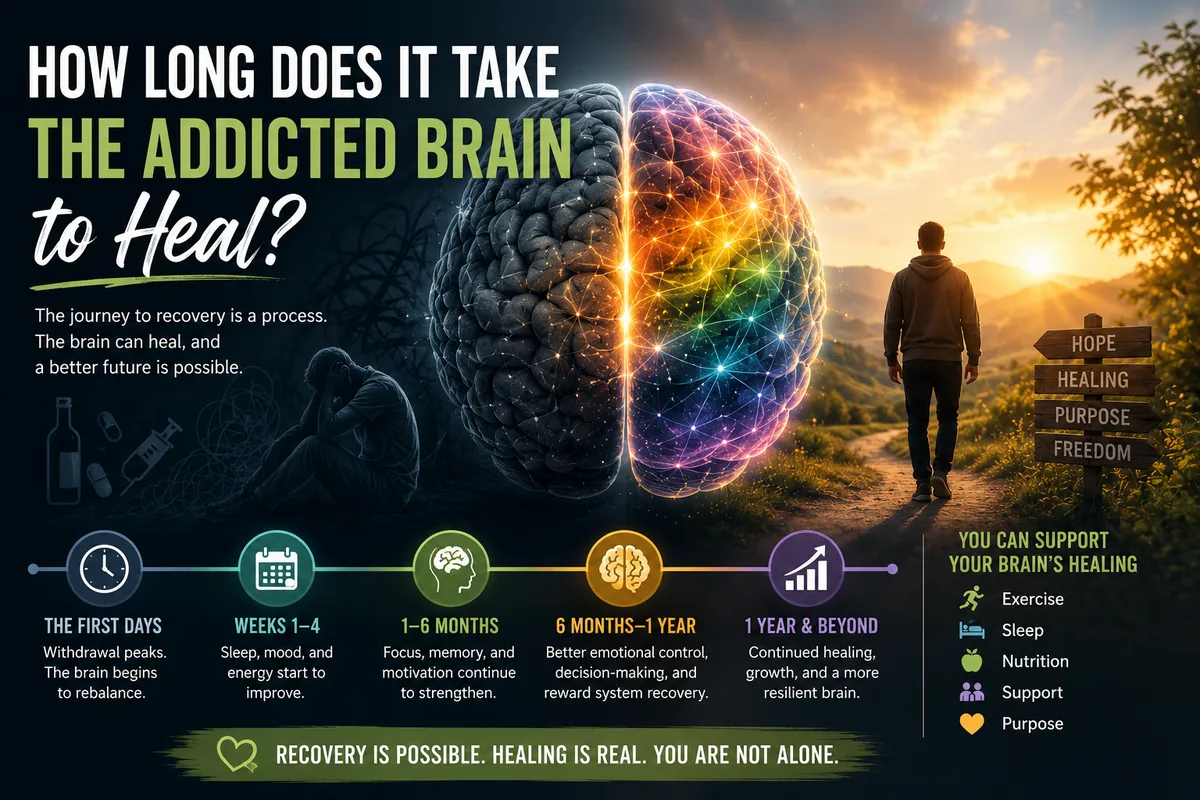
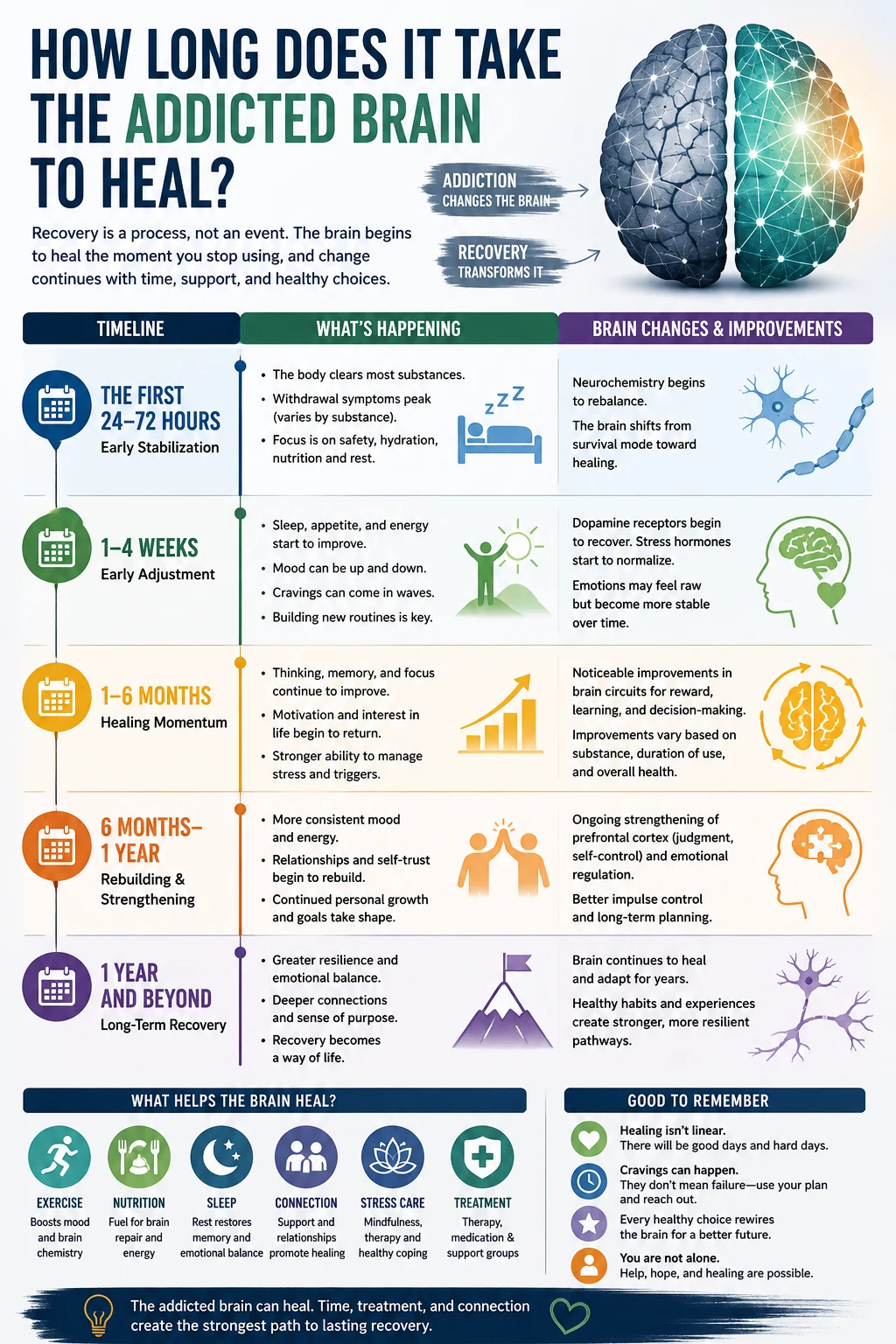
How long does it take the addicted brain to heal? There is no universal 30-day, 90-day, or one-year answer. The brain begins adjusting soon after substance use stops, but complete recovery can take months or longer. Some changes improve quickly. Others fade slowly, and certain injuries may not fully reverse.
The timeline depends on the substance, how heavily and how long it was used, the person’s age, nutrition, mental health, medical conditions, sleep, genetics, and whether more than one drug was involved.
The hopeful truth is that the addicted brain is not permanently “broken.” The brain has neuroplasticity, which means it can reorganize connections, strengthen healthier pathways, and adjust to new experiences. Research shows that sustained recovery is often accompanied by improvements in brain structure, function, and thinking skills.
What Addiction Does to the Brain
Addiction changes the systems involved in reward, stress, memory, judgment, and self-control. Drugs can produce much larger or faster dopamine signals than ordinary activities such as eating, exercising, working toward a goal, or spending time with someone you love.
With repeated exposure, the brain adapts. Natural rewards may feel less satisfying, while drug-related people, places, objects, and emotions become strongly connected with craving. Areas involved in planning and controlling impulses may also struggle to compete with the powerful urge to use.
This helps explain why someone can sincerely want to stop but still return to a substance. Addiction is a medical disorder that changes the brain and behavior—not simply a lack of character or willpower.
Healing does not mean forgetting that a drug once existed. It means the brain gradually becomes better able to experience normal rewards, manage stress, think clearly, and choose recovery instead of automatically responding to cravings.
The First Days and Weeks of Brain Recovery
During the first several days, the brain is often focused on withdrawal and restoring basic balance. Sleep, appetite, mood, concentration, and energy may be disrupted.
Someone stopping stimulants may feel exhausted, depressed, emotionally flat, or unable to enjoy anything. A person stopping opioids may experience intense cravings, pain, anxiety, and sleep problems. Cannabis withdrawal can cause irritability and vivid dreams. Alcohol or benzodiazepine withdrawal may be medically dangerous and should not be attempted without professional guidance when dependence is present.
During the first two to four weeks, many people notice gradual improvements in sleep, appetite, physical energy, and mental clarity. However, it is also common to feel discouraged during this period. The brain’s reward system may still be adjusting, so everyday life can seem boring compared with the intense effects of drugs.
This temporary inability to feel pleasure is sometimes called anhedonia. It does not mean someone will never feel happy again. It often means the brain needs more time and repeated exposure to healthy rewards.
What Changes Over the First Several Months?
During the first one to six months, attention, memory, emotional control, and decision-making may continue to improve. A review of substance use research found that sustained abstinence generally leads to at least partial recovery of cognitive abilities, although the degree and speed vary widely.
Brain-imaging studies also show signs of structural and functional recovery during abstinence. However, researchers caution that the evidence is mixed because studies involve different substances, treatment settings, and lengths of recovery.
Alcohol-related brain changes may improve over months without heavy drinking. NIAAA reports that some changes in thinking, emotions, behavior, and brain structure can improve or possibly reverse during prolonged recovery. Severe nutritional deficiencies, repeated withdrawal episodes, liver disease, stroke, or conditions such as Wernicke-Korsakoff syndrome may create more lasting damage.
Methamphetamine recovery may take longer because the drug strongly disrupts dopamine systems. Imaging studies have found improvement in dopamine transporters after prolonged abstinence, sometimes over a year or more. Yet improvements on a brain scan do not always match the speed of improvement in memory, motivation, or judgment.
For opioid addiction, healing does not require refusing medication. Methadone and buprenorphine can reduce cravings, stabilize opioid receptors, lower overdose risk, and give the brain and daily life time to recover. Taking prescribed medication for opioid use disorder is treatment—not replacing one addiction with another.
Why Cravings Can Return After the Brain Feels Better
A person may feel physically healthy after several months and still experience a sudden craving. This does not mean the brain has failed to heal.
Drug memories can remain connected to stress, celebrations, conflict, music, smells, neighborhoods, or specific people. These learned associations may reactivate even after long periods without use. That is why recovery involves more than waiting for the substance to leave the body.
Counseling, medication, peer support, new routines, and repeated healthy decisions help create competing pathways. Each time a person experiences a trigger and responds without using, the brain practices a new pattern.
Recovery is also broader than brain chemistry. SAMHSA describes it as an ongoing process that includes health, a stable home, purpose, and supportive relationships.
What Helps the Addicted Brain Heal?
The brain heals best when the person receives consistent support. Helpful factors include regular sleep, balanced nutrition, physical activity, treatment for depression or trauma, meaningful routines, and connection with supportive people.
Evidence-based addiction treatment may include counseling, recovery groups, medications, structured outpatient care, or residential treatment. Exercise may also support mood, sleep, stress regulation, and brain reward systems. One study found that eight weeks of structured exercise improved dopamine-receptor measures among people receiving treatment for methamphetamine addiction, although exercise should complement—not replace—professional care.
There is no day when the brain suddenly becomes “fully healed.” Recovery is usually a gradual return of abilities: sleeping through the night, remembering appointments, enjoying food, laughing again, handling stress, and thinking about something other than the next drink or drug.
Some people feel dramatically better within weeks. Others need many months before motivation and pleasure return. Both experiences can be normal.
The addicted brain can heal, but time alone is not the entire treatment. Time combined with safety, medication when appropriate, therapy, structure, purpose, and human connection gives the brain the strongest opportunity to recover.


