





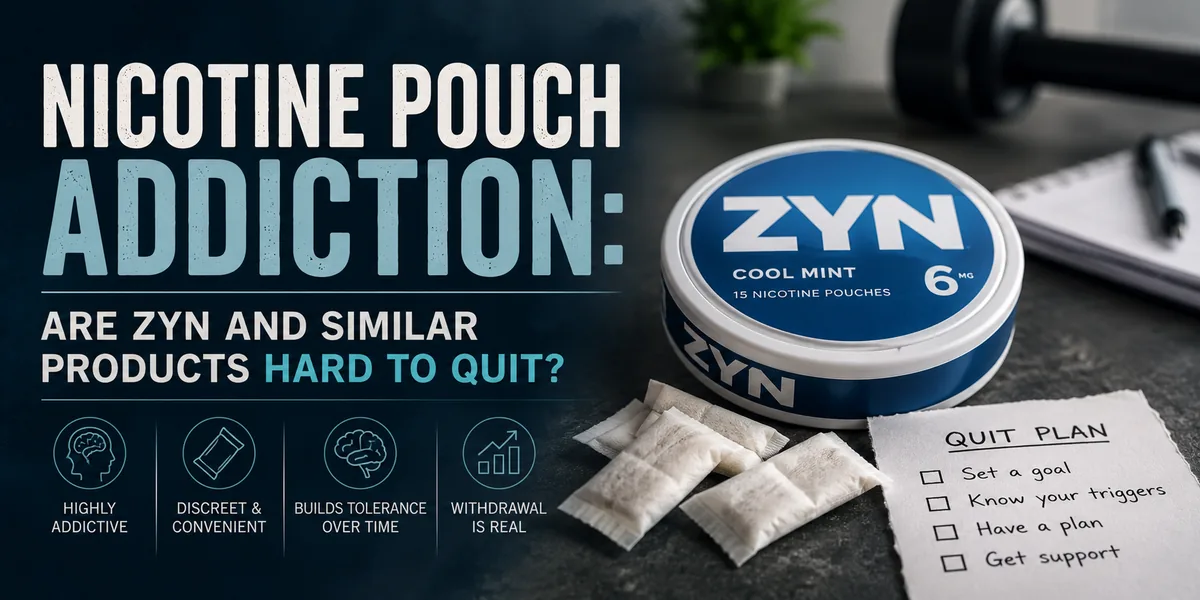
Nicotine pouch addiction can develop more quietly than cigarette or vaping addiction. Products such as Zyn, VELO, and On! do not create smoke, ash, or a noticeable vapor. A person can place a pouch under the lip at work, in the car, at school, or even in bed. That convenience can lead to near-constant nicotine use.
So, are Zyn pouches addictive? Yes. Nicotine is highly addictive, no matter whether it comes from a cigarette, vape, chewing tobacco, gum, or pouch. Some people can stop pouches without severe problems. Others experience powerful cravings, irritability, anxiety, poor concentration, and repeated failed attempts to quit.
Why Nicotine Pouches Can Be So Addictive
Nicotine pouches are placed between the gum and lip. Nicotine is then absorbed through the lining of the mouth and enters the bloodstream. The nicotine reaches the brain more slowly than it does after smoking a cigarette, but the dose can still be large enough to create dependence.
The amount of nicotine varies by product and strength. A 2025 review found that lower-strength pouches generally delivered less nicotine than cigarettes, while pouches containing 8 milligrams or more could produce similar or even greater total nicotine exposure. The amount absorbed also depends on how long the pouch remains in the mouth and how many pouches are used.
Pouches can become especially habit-forming because they are easy to use repeatedly. Smoking requires going outside in many places. Vaping may produce a visible cloud or smell. A pouch can remain hidden under the lip, allowing someone to use nicotine throughout the day.
Over time, the brain adjusts to regular nicotine exposure. The person may need stronger pouches, more pouches, or more frequent doses to feel the same effect. Eventually, using nicotine may stop feeling pleasurable and begin to feel necessary just to avoid withdrawal.
Signs of Zyn or Nicotine Pouch Addiction
Using nicotine pouches does not automatically mean someone has an addiction. The pattern becomes concerning when the person loses control or continues despite problems.
Common warning signs include:
- Using a pouch soon after waking
- Keeping a pouch in nearly all day
- Moving to stronger nicotine levels
- Using more pouches than intended
- Feeling anxious when the container is almost empty
- Trying to quit but quickly returning to use
- Becoming irritable or restless without nicotine
- Spending more money than planned
- Hiding pouch use from family or a partner
- Continuing despite mouth irritation, nausea, headaches, or sleep problems
Craving nicotine, being unable to stop, and developing tolerance are recognized signs of nicotine addiction.
Another warning sign is using pouches to manage every uncomfortable feeling. A person may reach for nicotine whenever they feel tired, bored, stressed, angry, or socially uncomfortable. This creates both a physical dependence and a powerful behavioral routine.
Someone who switched completely from cigarettes to nicotine pouches may have reduced exposure to many toxic chemicals produced by burning tobacco. In June 2026, the FDA allowed certain Zyn products to carry a specific modified-risk claim when used instead of cigarettes. However, the FDA also stresses that there is no safe tobacco product and that people who do not currently use nicotine should not start. Marketing authorization does not mean Zyn is harmless or approved as a quit-smoking medication.
What Happens When You Stop Using Nicotine Pouches?
Stopping nicotine pouches can trigger the same basic withdrawal process seen with other nicotine products. Symptoms vary depending on pouch strength, daily use, how long the person has used nicotine, and whether they also smoke or vape.
Nicotine withdrawal may include:
- Strong cravings
- Irritability or anger
- Anxiety and restlessness
- Difficulty concentrating
- Low mood
- Trouble sleeping
- Increased hunger
- Headaches
- Fatigue
- A feeling that something is missing from the daily routine
Withdrawal is uncomfortable, but it is usually not medically dangerous in the way that severe alcohol or benzodiazepine withdrawal can be. For most people, symptoms are strongest during the first few days or weeks and then gradually become less frequent. Cravings connected to stress, driving, meals, work, or social situations may continue longer.
Nicotine pouches may feel especially difficult to quit when someone has used them all day. The brain has received repeated nicotine doses from morning until night, while dozens of normal activities have become linked with placing a pouch under the lip.
A person may also underestimate their dependence because they are not smoking. They may think, “It is only a pouch,” even while using high-strength products every hour.
How to Quit Zyn and Other Nicotine Pouches
The first step is learning how much nicotine is actually being used. Write down the pouch strength, the number used each day, and the times when cravings are strongest. This creates a starting point and reveals triggers.
Some people choose a firm quit date. Others gradually reduce the number or strength of their pouches before stopping. A gradual plan might involve delaying the first pouch of the morning, creating nicotine-free parts of the day, switching to a lower strength, and carrying only the planned daily amount.
Remove extra cans from the home, vehicle, desk, and nightstand. Replace the mouth habit with sugar-free gum, mints, toothpicks, cold water, or crunchy snacks. During a craving, changing locations, walking for several minutes, or calling someone can help interrupt the automatic routine.
FDA-approved quit-smoking medications may also help manage nicotine withdrawal. These include nicotine patches, gum, and lozenges, as well as prescription varenicline and bupropion. Nicotine pouches themselves are not FDA-approved medications for quitting smoking or nicotine. A doctor or pharmacist can help determine which option is appropriate, especially for someone who uses strong pouches, has a medical condition, is pregnant, or takes other medications.
Quitting Zyn can be hard, but difficulty quitting does not mean failure. It means nicotine has changed the brain’s expectations. With a clear plan, support, and treatment when needed, those changes can gradually reverse—and life no longer has to revolve around the next pouch.


