





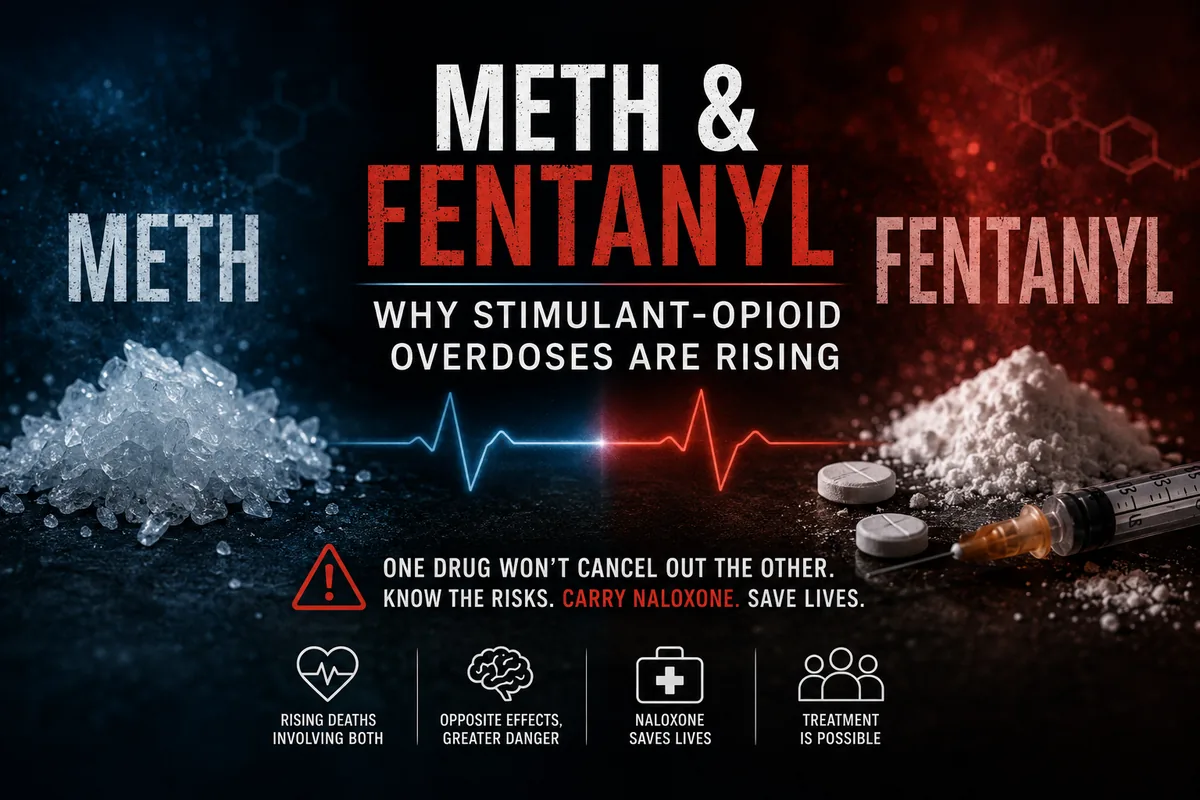
Mixing meth and fentanyl creates one of the most dangerous combinations in today’s illegal drug supply. Methamphetamine speeds up the heart, raises body temperature, and pushes the brain into overdrive. Fentanyl slows breathing and can cause unconsciousness within minutes. Together, they do not balance each other out. Instead, they place the body under two different forms of extreme stress and make a stimulant opioid overdose harder to recognize and treat.
CDC research shows how widespread this danger has become. From January 2021 through June 2024, nearly 69% of methamphetamine-involved overdose deaths also involved opioids. Overall, 73% of all stimulant-involved overdose deaths included an opioid.
Why Do People Combine Meth and Fentanyl?
Some people knowingly use methamphetamine and fentanyl together. This combination is sometimes called a “goofball,” similar to how heroin and cocaine used together may be called a speedball.
People may combine the drugs because they believe meth will help them stay awake after using fentanyl. Others may use meth to fight opioid-related tiredness, increase energy, work longer hours, or intensify the high. CDC-supported research has found that some people use stimulants to counter fentanyl’s sedating effects and remain alert or productive, especially during physically demanding work.
Other people may not realize both drugs are involved. The illegal drug supply is unpredictable, and powders or pills can contain substances that are not listed or expected. However, CDC researchers noted that drug-checking programs rarely found opioids in stimulant products in some recent samples. This suggests that many fatal meth-and-opioid combinations involved the intentional use of separate products rather than fentanyl contamination alone.
Whether the combination is intentional or accidental, the overdose risk remains high.
Why Meth Does Not Cancel Out Fentanyl
Meth is a stimulant. It may cause energy, alertness, rapid breathing, sweating, agitation, and a racing heart. Fentanyl is a powerful synthetic opioid that can slow or stop breathing. These opposite effects can create the false impression that one drug will block the other.
That is not what happens.
Meth may temporarily hide fentanyl-related sleepiness, but it does not remove fentanyl from the brain or prevent breathing from slowing. When the stimulant effect weakens, the fentanyl may still be active. A person who appeared awake could suddenly become unconscious or stop breathing.
At the same time, fentanyl does not protect the heart or brain from methamphetamine. Meth can cause dangerously high blood pressure, abnormal heart rhythms, overheating, heart attack, seizure, or stroke. Stimulants also make it harder for the body to control temperature and can worsen anxiety, paranoia, or psychosis.
The combination can therefore strain the heart while also depriving the brain of oxygen. A person may have both stimulant toxicity and an opioid overdose at the same time.
Why Stimulant-Opioid Overdose Deaths Increased
Stimulant-involved overdose deaths rose sharply over the past decade. The number of deaths involving psychostimulants—primarily methamphetamine—increased from 2,266 in 2011 to 34,855 in 2023. The methamphetamine-related overdose death rate increased from 3.9 per 100,000 people in 2018 to 10.4 in 2023, with the largest increases involving opioids.
Another CDC analysis found that 53.6% of nearly 70,000 fatal synthetic-opioid overdoses among people ages 15 to 64 in 2022 also involved cocaine or psychostimulants. The share of synthetic-opioid deaths involving stimulants more than doubled between 2018 and 2022.
There is some encouraging news. Provisional CDC data indicate that total overdose deaths and deaths involving opioids, cocaine, and psychostimulants declined during 2025. However, the estimated number of U.S. overdose deaths remained close to 70,000, and the latest figures are incomplete and subject to change.
The recent decline does not erase the long-term rise or the continuing risk created by fentanyl and stimulant co-use.
Signs of a Meth and Fentanyl Overdose
A stimulant opioid overdose may not look like a typical opioid overdose. The person may first appear restless, sweaty, frightened, or confused before becoming unresponsive.
Possible warning signs include:
- Slow, shallow, irregular, or stopped breathing
- Blue, gray, or unusually pale lips and skin
- Pinpoint pupils
- Limpness or inability to wake up
- Snoring, choking, or gurgling sounds
- Chest pain or a dangerously fast heartbeat
- Severe agitation, paranoia, or hallucinations
- High body temperature
- Seizure, collapse, or sudden confusion
Call 911 immediately when any of these symptoms occur. Do not wait for the person to “sleep it off,” and do not leave them alone.
Why Naloxone Is Still Important
Naloxone does not reverse methamphetamine. It does reverse opioid overdose, including overdose caused by fentanyl. Because fentanyl may be present, naloxone should be given whenever someone is unresponsive or has slow or stopped breathing after using drugs.
Give naloxone, call 911, and follow the product instructions. More than one dose may be needed. Provide rescue breathing or CPR if trained and stay with the person until emergency responders arrive. Naloxone will not harm someone who does not have opioids in their body. SAMHSA identifies opioid-overdose-reversal medications as essential tools for responding to suspected overdoses.
Naloxone will not treat overheating, seizures, chest pain, stroke, or meth-induced psychosis. Emergency medical care is still necessary even when the person wakes up.
Recovery from meth and fentanyl use is possible. Treatment may include medications such as buprenorphine or methadone for opioid use disorder, behavioral treatment, contingency management for stimulant use, medical care, and peer support. There is no FDA-approved medication specifically for stimulant use disorder, but effective behavioral treatments are available.
One drug never makes the other safe. Carry naloxone, avoid using alone, and seek treatment before another dose becomes a fatal stimulant opioid overdose.


