





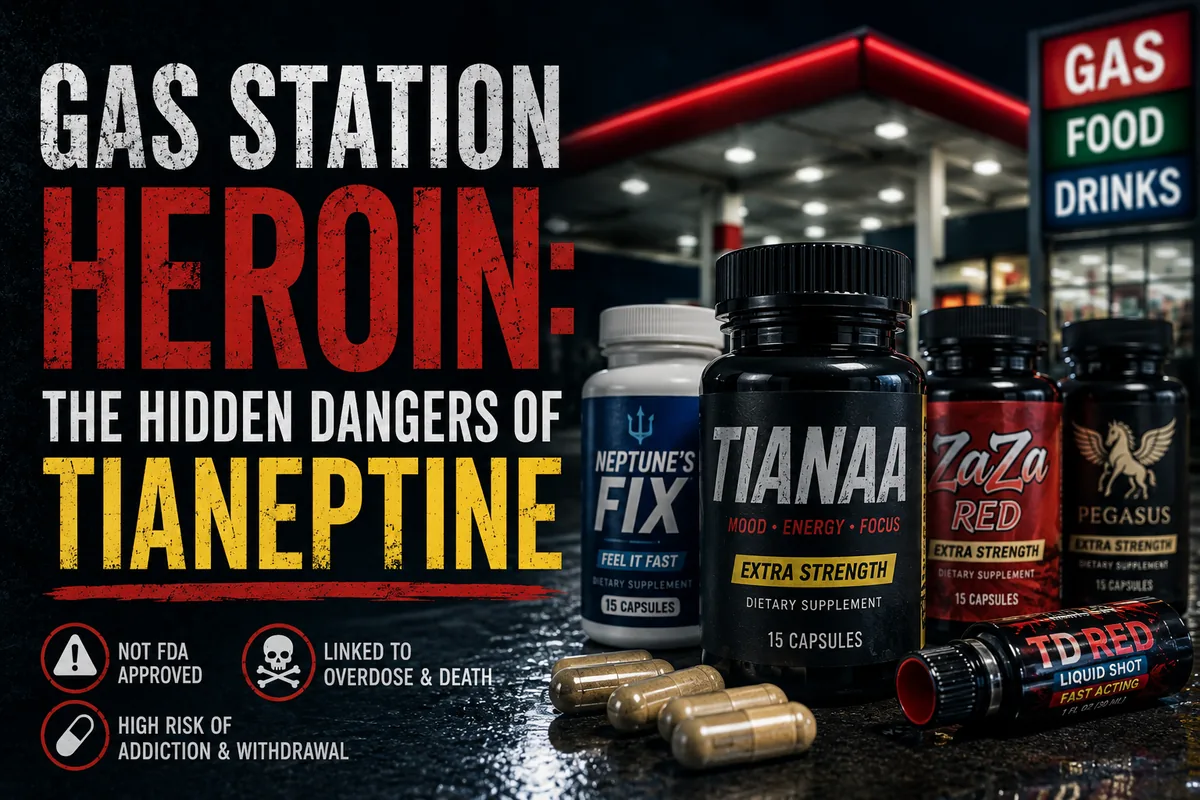
Gas station heroin is a nickname for tianeptine, an unapproved drug sold in some convenience stores, vape shops, gas stations, and online. The colorful bottles and capsules may look like ordinary supplements, but tianeptine acts on opioid receptors and can lead to overdose, dependence, and tianeptine addiction. The FDA warns that tianeptine is not approved for any medical use in the United States and has been connected to seizures, breathing problems, loss of consciousness, serious illness, and death.
What Is “Gas Station Heroin”?
Tianeptine is used as a prescription antidepressant in some countries, usually at controlled medical doses. It has never been approved by the FDA for depression, anxiety, pain, opioid withdrawal, or any other condition in the United States. The FDA also says it is not a lawful dietary ingredient and is not generally recognized as safe for use in food.
The name “gas station heroin” comes from two facts: these products can be easy to buy, and tianeptine activates mu-opioid receptors in the brain. These are the same receptor systems affected by heroin, fentanyl, and prescription opioids. At higher doses, tianeptine can produce euphoria and sedation. Regular use can also lead to dependence and opioid-like withdrawal.
Products have been sold under names such as Tianaa, ZaZa, Neptune’s Fix, Pegasus, and TD Red. Some labels describe them as supplements, nootropics, mood enhancers, or research products. Brand names and ingredients can change, so a familiar package does not guarantee a consistent dose or safe contents.
Why Tianeptine Products Are So Dangerous
Unapproved tianeptine products do not go through the testing, manufacturing controls, and dosing review required for FDA-approved medicines. A buyer may not know how much tianeptine is present or whether the product contains another drug.
That uncertainty has caused real emergencies. During a 2023 New Jersey outbreak, health officials investigated 20 tianeptine-related hospital encounters involving 17 patients. Many had taken Neptune’s Fix. Every patient had an altered mental state. Reported effects included rapid heartbeat, dangerously low blood pressure, seizures, abnormal heart rhythms, and cardiac arrest. Thirteen patients required intensive care, and seven needed breathing tubes. Testing found that some products also contained synthetic cannabinoids.
Mixing tianeptine with alcohol, benzodiazepines, opioids, kratom, gabapentin, sleep medications, or other sedating substances can make the effects more unpredictable. Routine urine drug screens may not detect tianeptine, which can make diagnosis harder unless the patient or family tells medical staff what was taken.
Warning Signs of Tianeptine Addiction
Tianeptine addiction can develop when repeated use begins changing a person’s behavior, priorities, and ability to stop. Someone may start using it for energy, mood, pain, or opioid withdrawal, then find that they need it simply to feel normal.
Possible warning signs include:
- Taking more capsules, bottles, or shots than intended
- Using several times per day or waking up to use
- Needing larger doses to experience the same effect
- Spending increasing amounts of money on products
- Hiding packages or lying about tianeptine use
- Continuing after blackouts, seizures, or emergency visits
- Trying to stop but returning because of withdrawal
- Missing work, family duties, or bills because of use
Signs of tianeptine poisoning can include extreme sleepiness, confusion, agitation, vomiting, sweating, rapid heartbeat, high blood pressure, slowed breathing, seizure, collapse, or coma.
Tianeptine Withdrawal Symptoms
Because tianeptine is relatively short acting, withdrawal may begin quickly when a dependent person cuts down or stops. Symptoms can feel similar to opioid withdrawal and may include intense cravings, anxiety, agitation, sweating, chills, goosebumps, muscle aches, diarrhea, nausea, vomiting, tremors, insomnia, rapid heartbeat, and high blood pressure.
Withdrawal can become severe, especially after frequent or high-dose use or when other substances are involved. A person should not assume that a store-bought product is safe to quit without support. Medical professionals can evaluate dehydration, heart symptoms, mental health risks, and the need for medication or supervised care.
When Tianeptine Use Requires Emergency Care
Call 911 immediately if someone cannot be awakened, has slow or difficult breathing, turns blue or gray, collapses, has a seizure, experiences chest pain, becomes severely confused, or shows signs of an abnormal heartbeat.
Give naloxone if it is available. Because tianeptine affects opioid receptors, naloxone may reverse some life-threatening effects, but it is not a substitute for emergency care. Stay with the person until emergency responders arrive.
For a person who is awake and breathing normally after a possible exposure, call Poison Control at 1-800-222-1222 for immediate guidance. Keep the bottle or package so professionals can see the product name and listed ingredients.
Tianeptine addiction is treatable. Care may include medical stabilization, supervised withdrawal, addiction treatment, counseling, peer support, and medication when an opioid use disorder is also present. Shame keeps people hiding; accurate information helps them act. A product sold beside snacks and energy drinks can still be a powerful opioid-like drug. Getting help early can prevent the next bottle from becoming a medical emergency.


