



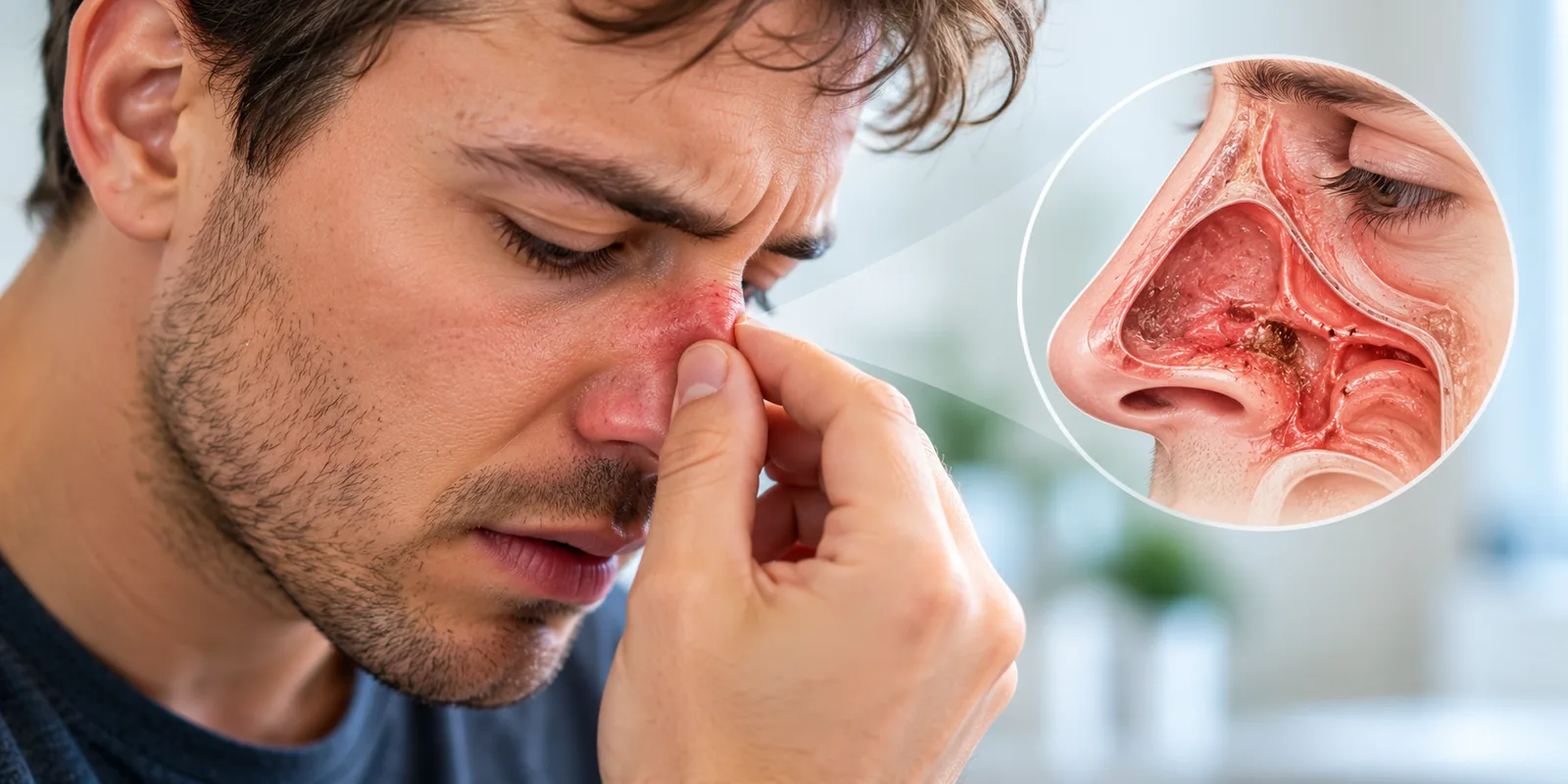


Coke nose is an informal term for the nasal irritation and damage that can develop from repeatedly snorting cocaine. At first, the signs may seem minor: a runny nose, congestion, dryness, or a little blood when you blow your nose. With continued use, however, cocaine can cause increasingly serious damage inside the nasal passages.
People searching for signs of coke nose may notice frequent nosebleeds, crusting, sores, sinus problems, reduced sense of smell, or pain inside the nose. Severe cases can involve destruction of the nasal septum and surrounding tissue.
The risk comes partly from the way cocaine affects blood vessels. When cocaine is snorted through the nose, it comes into direct contact with delicate nasal tissue while causing blood vessels to constrict. Repeated exposure can reduce blood flow and interfere with the tissue’s ability to stay healthy and heal.
Coke nose should not be dismissed as a cosmetic problem. It can be a warning that cocaine is causing real physical damage.
What Does Coke Nose Look and Feel Like?
There is no single appearance that defines coke nose.
Early cocaine nose damage may cause symptoms that resemble allergies or a sinus problem. The difference is that symptoms may repeatedly appear or become worse around cocaine use.
Common signs can include:
- Runny nose
- Chronic congestion
- Nasal dryness
- Crusting or scabs
- Bloody mucus
- Frequent nosebleeds
- Burning or tenderness
- Sores inside the nose
- Sinus pressure
- Reduced sense of smell
- Whistling when breathing
- Persistent post-nasal drainage
Repeated nosebleeds after cocaine use are particularly important to notice. Bleeding can occur when irritated, dry, or damaged tissue breaks open.
Someone may also experience a bitter drainage known as coke drip, where mucus and remaining material move down the back of the throat.
Why Does Cocaine Damage Your Nose?
Cocaine has a powerful effect on blood vessels.
After it contacts the nasal lining, blood vessels narrow. Reduced blood flow means the tissue receives less oxygen and fewer nutrients.
At the same time, powdered cocaine physically contacts and irritates the lining of the nose. Illicit cocaine may also contain other substances that can add to that irritation.
Repeated use can create a damaging cycle of:
- Dryness.
- Inflammation.
- Crusting.
- Bleeding.
- Poor healing.
- More cocaine exposure.
Someone may pick at scabs or aggressively blow their nose because it feels blocked, creating additional trauma.
Over time, small areas of irritated tissue can become ulcers or open sores.
Continuing to snort cocaine while these areas are trying to heal can make the damage progressively worse.
Can Coke Nose Cause a Hole in Your Septum?
Yes.
One of the most serious complications of long-term intranasal cocaine use is a perforated septum.
The septum separates the left and right sides of the nose. If its tissue repeatedly loses blood supply and becomes damaged, cartilage may begin to deteriorate.
Eventually, a hole in the septum from cocaine use can develop.
Possible symptoms include frequent crusting, bleeding, nasal obstruction, pain, and a whistling sound while breathing.
Severe cocaine-related nasal destruction may extend beyond the septum and affect other structures within the nose or surrounding areas.
If you can see an unusual opening inside your nose, experience persistent sores, notice structural changes, or have repeated foul-smelling drainage, an ear, nose, and throat specialist should evaluate the damage.
Can Your Nose Heal After Cocaine Use?
Some nasal irritation may improve after cocaine use stops, especially when damage is limited to inflammation, dryness, or superficial injury.
More advanced damage may not reverse on its own.
Destroyed cartilage does not simply grow back, and an established septal perforation may require specialized treatment.
A healthcare professional may recommend measures to keep nasal tissue moist, reduce crusting, manage infection when present, or protect damaged areas. Some septal perforations can be treated with a device called a septal button. Reconstructive surgery may be considered in certain cases.
The most important step is stopping further cocaine exposure.
Continuing to snort cocaine can interfere with healing and allow existing damage to progress.
Do not wait for your nose to visibly change before taking persistent symptoms seriously.
Coke Nose Can Be a Sign of a Bigger Cocaine Problem
If your nose repeatedly bleeds, hurts, develops sores, or stays congested and you continue using cocaine anyway, it may be worth looking beyond the nasal symptoms.
Cocaine addiction can make it difficult to stop even when someone clearly sees that the drug is harming their health.
Cocaine can also cause serious problems far beyond the nose. It can affect the cardiovascular system and brain, and a cocaine overdose can cause seizures, dangerous heart problems, stroke, loss of consciousness, or death. Illicit cocaine may also contain fentanyl or other unexpected substances.
People who stop after regular cocaine use may experience fatigue, depression, cravings, sleep changes, and other cocaine withdrawal symptoms.
Those symptoms can make quitting difficult, but help is available.
Professional addiction treatment can address cravings, triggers, mental health symptoms, and the behaviors surrounding cocaine use. People who need additional structure may benefit from an inpatient addiction treatment program.
Coke nose does not begin with a collapsed nose or a large hole in the septum.
It often begins with symptoms that are easy to ignore.
- A runny nose.
- A little blood.
- A scab that keeps returning.
- Listen to those early warnings.
Stopping cocaine now may give irritated tissue a chance to recover—and may prevent much more serious damage later.


