



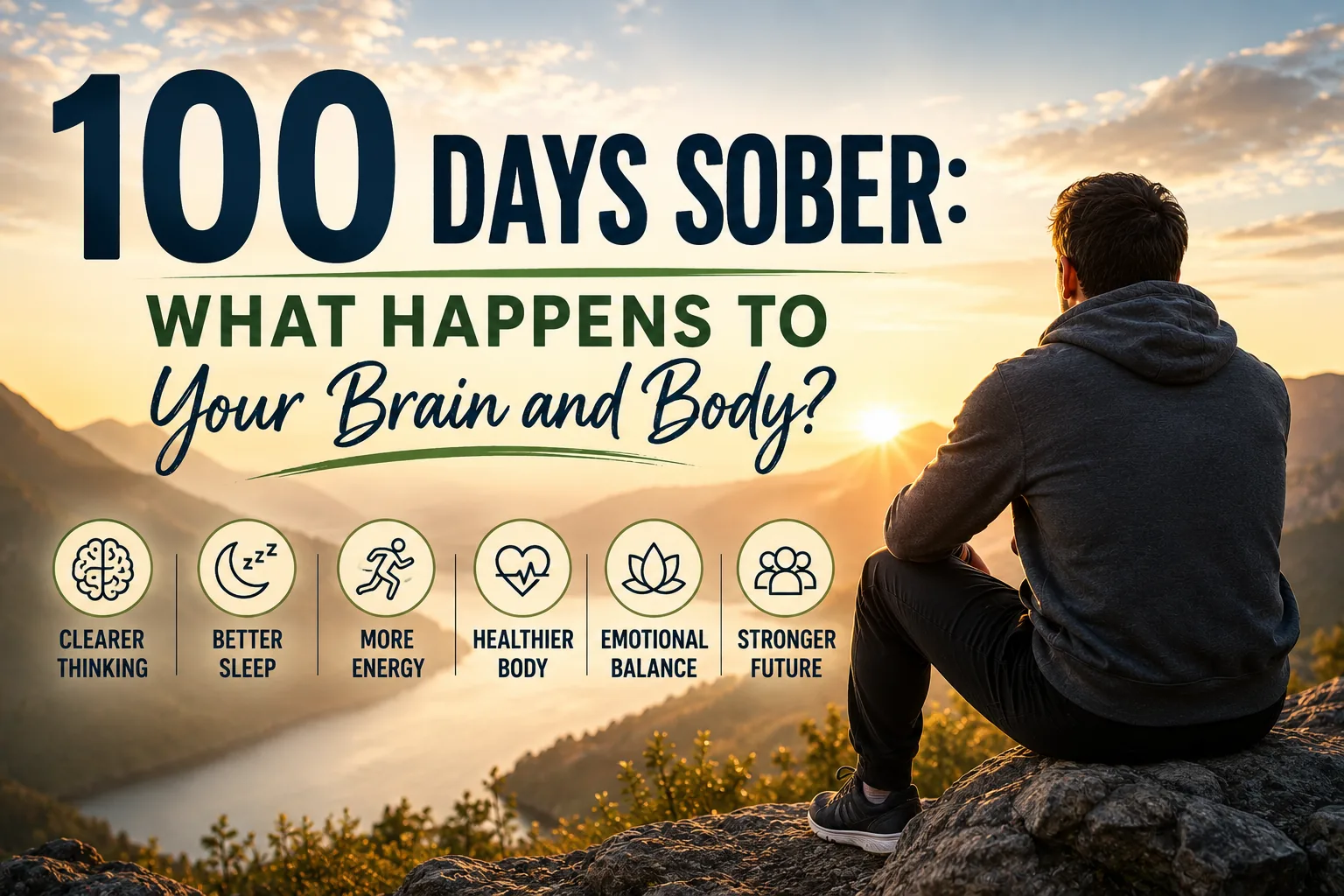


Reaching 100 days sober is a meaningful milestone in addiction recovery. By this point, the intense withdrawal period is usually behind you, daily routines may feel more natural, and your body and brain have had more than three months without repeated exposure to drugs or alcohol.
For many people, 100 days of sobriety can bring noticeable physical and emotional changes.
Sleep may be more consistent.
Energy may improve.
Thinking may feel clearer.
Cravings may be less frequent.
Relationships may begin to feel more stable.
But recovery does not follow a perfect calendar. What happens to your brain and body after 100 days sober depends on the substance used, how long it was used, overall health, nutrition, sleep, mental health, medications, and the amount of recovery support available.
One hundred days is not complete healing.
It is evidence that healing is already happening.
What Happens to Your Brain After 100 Days Sober?
Long-term alcohol and drug use can affect brain systems involved in reward, motivation, memory, decision-making, stress, and impulse control.
When substances are removed, the brain begins adjusting.
That process takes time.
During the first few weeks, someone may experience brain fog, trouble concentrating, emotional instability, or difficulty enjoying activities without substances.
By around 90 to 100 days sober, some people begin noticing improvements such as:
- Clearer thinking
- Better concentration
- Improved memory
- Greater motivation
- Better decision-making
- More emotional awareness
- Less mental fog
These improvements can make everyday life feel different.
You may find it easier to complete work.
Follow conversations.
Remember appointments.
Make plans.
Think before reacting.
But the brain may still be healing.
Some people continue experiencing low motivation, anxiety, irritability, sleep problems, or difficulty experiencing pleasure.
Recovery is not always a straight line.
You may have several great days followed by one difficult day.
That does not mean you are moving backward.
Your Reward System Is Learning Something New
Addiction can train the brain to expect a powerful chemical reward from alcohol or drugs.
Ordinary activities may begin feeling less satisfying.
Food.
Exercise.
Relationships.
Music.
Hobbies.
Work.
When substance use stops, the brain has to relearn how to respond to everyday rewards.
At 100 days sober, some people begin noticing that normal experiences feel enjoyable again.
You may actually look forward to dinner with family.
Exercise may feel rewarding.
You might rediscover music, hobbies, nature, or interests that disappeared during addiction.
This shift can be subtle.
But it matters.
Recovery becomes stronger when life itself begins providing reasons to stay sober.
Physical Changes After 100 Days Without Drugs or Alcohol
The body can also change significantly during the first several months.
Depending on the substance and your health, you may notice:
- Better sleep
- More stable energy
- Improved hydration
- Better digestion
- More regular appetite
- Improved exercise tolerance
- Healthier skin or appearance
- Fewer hangovers or withdrawal symptoms
- More predictable mornings
Someone who once spent mornings recovering from substance use may now wake up, eat breakfast, exercise, or go to work without feeling physically destroyed.
That can feel like getting hours of your life back every day.
Alcohol recovery may also give the liver, digestive system, cardiovascular system, and nervous system time away from repeated alcohol exposure.
Recovery from other drugs may improve nutrition, sleep, hydration, and physical stability.
However, sobriety does not automatically reverse every health problem.
Medical care is still important.
If you have ongoing symptoms, regular checkups and honest conversations with healthcare providers should remain part of your recovery plan.
Sleep and Energy May Become More Predictable
Sleep is one of the areas that can take time to normalize.
During the first 30 days sober, some people struggle to sleep at all.
Others sleep constantly.
By 100 days, a more consistent sleep-wake schedule may begin developing.
Better sleep can influence almost everything else.
Mood.
Energy.
Concentration.
Stress tolerance.
Exercise.
Cravings.
When you are exhausted, small problems can feel enormous.
When you are rested, you may have more emotional space to handle them.
This is why maintaining a daily routine in addiction recovery remains valuable even after the earliest stage has passed.
Regular sleep, meals, exercise, treatment, and social connection create stability.
Emotional Recovery Can Still Be Complicated
Physical progress does not always mean emotional recovery feels easy.
At 100 days sober, you may be thinking more clearly than you have in years.
That clarity can bring difficult realizations.
You may think about relationships you damaged.
Money you lost.
Opportunities you missed.
Family members you hurt.
Time spent in addiction.
Guilt and regret can become powerful.
But this stage can also bring hope.
You now have more than three months of evidence showing that change is possible.
Recovery gives you the opportunity to respond differently to your past.
You may not be able to change what happened.
You can change what happens next.
Do Cravings Still Happen After 100 Days?
Yes.
Some people experience very few cravings by this point.
Others still have them regularly.
Triggers can appear unexpectedly.
A stressful workday.
An argument.
A familiar neighborhood.
A celebration.
A song.
Seeing someone from your past.
Even feeling extremely happy can trigger thoughts about using.
This is why your relapse prevention plan should remain active even when recovery feels stable.
Know your warning signs.
Stay connected to your recovery support system.
Do not assume that feeling better means you no longer need the things that helped you get better.
One of the biggest risks in early recovery can be confidence turning into complacency.
Your Life May Begin Expanding
At first, sobriety is about not drinking or using.
By 100 days, recovery may start becoming about much more.
Work.
Relationships.
Money.
Health.
Education.
Fitness.
Parenting.
Hobbies.
Purpose.
You may begin thinking about where you want to be six months or one year from now.
That is an important transition.
Your recovery capital may also be growing.
Maybe you now have sober friends.
A counselor.
A sponsor.
Stable housing.
A job.
Savings.
A healthier routine.
Each of those resources gives you another reason and another tool to protect your recovery.
One Hundred Days Is Proof of Progress
At 100 days sober, your brain and body are still recovering.
But you may already be living very differently.
The person who struggled through the first 24 hours has now experienced more than 2,000 hours without using.
That matters.
Continue treatment or aftercare when needed.
Keep your routines.
Stay connected.
Pay attention to triggers.
Take care of your physical and mental health.
One hundred days is not the end of recovery.
It is a strong foundation for what comes next.
And over time, sobriety can become less about counting days and more about building a life you no longer want to escape from.


