



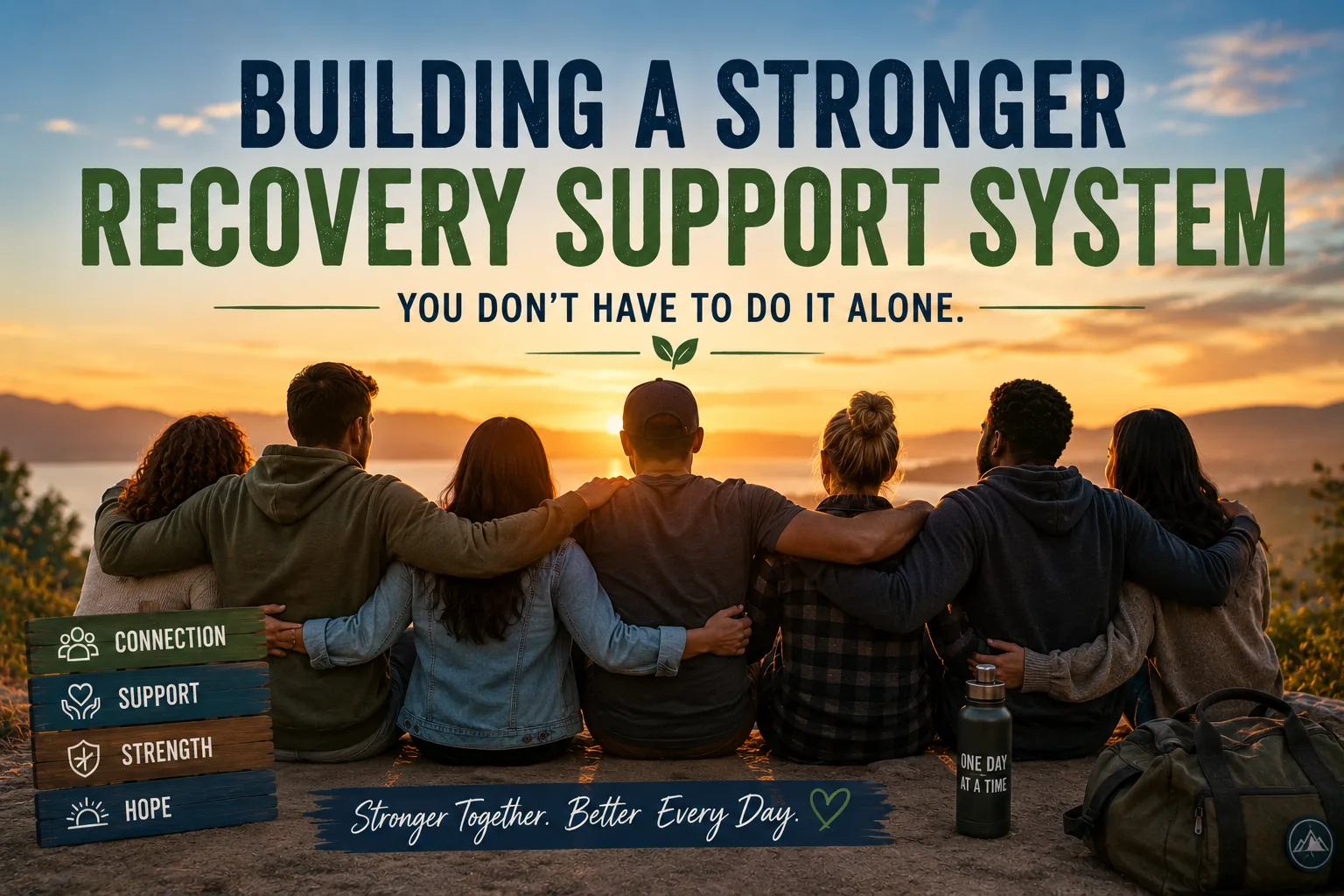


A recovery support system can make a major difference in whether someone feels alone or supported while rebuilding life after addiction. Recovery can be difficult, especially during stressful moments, cravings, relationship problems, or major life changes. Having people you can call, places you can go, and resources you can rely on gives you more options when things feel overwhelming.
A strong support system does not have to be huge.
You do not need dozens of friends.
You need the right people.
The goal is to build a network that encourages healthy choices, supports your recovery goals, and helps you stay connected when your first instinct may be to isolate.
What Is a Recovery Support System?
A recovery support system is the group of people, services, and resources that help someone maintain long-term addiction recovery.
It may include:
- Family members
- Sober friends
- Sponsors
- Recovery coaches
- Counselors
- Doctors or treatment providers
- Peer-support groups
- Faith communities
- Sober living residents
- Supportive coworkers
- Alumni programs
Some people begin recovery with a strong family and social network.
Others may have almost nobody.
That does not mean they cannot build one.
In fact, creating a healthy network can become one of the most important parts of rebuilding your life after addiction.
Start With People Who Support Your Recovery
Not everyone in your life belongs in your recovery support system.
That can be difficult to accept.
Someone may be a longtime friend but still pressure you to drink.
A family member may love you but constantly create chaos.
An old friend may remind you of good times while ignoring what substance use eventually cost you.
Ask yourself a simple question:
Does this person make my recovery stronger or weaker?
Healthy recovery relationships do not have to be perfect.
But they should respect your decision to change.
The people closest to you should not encourage substance use, make fun of your recovery, or repeatedly pull you into situations that put your sobriety at risk.
Sometimes building a stronger future requires creating distance from parts of your past.
Build Sober Friendships
One of the biggest challenges in early recovery is figuring out what to do socially.
If most of your friendships involved drinking or drug use, getting sober can feel lonely.
That loneliness can become dangerous if it leads to isolation.
This is where sober friendships matter.
You may meet people through recovery meetings, treatment programs, sober living, volunteer groups, fitness communities, faith organizations, or other healthy activities.
Sober friends can understand experiences that other people may not.
They know what cravings feel like.
They understand why certain places may be risky.
They may recognize relapse warning signs before you do.
And sometimes they are the people you can call at 11 p.m. when nobody else understands why you are struggling.
Use Peer Support and Recovery Groups
Peer-support groups can provide both structure and connection.
Some people choose 12-step programs such as Alcoholics Anonymous or Narcotics Anonymous.
Others prefer SMART Recovery, faith-based recovery groups, or other community programs.
There is no single group that works for everyone.
The important thing is finding support that helps you stay accountable, connected, and focused on recovery.
Going to a meeting is not just about sitting in a room.
Over time, you may begin recognizing familiar faces.
You start talking before or after meetings.
Someone gives you their phone number.
You call when you are struggling.
Those small connections can grow into real recovery relationships.
Stay Connected to Professional Support
Friends and family can be incredibly helpful, but they are not replacements for professional care.
Addiction recovery may involve:
- Outpatient treatment
- Counseling
- Psychiatric care
- Medication management
- Addiction medicine
- Recovery coaching
- Family counseling
Professional support can help address issues that friends may not know how to handle.
Depression, anxiety, trauma, grief, relationship problems, or intense cravings may require more than a conversation with a friend.
This is especially important during life after rehab, when someone is transitioning from a highly structured treatment environment back into everyday life.
Ongoing care can provide another layer of stability.
Let Family Support Recovery Without Controlling It
Family can play a powerful role in recovery.
But healthy family support does not mean monitoring every move or trying to control another adult’s life.
Support might mean:
Listening without immediately criticizing.
Offering transportation to treatment.
Participating in family counseling.
Respecting boundaries.
Encouraging healthy routines.
Learning about addiction and relapse.
Family members may also need their own support.
Addiction affects more than the person using substances. Loved ones may carry fear, resentment, guilt, anger, or exhaustion.
Recovery can become stronger when the entire family learns healthier ways to communicate.
Know Who to Call Before You Need Them
Do not wait until a crisis to figure out who can help.
Create a short list of people you can contact when recovery feels shaky.
You might include:
One person you can call during a craving.
One professional you can contact when your mental health becomes difficult.
One person who will tell you the truth even when you do not want to hear it.
One person you can spend time with when isolation starts creeping in.
This can become part of your relapse prevention plan.
The idea is simple.
When something goes wrong, you already know what to do next.
Your Support System Can Grow Over Time
Recovery support is part of recovery capital—the resources and relationships that make recovery stronger.
You may begin with only one supportive person.
That is enough to start.
Then you meet someone in treatment.
You attend a meeting.
You repair a relationship with a sibling.
You find a counselor you trust.
You join a gym or volunteer somewhere.
Over time, the network grows.
Eventually, you may become part of someone else’s recovery support system too.
That is one of the remarkable things about recovery.
The person who once needed someone to answer the phone can eventually become the person answering it.
Connection Makes Recovery Stronger
Addiction often grows in isolation.
Recovery usually grows through connection.
You do not need to tell everyone your story.
You do not need hundreds of people around you.
You need people who understand what you are trying to protect.
Build relationships with people who encourage growth, honesty, accountability, and hope.
Stay connected when things are going well.
Reach out when they are not.
A strong recovery support system cannot prevent every difficult moment.
But it can make sure you do not have to face those moments alone.


