



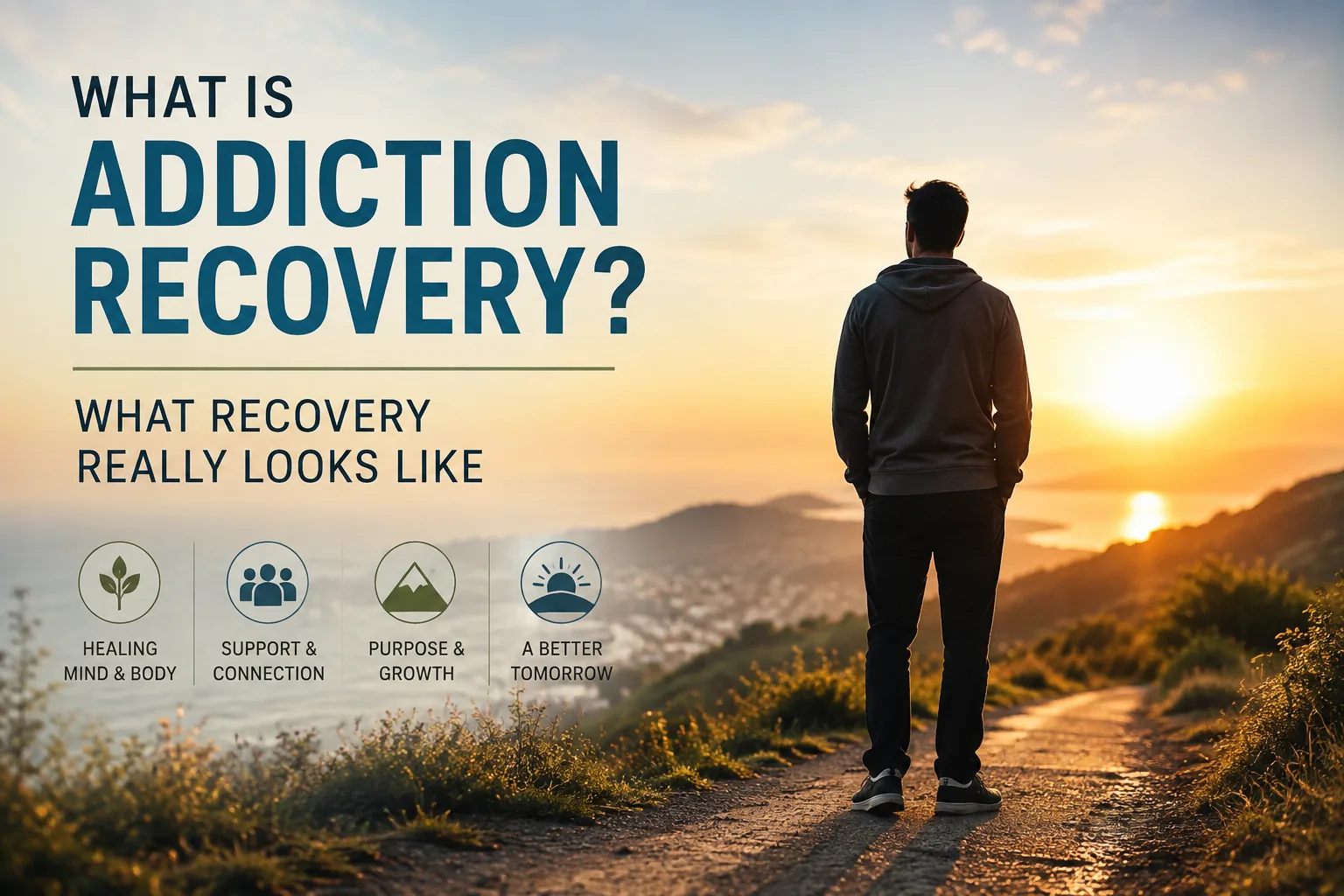


Addiction recovery is more than simply stopping drugs or alcohol. It is the process of rebuilding a life that no longer revolves around getting, using, hiding, or recovering from substances. Understanding what recovery looks like can be difficult from the outside because there is no single path, timeline, or finish line.
For some people, recovery begins in a hospital or detox center. Others start in residential treatment, outpatient care, a recovery meeting, sober living, or with one honest conversation with someone they trust.
The beginning can feel overwhelming. Sleep may be difficult. Emotions can come back intensely. Relationships may be damaged. Money, work, health, or legal problems may still need attention.
Yet recovery can also become something much bigger than sobriety.
It can become the process of getting your life back.
What Does Addiction Recovery Mean?
Addiction can gradually change a person’s priorities. Things that once mattered—family, health, work, friendships, hobbies, goals—may become less important as substance use takes control.
Recovery begins to reverse that process.
At first, the goal may simply be:
Don’t use today.
Over time, the goals often become bigger.
A person may begin repairing relationships, finding stable housing, returning to work, improving physical health, treating mental health conditions, managing money, rebuilding trust, or discovering interests that disappeared during addiction.
This is why sobriety and recovery are related but are not always exactly the same thing.
Sobriety usually refers to not using alcohol or drugs. Recovery includes learning how to live without needing them.
That difference matters.
Someone can stop using substances but still struggle with isolation, anger, dishonesty, untreated trauma, unhealthy relationships, or constant cravings. Long-term recovery often means addressing the problems underneath and around the addiction, not simply removing the substance.
What Recovery Really Looks Like
Movies sometimes make addiction recovery look dramatic: someone reaches rock bottom, enters rehab, has a breakthrough, and suddenly everything changes.
Real recovery usually looks much less perfect.
It may look like getting out of bed when depression says not to.
It may mean calling someone during a craving instead of calling a dealer.
It can mean attending an appointment you wanted to cancel, apologizing without expecting immediate forgiveness, finding new friends, learning how to handle anger, or going to sleep early because you know exhaustion is dangerous for you.
Recovery may include addiction treatment, medications, counseling, 12-step programs, peer recovery groups, faith communities, exercise, family support, recovery coaching, or sober living.
Different people need different combinations of support.
There is no prize for recovering with the least amount of help.
In fact, one of the biggest changes in recovery is often learning how to ask for help before a situation becomes a crisis.
The Stages of Addiction Recovery
Recovery changes over time.
During early recovery, much of a person’s attention may be focused on staying safe and creating stability. This can include getting through withdrawal, managing cravings, avoiding people or places connected with substance use, developing a routine, and building a recovery support system.
As recovery continues, life often begins expanding.
Someone may start thinking less about simply surviving the day and more about rebuilding their future. Work, education, relationships, physical health, finances, hobbies, parenting, and personal goals can become important again.
Long-term recovery does not mean a person never struggles.
Stress still happens.
Relationships still hurt.
People lose jobs, experience grief, get sick, argue with family members, and have bad days.
The difference is learning how to experience those moments without automatically returning to alcohol or drugs.
That is a major part of building a life in recovery.
Recovery Is Not Always a Straight Line
Some people remain continuously sober after beginning recovery. Others experience a lapse or addiction relapse along the way.
A relapse should always be taken seriously, particularly with opioids such as fentanyl because tolerance can decrease during periods of abstinence and overdose risk may rise.
But a setback does not erase every healthy decision that came before it.
What matters next is action.
Someone who has returned to substance use may need to reconnect with treatment, tell their support system what happened, review their relapse warning signs, develop a stronger relapse prevention plan, or move to a higher level of care.
Recovery is not about pretending mistakes never happen.
It is about learning how to respond differently when life becomes difficult.
Signs That Recovery Is Growing
Progress is not measured only by the number of sober days.
Recovery may be getting stronger when someone:
- Asks for help before a crisis
- Keeps treatment appointments
- Builds healthy daily routines
- Handles cravings without using
- Sets boundaries with unhealthy people
- Takes responsibility for past behavior
- Begins repairing damaged relationships
- Finds supportive sober friendships
- Takes better care of physical and mental health
- Develops goals that have nothing to do with substances
- Learns how to experience uncomfortable emotions
- Begins enjoying life again
Some changes happen quickly. Others can take years.
Trust may return slowly. The brain and body may need time to heal. Family members may still be afraid. Financial or legal problems may not disappear simply because someone stopped using.
Recovery requires patience.
Recovery Can Become More Than Staying Sober
In the beginning, people often ask:
“How am I supposed to live without drugs or alcohol?”
Later, many begin asking a different question:
“What do I want my life to become?”
That shift is powerful.
Recovery can mean being present for your children. It can mean answering the phone without fear, waking up without wondering what happened the night before, keeping promises, rebuilding relationships, finding meaningful work, helping another person, or simply feeling comfortable in your own life again.
There is no perfect version of addiction recovery.
There is only progress.
You do not have to rebuild everything at once. Recovery often starts with one decision, followed by another, and then another.
If addiction has taken over your life—or the life of someone you love—help is available. Treatment can provide the medical care, structure, support, and tools needed to begin.
Stopping the substance may be the first step.
Recovery is learning how to live again.


