





A relapse can turn a calm household into a crisis very quickly.
Someone starts drinking again.
A loved one disappears for hours.
A person who had been in recovery returns to opioids.
Suddenly the family is trying to decide:
Who should we call?
Should we take them to treatment?
Is this an overdose?
Who will care for the children?
Should we hold an intervention?
Families often try to answer these questions in the middle of panic.
That is exactly why an emergency relapse plan can help.
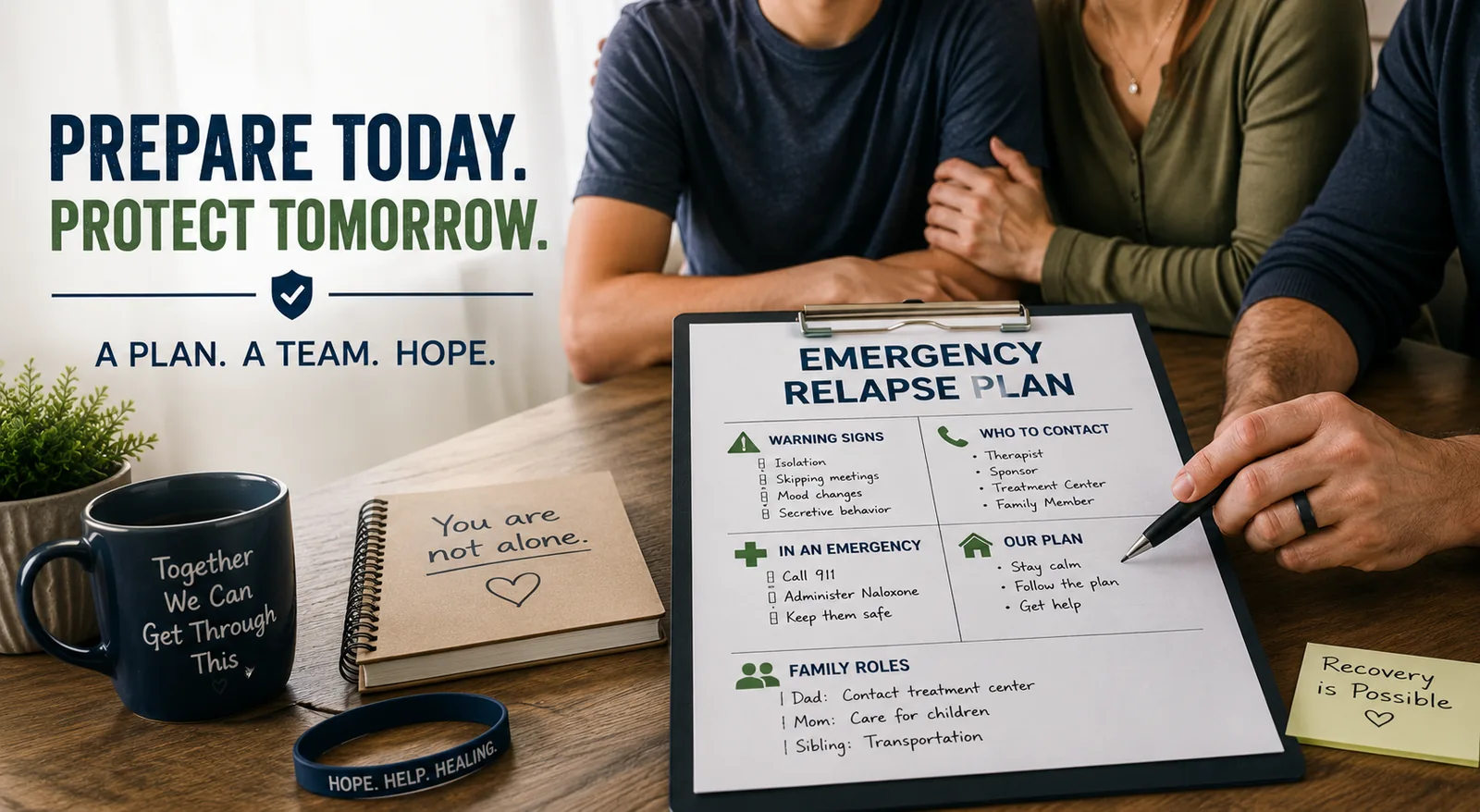
A relapse plan is a written agreement that explains what the family will do if substance use returns, warning signs appear, or the person becomes medically unsafe.
The best time to create that plan is before the emergency happens.
Know the Early Signs of Relapse
An emergency relapse plan should begin with warning signs.
Relapse does not always begin with someone visibly intoxicated.
Sometimes the first signs are behavioral.
The person stops going to meetings.
They cancel counseling.
They isolate.
They reconnect with people associated with past substance use.
Sleep changes.
Money disappears.
They become secretive.
You may hear:
“I don’t need treatment anymore.”
“I can handle one drink.”
“Everyone is overreacting.”
Families should write down the warning signs that have appeared in the past.
For example:
Early warning signs:
- Missing treatment appointments
- Increased isolation
- Borrowing money
- Staying out overnight
- Contacting old drug-using friends
- Major mood changes
- Talking positively about past substance use
- Hiding medications or alcohol
If several warning signs appear together, the family does not have to wait for a full relapse before acting.
The plan might say:
“If three warning signs appear, we will contact the treatment provider and schedule an assessment.”
That creates a clear response instead of an emotional argument.
Decide What Counts as an Emergency
Not every relapse requires calling 911.
But some situations absolutely do.
Families should know the difference.
Emergency warning signs can include:
- The person cannot be awakened
- Breathing becomes very slow or stops
- Lips or skin turn blue or gray
- A seizure occurs
- Severe chest pain develops
- The person is dangerously confused
- There are signs of overdose
- The person threatens violence
- There is immediate danger to children or other family members
If opioids may be involved, families should know where naloxone is kept and how to use it.
Do not hide naloxone in a drawer that nobody can find during an emergency.
Put it somewhere accessible.
Make sure more than one family member knows where it is.
An emergency plan should clearly state:
“If overdose is suspected, give naloxone if available and call emergency services.”
Do not waste valuable time arguing about whether the person “really overdosed.”
Safety comes first.
Create a Contact List Before the Relapse Happens
During a crisis, nobody wants to search through old emails looking for a counselor’s phone number.
Write everything down.
Your emergency relapse contact list might include:
The addiction treatment provider.
Primary care provider.
Psychiatrist.
Therapist.
Recovery coach.
Sponsor.
Trusted family member.
Preferred detox facility.
Preferred treatment center.
Insurance information.
Emergency contact.
Pharmacy.
Keep the list somewhere accessible.
You can also save the important numbers in multiple family members’ phones.
The goal is simple:
When something happens, the family already knows who to call.
Decide Who Will Handle Specific Responsibilities
A relapse often affects more than the person using substances.
Children still need to go to school.
Pets need care.
Someone may need transportation.
The household may need financial protection.
One person cannot manage everything.
Assign roles beforehand.
For example:
Person A: contacts the treatment provider.
Person B: stays with the children.
Person C: handles transportation.
Person D: communicates with other family members.
If children are involved, decide who can safely care for them if the parent is intoxicated or hospitalized.
That may be a grandparent, aunt, uncle, or trusted family friend.
Children should not be expected to manage the crisis.
They should not be asked to monitor whether someone is breathing or keep track of how much a parent has used.
Those are adult responsibilities.
Agree on Boundaries Before Emotions Take Over
Relapse can create enormous pressure.
Someone may ask for money.
Beg for a place to stay.
Promise they will stop tomorrow.
Families need boundaries before those conversations happen.
The plan might include statements such as:
“We will pay directly for treatment but will not give cash during active substance use.”
“No drugs or alcohol are allowed in the home.”
“The person cannot drive children while intoxicated.”
“We will help with transportation to treatment.”
“We will not lie to employers or other family members to cover substance use.”
Boundaries should be realistic.
Do not include consequences that nobody intends to enforce.
A plan only works if the family follows it.
Decide When an Intervention Will Happen
An intervention does not need to be the first response to every relapse.
If the person admits what happened and immediately reconnects with treatment, a formal intervention may not be necessary.
But families should decide ahead of time when an intervention will be considered.
For example:
“If substance use continues for more than several days and treatment is refused, we will contact an addiction professional about an intervention.”
Or:
“If there is another overdose or serious safety incident, we will organize an intervention and have treatment available.”
Setting that threshold beforehand helps families avoid waiting indefinitely while the situation gets worse.
If an intervention becomes necessary, treatment options should ideally already be researched.
Know where the person can go.
Know whether detox is required.
Know how admission works.
Know how transportation will happen.
Include a Treatment Re-Entry Plan
The emergency plan should not end with:
“Stop using.”
It should explain how the person returns to care.
That might include calling their previous counselor.
Scheduling a substance use assessment.
Returning to outpatient treatment.
Entering detox.
Considering residential care.
Restarting recovery meetings.
Meeting with a medical or psychiatric provider.
A relapse may require a stronger level of treatment than before.
It may also reveal a new trigger that needs attention, such as depression, grief, relationship problems, chronic pain, or poor sleep.
The goal is not simply to end the immediate episode.
It is to prevent the next one.
Review the Plan Regularly
Recovery changes.
Treatment providers change.
Insurance changes.
Triggers change.
People move.
A relapse plan written two years ago may no longer be useful.
Review it every few months or after any significant treatment change.
Update phone numbers.
Update treatment options.
Replace expired naloxone.
Discuss what worked and what did not after previous crises.
A good emergency relapse plan should evolve with recovery.
A Plan Replaces Panic With Action
Families cannot prevent every relapse.
But they can decide how they will respond.
That can make a frightening situation much easier to manage.
Instead of arguing, everyone knows the boundaries.
Instead of searching for treatment, options are already available.
Instead of wondering whether an intervention is necessary, the family has already discussed when one should happen.
Instead of leaving children in the middle of chaos, another caregiver is ready.
An emergency relapse plan does not assume failure.
It assumes preparation.
Recovery can have difficult moments.
The goal is to make sure that when one happens, the family does not have to invent a response while emotions are at their highest.
Write the plan while things are calm so you know what to do when they are not.


