



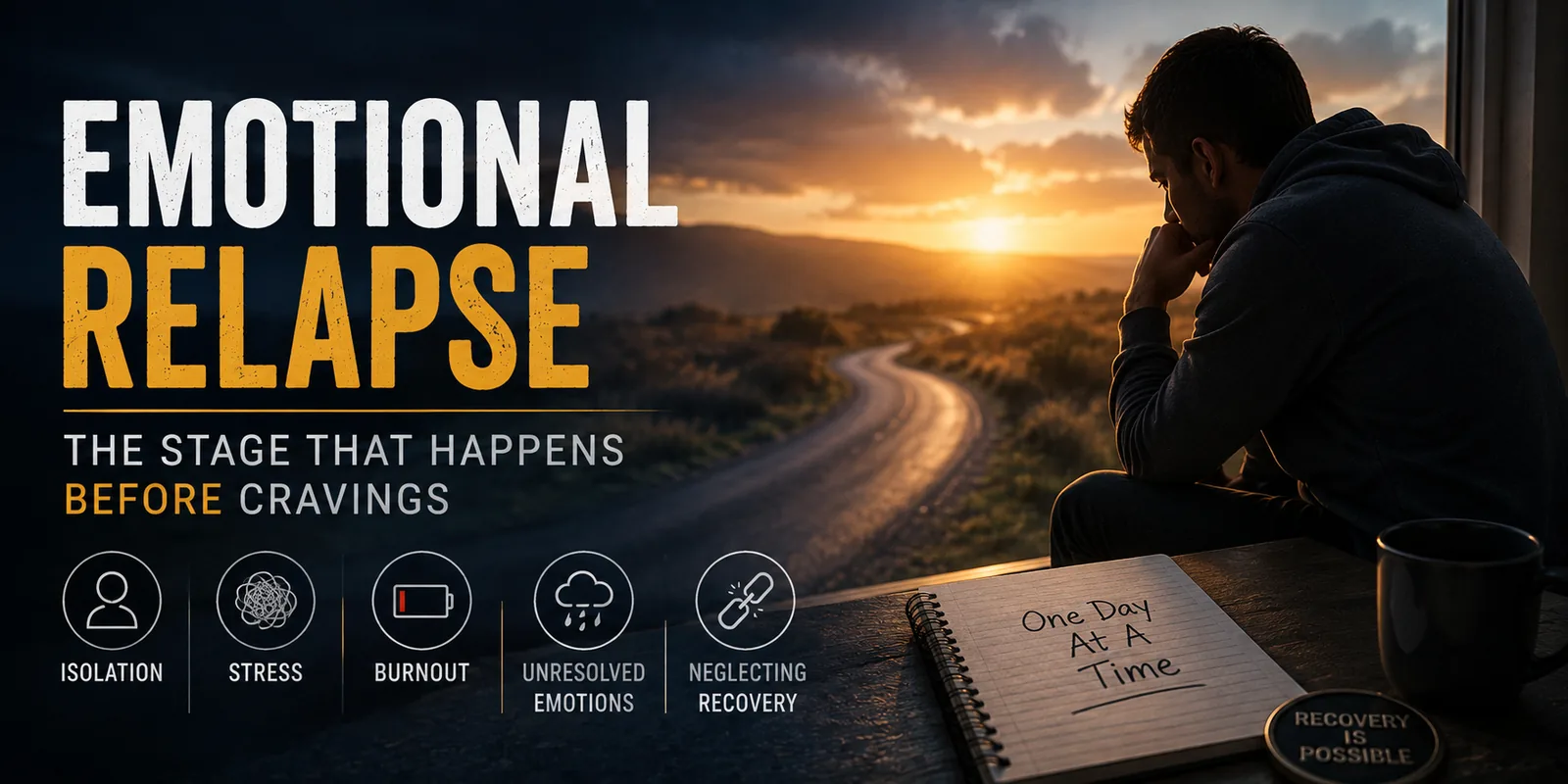


An emotional relapse can begin before a person consciously wants alcohol or drugs. There may be no craving, no plan to use, and no contact with old dealers or drinking friends. Instead, the first signs can be much quieter.
Sleep gets worse. Stress piles up. Anger stays bottled inside. Recovery meetings get skipped. Someone stops returning calls. Meals become irregular. They isolate from the people who usually support them.
On the surface, they may still be sober.
But underneath, the habits that helped protect their recovery are starting to weaken.
Many relapse-prevention models describe relapse as developing in stages: emotional, mental, and physical relapse. Emotional relapse is often the earliest stage. The person may not be thinking about using at all, but their emotions and behaviors are moving them toward greater risk.
That is what makes this stage so important.
If you can recognize emotional relapse early, you may be able to strengthen your recovery before cravings become intense.
What Is Emotional Relapse?
Emotional relapse is not a formal medical diagnosis. It is a way of describing the emotional and behavioral changes that can happen before someone begins actively thinking about drinking or using drugs.
At this point, a person may honestly say:
“I don’t want to use.”
And they may mean it.
The warning signs are often found in how they are living rather than what they are thinking about drugs.
Possible signs include:
- Isolating from friends or family
- Keeping emotions bottled up
- Becoming more irritable or angry
- Sleeping poorly
- Eating irregularly
- Feeling constantly stressed
- Stopping exercise or healthy routines
- Missing counseling or recovery meetings
- Refusing to ask for help
- Feeling burned out
- Neglecting basic self-care
- Becoming increasingly anxious or depressed
One bad day does not mean someone is relapsing.
The concern is when these changes become a pattern.
Why Emotional Relapse Can Happen Before Cravings
Imagine someone who has been sober for eight months.
During early recovery, they take their sobriety seriously. They attend treatment, talk with supportive people, exercise, sleep regularly, and avoid places associated with past drug use.
Then work gets stressful.
They stop exercising because they are tired.
They start sleeping only a few hours each night.
They skip a recovery meeting.
Then another.
When someone asks how they are doing, they say:
“I’m fine.”
But they are not fine.
They are exhausted, lonely, angry, and overwhelmed.
A few weeks later, they drive past a bar where they used to drink.
Suddenly, alcohol sounds good.
It may feel like the craving appeared out of nowhere.
But the relapse process may have been building for weeks.
That is why waiting for a strong craving before taking relapse prevention seriously can be a mistake.
The craving may be one of the later warning signs.
Hungry, Angry, Lonely and Tired
A simple recovery tool that can help during emotional relapse is HALT:
Hungry. Angry. Lonely. Tired.
These basic states may seem too simple to matter, but they can have a major effect on emotional stability.
If you are hungry, you may become irritable and physically drained.
If you are angry, resentment can build.
If you are lonely, old people and places may start looking more appealing.
If you are exhausted, healthy coping strategies can feel like too much work.
When you notice that something feels wrong, ask yourself:
Have I eaten today?
Am I angry about something I have not talked about?
Have I been isolating?
When did I last get enough sleep?
Sometimes relapse prevention begins with very basic care.
Eat.
Sleep.
Call someone.
Take a walk.
Attend the meeting.
Ask for help.
Those actions may sound small, but recovery is often protected by small choices repeated consistently.
Emotional Relapse Can Look Like “Doing Fine”
Families may miss emotional relapse because nothing dramatic has happened yet.
The person is still sober.
They may still be going to work.
They may still be taking care of their children.
They may even insist that everything is going well.
But recovery can quietly become less important.
Someone stops calling their sponsor because they are busy.
They stop counseling because they think they no longer need it.
They start spending more time alone.
They stop talking about what is bothering them.
Old resentments begin returning.
Anxiety increases.
Sleep becomes worse.
None of these things guarantees that someone will use alcohol or drugs.
But several warning signs appearing together deserve attention.
A person can remain technically sober while slowly abandoning many of the habits that helped them become stable.
What to Do During an Emotional Relapse
The good news is that emotional relapse may be one of the best times to take action.
You may not be dealing with overwhelming cravings yet.
You may not have used anything.
The goal is to rebuild stability before the situation progresses.
Start by telling someone how you are actually doing.
Not:
“I’m fine.”
Tell the truth.
“I haven’t been sleeping. I’m angry all the time. I’ve stopped going to meetings, and I’m starting to isolate.”
That gives people something real to help with.
Then look at the basics.
Are you sleeping enough?
Are you eating regularly?
Are you spending time with supportive people?
Have you stopped treatment?
Are you overwhelmed at work?
Are you dealing with depression, anxiety, grief, or trauma by yourself?
If recovery routines have disappeared, start rebuilding them.
Return to counseling.
Attend a support meeting.
Call a sponsor or trusted friend.
Exercise.
Get outside.
Create a regular sleep schedule.
Make time for something enjoyable that does not involve substances.
If mental health symptoms are getting worse, talk with a healthcare or mental health professional.
Do Not Wait for the Craving
People often imagine relapse as a single moment:
Someone takes a drink.
Someone swallows a pill.
Someone uses a drug.
But the process may begin long before that moment.
It can start with stress.
Then poor sleep.
Then isolation.
Then resentment.
Then stopping treatment.
Then the mind starts remembering how alcohol or drugs once provided relief.
Eventually, the craving arrives.
Recognizing emotional relapse changes the question.
Instead of asking:
“How do I stop myself from using?”
Ask:
“What is happening in my life that is making using more likely?”
That question gives you more time to respond.
Feeling angry does not mean you are going to relapse.
Having a bad week does not mean you are going to relapse.
Missing one meeting does not mean you are going to relapse.
But when several warning signs begin stacking up, pay attention.
You do not have to wait until you are craving alcohol or drugs to protect your recovery. Sometimes the best time to stop a relapse is before the craving ever begins.


