



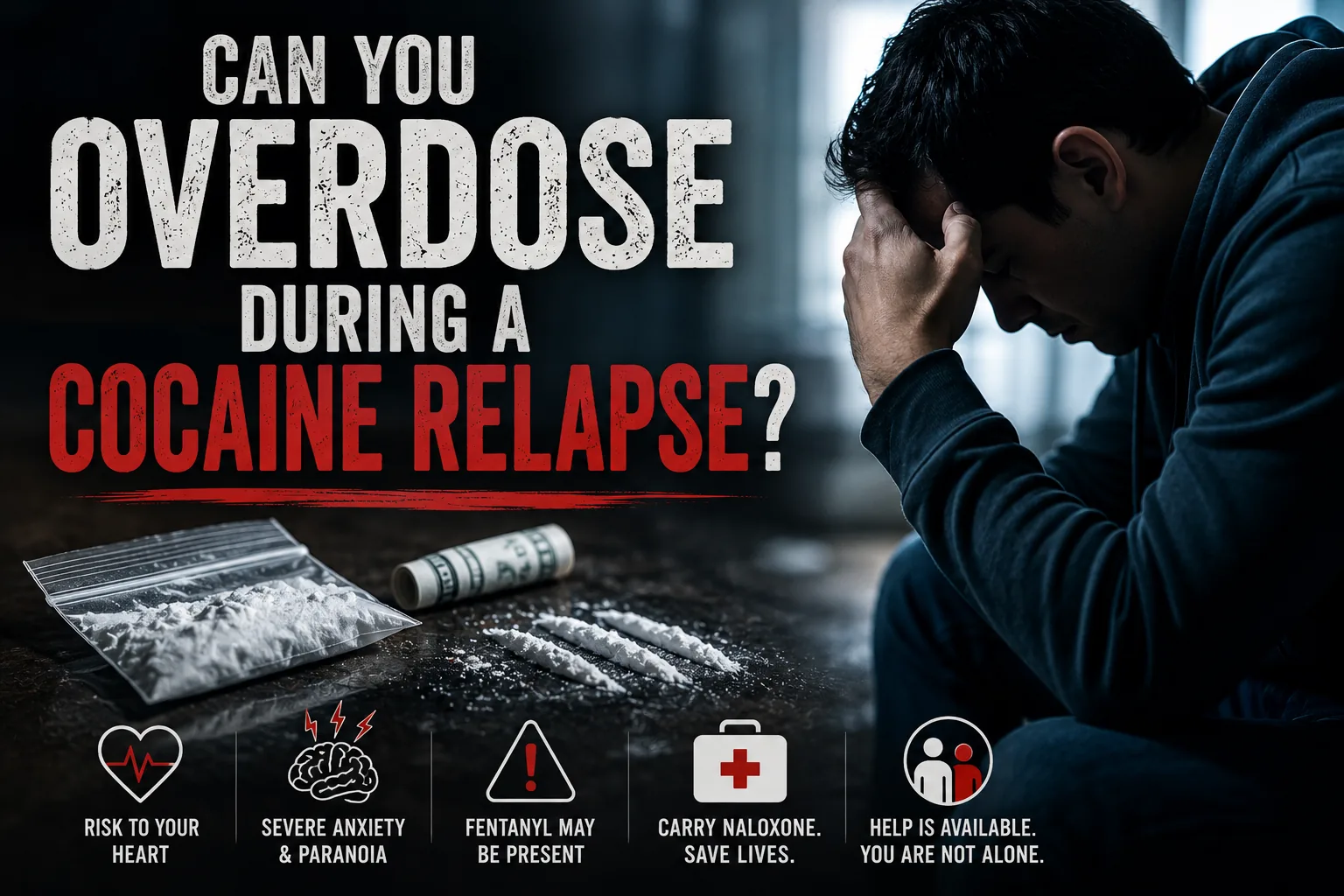


Yes. You can overdose during a cocaine relapse, and returning to cocaine after weeks or months without using can be especially dangerous. Someone may remember the amount they once used and assume their body can still handle it. But after a period of abstinence, the body may no longer respond the same way.
There is another major danger today: cocaine from the illegal drug supply may contain fentanyl or other substances without the person knowing it.
A cocaine relapse should be taken seriously. It does not mean recovery has failed, but it can create a medical emergency very quickly.
Why Cocaine Overdose Can Happen During a Relapse
Cocaine is a powerful stimulant. It places heavy stress on the heart, blood vessels, brain, and nervous system.
The risk of overdose depends on several things, including:
- How much cocaine is used
- The strength or purity of the drug
- Whether other substances are involved
- A person’s overall health
- How long they have been abstinent
- Their recent pattern of drug use
During a relapse, someone may return to an amount they remember using before they stopped.
They may think:
“I used this much all the time before.”
But that does not mean the same amount is safe now.
After time away from cocaine, the body may no longer be accustomed to the same level of stimulation. At the same time, there is no reliable way to know exactly how strong illegal cocaine is.
The drug supply is unpredictable. One batch may be very different from another.
Cocaine continues to be involved in thousands of overdose deaths in the United States each year. Many fatal overdoses also involve more than one drug, making unexpected exposure to opioids such as fentanyl especially dangerous.
What Does a Cocaine Overdose Look Like?
A cocaine overdose may look very different from an opioid overdose.
Because cocaine strongly stimulates the cardiovascular and nervous systems, severe toxicity can involve the heart, brain, body temperature, and behavior.
Possible warning signs include:
- Severe chest pain
- Seizures
- Extreme overheating
- Difficulty breathing
- Loss of consciousness
- Severe confusion
- Dangerous agitation
- Very high blood pressure
- A very fast or irregular heartbeat
- Signs of a heart attack or stroke
- Collapse or inability to wake up
Call 911 immediately if someone develops severe symptoms after using cocaine.
Do not wait to see whether the problem improves.
Cocaine can also cause severe anxiety, paranoia, confusion, aggression, or hallucinations. These symptoms can become dangerous for both the person using cocaine and the people around them.
If someone cannot be awakened, is having a seizure, cannot breathe normally, or appears to be having a heart attack or stroke, treat it as an emergency.
Fentanyl Can Make Cocaine Relapse Even More Dangerous
One of the biggest dangers surrounding cocaine today is the possibility of unexpected fentanyl exposure.
Fentanyl is an extremely powerful opioid. It may be mixed into illegal drugs without the person using them knowing it is there.
That means someone may believe they are using cocaine but also be exposed to an opioid.
This can be especially dangerous for someone who does not normally use opioids because they may have little or no opioid tolerance.
Signs of an opioid overdose may include:
- Very slow breathing
- Stopped breathing
- Inability to wake up
- Choking or gurgling sounds
- Very small pupils
- Pale, blue, gray, or discolored skin, lips, or fingernails
If an opioid overdose may be involved, give naloxone if available and call 911 immediately.
Naloxone can reverse the opioid portion of an overdose. It does not treat cocaine toxicity itself, but it can save a life if fentanyl or another opioid is involved.
Because someone cannot reliably identify fentanyl by looking at cocaine, carrying naloxone can be an important safety measure for people at risk of stimulant relapse.
Avoiding drug use alone is also important. If an overdose happens while someone is alone, there may be nobody there to call for help or give naloxone.
Mixing Cocaine With Other Drugs Raises the Risk
Cocaine overdose risk can become even higher when other substances are involved.
Alcohol is one common example. People sometimes drink while using cocaine because they feel the substances balance each other out.
They do not.
Using multiple substances places additional stress on the body and makes the effects harder to predict.
Cocaine may also be combined with opioids intentionally or unintentionally.
Mixing stimulants and opioids does not cancel either drug out. Instead, the body has to deal with the effects of both substances at the same time.
Someone may feel awake because of the stimulant while their breathing is becoming dangerously slow from an opioid.
This makes recognizing overdose symptoms more difficult.
What Should You Do After a Cocaine Relapse?
Once immediate medical safety has been addressed, act quickly.
Do not allow one return to cocaine to become a reason to keep using.
Tell someone what happened.
Contact your:
- Addiction counselor
- Sponsor
- Recovery coach
- Treatment program
- Doctor
- Trusted friend or family member
Then get away from the people and places connected to cocaine use.
Block dealer contacts if necessary. Avoid people who are currently using. Do not keep cocaine nearby while telling yourself you will throw it away later.
Next, figure out what happened before the relapse.
Ask yourself:
Was I stressed?
Had I been drinking?
Did I reconnect with someone I used with?
Was I lonely or bored?
Had I stopped attending treatment?
Was I sleeping poorly?
Did I start believing I could use cocaine occasionally?
A relapse trigger is information.
Finding it allows you to strengthen your recovery plan.
Treatment Can Help Prevent Another Cocaine Relapse
A relapse does not automatically mean addiction treatment has failed.
It may mean something needs to change.
Someone who previously attended counseling once a week might need more frequent support. A person struggling with depression or anxiety may need those problems treated alongside the addiction. Someone repeatedly returning to cocaine may benefit from a more structured outpatient or residential program.
Behavioral treatments can help people recover from cocaine addiction.
One of the strongest approaches for stimulant use disorders is contingency management, which rewards measurable recovery behaviors such as attending treatment or maintaining drug-free periods.
Cognitive behavioral therapy can also help people recognize triggers, challenge thoughts that encourage cocaine use, and develop healthier ways to cope with stress and cravings.
Treatment can also include:
- Intensive outpatient programs
- Residential treatment
- Individual counseling
- Group support
- Peer recovery programs
- Mental health treatment
- Recovery housing
- Relapse-prevention planning
A Cocaine Relapse Does Not Have to Continue
Overdose can happen during a cocaine relapse.
The danger may be even greater when someone returns to a previous pattern of use, does not know the strength of the cocaine, mixes substances, or is unexpectedly exposed to fentanyl.
But a relapse does not erase months or years of recovery.
What matters now is what happens next.
Get safe. Tell someone. Get away from the drug. Return to treatment. Strengthen your relapse-prevention plan.
One episode does not have to become a full return to cocaine addiction.
Recovery can continue from here.


