



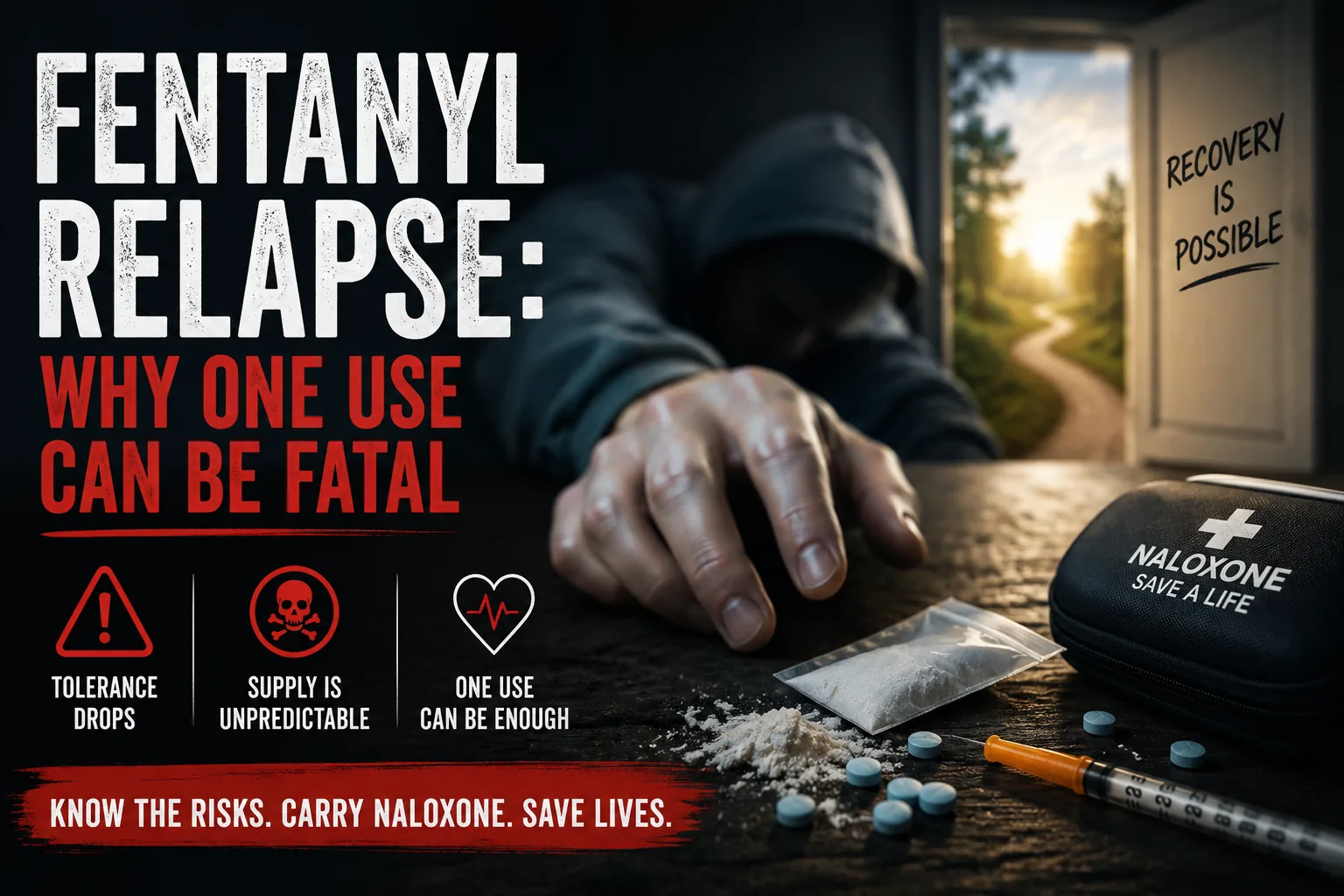


A fentanyl relapse can be fatal after a single use. Someone may return to opioids after days, weeks, or months of recovery believing they know what their body can tolerate. The problem is that opioid tolerance can fall during abstinence, while the illegal fentanyl supply remains extremely unpredictable. A dose that once seemed familiar may now be enough to stop breathing. The CDC specifically warns that even a brief period without opioids can lower tolerance and increase overdose risk if a person returns to the amount they previously used.
Fentanyl adds another layer of danger because people often do not know exactly what they are taking. Illegally manufactured fentanyl may be sold as heroin, mixed into other drugs, or pressed into counterfeit pills that resemble legitimate prescription medications. The CDC reports that most fentanyl-related harm and overdose is associated with illegally manufactured fentanyl.
For someone in recovery, that combination—lower tolerance and an unpredictable drug supply—can make one relapse deadly.
Why Fentanyl Is So Dangerous After Sobriety
Opioids affect areas of the brain that control breathing. During an overdose, breathing may become dangerously slow or stop entirely.
A person who regularly uses opioids can develop tolerance, meaning increasingly larger amounts may be needed to produce the same effect. Once opioid use stops, however, that tolerance can decrease. Someone leaving detox, residential treatment, a hospital, jail, or another period of abstinence may therefore be at particularly high risk if they return to use. The CDC has specifically recommended prioritizing naloxone for people following periods of abstinence or transitions where opioid tolerance may have decreased.
The person may remember, “I used this amount before and survived.”
Their body may no longer tolerate that amount.
This is one reason a return to opioid use should never be viewed as simply picking up where someone left off.
You May Not Know Fentanyl Is Present
The modern illegal drug supply makes relapse even less predictable.
Illegally manufactured fentanyl may be found in powders or counterfeit pills, sometimes without the person using the drug knowing fentanyl is present. The CDC warns that fentanyl and its analogs have played a major role in U.S. overdose deaths and notes that fentanyl test strips can detect fentanyl in many drug products.
Counterfeit pills are particularly dangerous because they may be designed to resemble prescription medications. CDC research has documented overdose deaths involving counterfeit pills and emphasizes that pills obtained outside legitimate pharmacies may contain unexpectedly powerful substances such as illegally manufactured fentanyl.
The amount of fentanyl may also vary from one illicit product to another.
Someone may believe they are buying the same substance they used before treatment, but there is no reliable way to judge potency by appearance alone.
That uncertainty means one pill, one bag, or one return to use can have consequences that cannot be predicted from past experience.
Mixing Fentanyl With Other Drugs Raises the Risk
Another major danger during relapse is combining opioids with other substances.
Alcohol, benzodiazepines, and other drugs that depress the central nervous system can make opioid-related breathing problems more dangerous. Heroin combined with other drugs or alcohol can increase overdose risk, according to the CDC.
Polysubstance use is common in overdose deaths, and a person may not always know multiple drugs are present because the illegal supply can be contaminated or intentionally mixed.
Using alone creates another major danger. If an overdose happens with nobody nearby, there may be no one available to administer naloxone or call emergency services.
Know the Signs of a Fentanyl Overdose
An opioid overdose can look like someone is simply sleeping.
Do not assume they will wake up on their own.
Warning signs may include:
- Being unable to wake the person
- Very slow, shallow, irregular, or stopped breathing
- A limp body
- Very small or pinpoint pupils
- Pale, blue, or gray lips or skin
- Choking, snoring, or gurgling sounds
- Loss of consciousness
When an opioid overdose is suspected, act immediately.
Naloxone is a medication that can rapidly reverse an opioid overdose, including an overdose involving fentanyl.
Give naloxone as soon as possible if it is available and call 911. SAMHSA recommends administering an opioid overdose reversal medication quickly when someone is unresponsive and an overdose is suspected.
More than one dose may sometimes be necessary. Stay with the person until emergency medical help arrives.
Do not assume that giving naloxone means the emergency is over.
What to Do After a Fentanyl Relapse
If someone survives a fentanyl relapse or overdose, the response should be immediate treatment—not shame.
Contact an addiction treatment provider as soon as possible. The person may need medical evaluation, detoxification services, residential treatment, intensive outpatient care, peer support, or medication for opioid use disorder.
Evidence-based medications for opioid use disorder include buprenorphine, methadone, and extended-release naltrexone. Treatment with medication can be combined with counseling and other recovery services. SAMHSA notes that ongoing treatment can help prevent future relapse and that the duration of medication treatment should be individualized.
Families and people in recovery should also keep naloxone readily available. SAMHSA emphasizes that friends, caregivers, and family members need to know how to recognize an opioid overdose and provide lifesaving assistance until emergency medical help arrives.
One Use Really Can Be Enough
Someone may have survived fentanyl, heroin, or other opioids hundreds of times before entering recovery. That history does not protect them after abstinence.
Tolerance can change.
The drug supply can change.
The amount of fentanyl in an illicit pill or powder can change.
That is why a fentanyl relapse carries such a high risk. In 2023, CDC researchers estimated that approximately 72,000 U.S. drug overdose deaths—nearly seven in ten— involved illegally manufactured fentanyl.
Relapse does not mean recovery is over. But with fentanyl, there may not always be another opportunity to return to treatment.
Keep naloxone available. Recognize overdose signs. Call 911 immediately when an overdose is suspected. Most importantly, reconnect with evidence-based addiction treatment as soon as relapse risk appears.
With fentanyl, one use can be fatal. Getting help before that use can save a life.


