



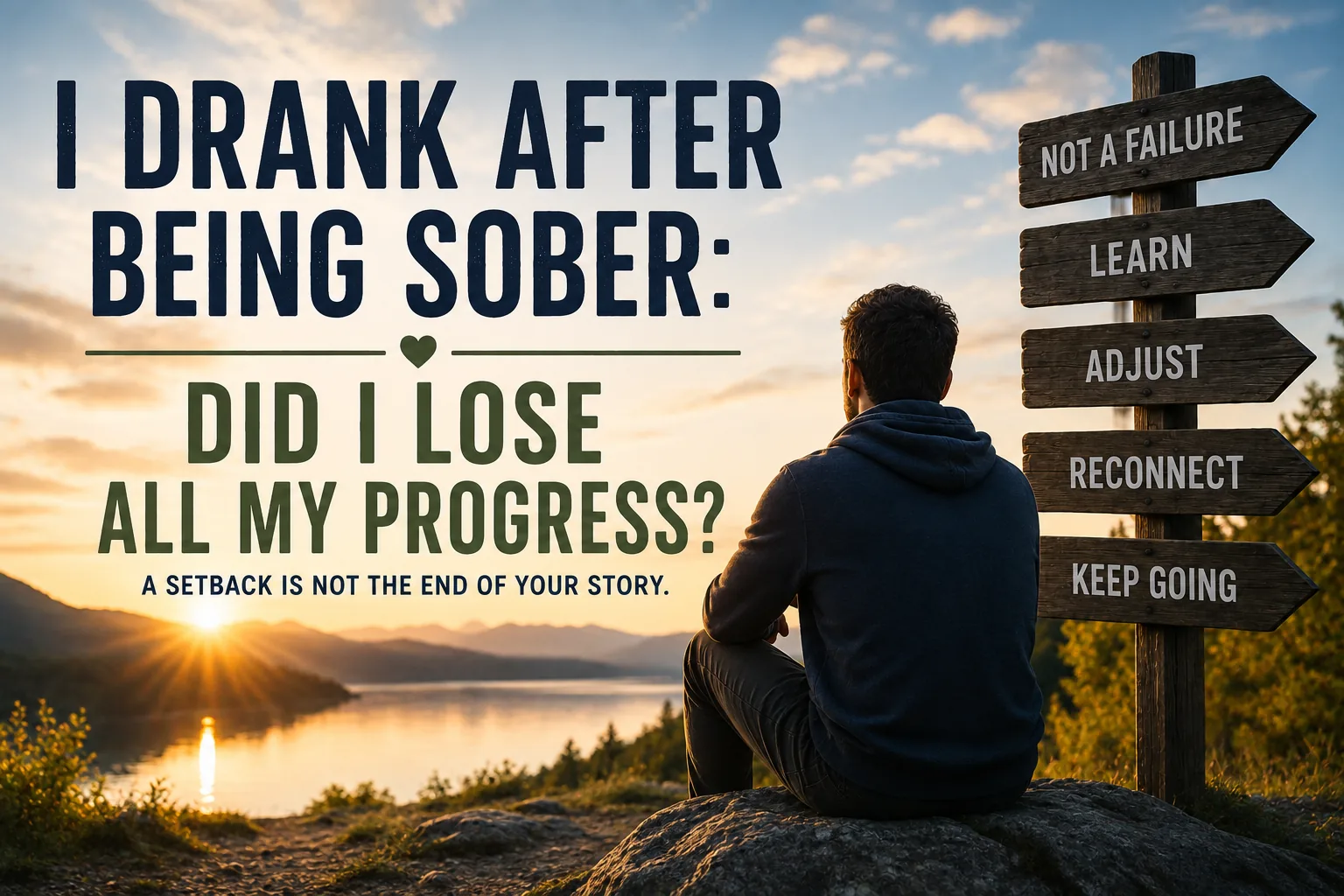


If you are thinking, “I drank after being sober. Did I lose all my progress?” the answer is no. One drinking episode does not erase the days, months, or years you spent sober. It does not erase the relationships you repaired, the coping skills you learned, or the healthier life you started building.
But it does matter what you do next.
After drinking again, shame can become dangerous. You may think, “I already messed everything up, so why stop now?” That kind of all-or-nothing thinking can turn one drink or one night into days or weeks of drinking.
The National Institute on Alcohol Abuse and Alcoholism explains that a return to drinking can be viewed as a temporary setback rather than a complete failure. Relapse can also be a signal that your recovery plan needs more support or a different approach.
Your progress is still real. Now is the time to protect it.
Did One Drink Ruin My Sobriety?
People use different words to describe drinking after sobriety. Some call a single episode a lapse, while relapse may describe a more sustained return to drinking. In many recovery communities, however, any alcohol use after choosing abstinence may be considered a relapse.
The label is less important than what happens next.
Imagine you were sober for a year and drank one night. You did not suddenly lose everything your brain and body experienced during those 12 months. You still spent a year learning how to handle stress without drinking. You may have improved your health, finances, relationships, sleep, career, and confidence.
That experience still belongs to you.
SAMHSA describes recovery as a process of continued growth involving health, purpose, supportive relationships, and the ability to manage setbacks. Recovery is bigger than simply counting days.
That does not mean you should minimize drinking again.
Ask yourself honestly:
- What happened before I drank?
- Was I experiencing strong cravings?
- Had I stopped attending treatment or meetings?
- Was I isolating from supportive people?
- Was I stressed, angry, lonely, or depressed?
- Did I deliberately put myself around alcohol?
- Did I believe I could control drinking this time?
- Can I stop again right now?
These answers can tell you whether this was a brief setback or whether you are beginning to return to an old drinking pattern.
What Should I Do After Drinking Again?
Start by telling someone.
Call your counselor, sponsor, recovery coach, doctor, family member, or another trusted person. Hiding what happened creates space for the problem to grow.
Then remove alcohol from your immediate environment and avoid the people or places that encourage drinking.
Do not wait several weeks to see whether things get worse.
NIAAA recommends that a return to drinking be used as an opportunity to reevaluate treatment. Some people may need additional counseling, more frequent appointments, medication, stronger recovery support, or a higher level of care.
Look closely at what happened before you drank.
Maybe you stopped doing the things that had been keeping you sober. Maybe a breakup, death, financial problem, celebration, work stress, or familiar drinking environment triggered old thoughts.
NIAAA reports that alcohol relapse is particularly likely during periods of stress or when people are exposed to individuals and places associated with previous drinking.
Use that information to strengthen your relapse-prevention plan.
If loneliness was the trigger, increase contact with supportive people. If you stopped treatment, schedule another appointment. If cravings have become difficult to control, talk with a healthcare professional about treatment options.
Behavioral therapies can help people identify and respond to triggers, while medications may help some people reduce cravings or prevent a return to drinking.
Most importantly, do something today.
You do not have to wait until you “hit bottom” again.
Be Careful About Alcohol Withdrawal
If one drinking episode has turned into several days or weeks of heavy drinking, stopping suddenly may not always be safe.
Alcohol withdrawal can become medically dangerous in people who have been drinking heavily for a prolonged period. Symptoms may include shaking, sweating, anxiety, nausea, insomnia, rapid heartbeat, hallucinations, and seizures.
NIAAA warns that severe alcohol withdrawal can be life-threatening and that some people need medical assistance when stopping alcohol.
Seek medical guidance if you have returned to heavy or frequent drinking, especially if you have experienced severe alcohol withdrawal or withdrawal seizures in the past.
Call 911 for seizures, severe confusion, loss of consciousness, hallucinations accompanied by severe illness, difficulty breathing, or another medical emergency.
Detox can help someone stop drinking safely, but detox is only the beginning. Continued treatment may be necessary to address the reasons drinking returned.
Your Sober Time Still Counts
Recovery can become overly focused on a number: 30 days, six months, one year, five years.
Those milestones can be meaningful. Starting the count again may feel devastating.
But sobriety is not a video game where one mistake deletes everything you earned.
You still learned how to live without alcohol. You still experienced sober mornings. You still made healthier decisions. You still proved that you can go without drinking.
NIAAA encourages healthcare professionals to avoid criticism and shame after a heavy drinking episode and instead focus on continued change, recovery resources, and the idea of progress rather than perfection.
You may decide to reset your sobriety date. That decision can provide accountability and mark a new beginning. But resetting a date is not the same thing as resetting your life.
What matters most now is what you learn.
Maybe your recovery needs more structure. Maybe you need treatment again. Maybe you need medication, meetings, therapy, sober living, better boundaries, or distance from certain people.
A setback can reveal exactly where your recovery needs reinforcement.
If you drank after being sober, you did not lose all your progress.
You had a setback.
Now you have a choice about what happens next.
Tell someone. Get support. Look honestly at what led to the drinking. Change the plan where it needs to change, and start protecting your recovery again today.
You are not starting from zero. You are starting again with experience.


