



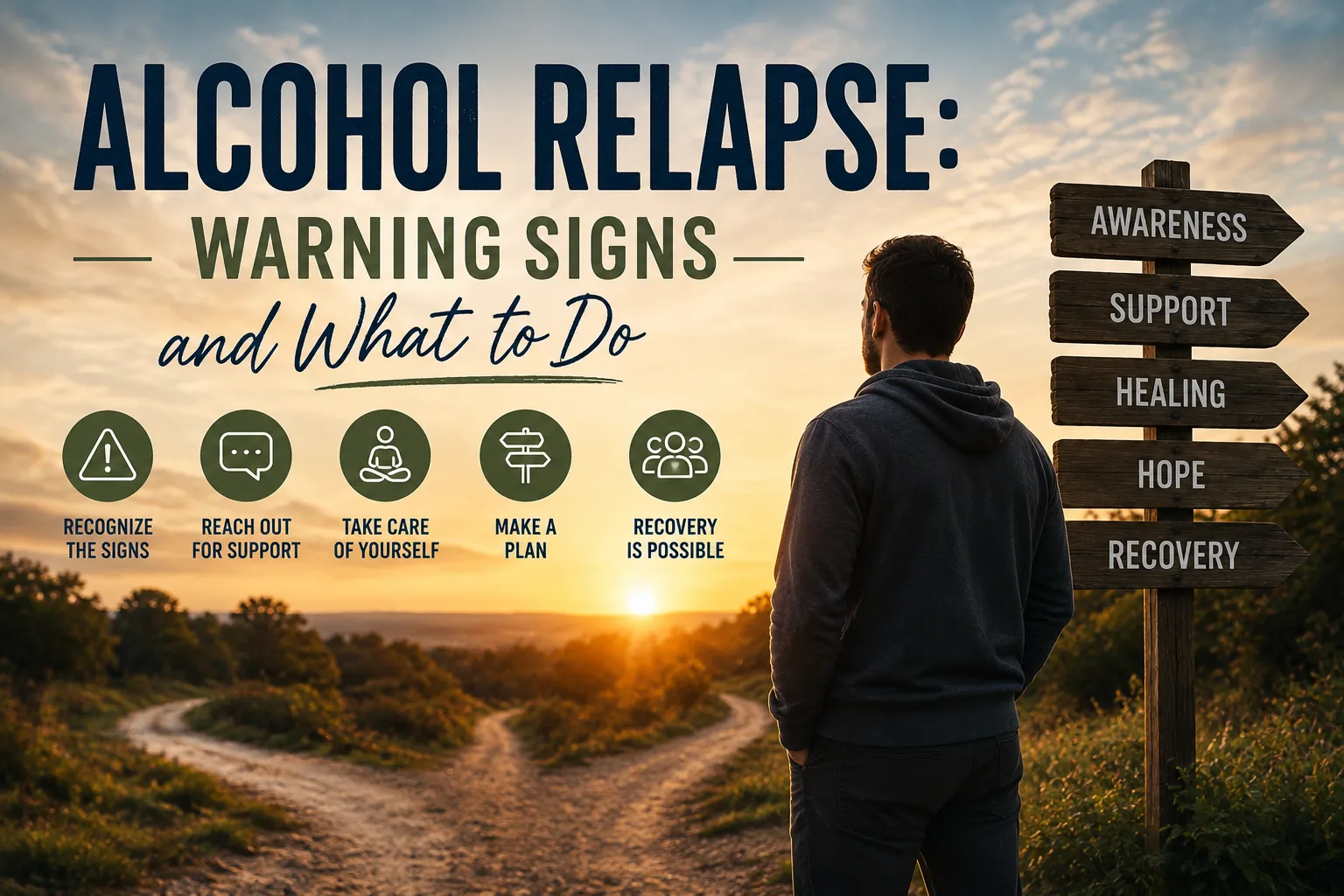


An alcohol relapse can begin long before someone takes the first drink. Changes in mood, behavior, routines, and thinking may appear days or even weeks earlier. Recognizing the warning signs of alcohol relapse can give a person and their loved ones time to act before drinking returns or becomes severe.
Relapse does not mean recovery has failed. Alcohol use disorder is a medical condition that can involve lasting changes in the brain, and those changes can leave someone vulnerable to returning to alcohol even after a long period of sobriety. The National Institute on Alcohol Abuse and Alcoholism (NIAAA) explains that setbacks can occur during recovery and that treatment can be adjusted when they happen.
At the same time, relapse should be taken seriously. Alcohol can quickly lead back to dangerous drinking patterns, accidents, health problems, relationship damage, and potentially dangerous withdrawal if heavy drinking resumes.
Warning Signs of an Alcohol Relapse
For many people, relapse develops gradually. Someone may begin drifting away from the habits and relationships that supported their recovery before alcohol ever enters the picture.
Common warning signs can include:
- Skipping counseling or recovery meetings
- Isolating from supportive friends and family
- Becoming unusually angry, anxious, or depressed
- Sleeping poorly or neglecting basic self-care
- Talking positively about past drinking
- Spending time with people associated with previous alcohol use
- Returning to bars or other drinking environments
- Becoming dishonest or secretive
- Feeling overconfident about being able to drink “just one”
- Experiencing stronger or more frequent alcohol cravings
- Stopping medications or treatment without medical guidance
- Losing interest in activities that supported recovery
Stress can be an especially powerful trigger. NIAAA notes that people are more likely to return to drinking during stressful periods or when exposed to people and places connected to previous alcohol use.
A person may also begin bargaining with themselves. Thoughts such as “I deserve one drink,” “I can control it now,” or “Nobody will know” can signal that the mental side of relapse is already developing.
These thoughts do not guarantee that someone will drink. They are signals that additional support may be needed immediately.
What to Do When You Notice Relapse Warning Signs
Do not wait until the person drinks to respond.
If you are in recovery and notice your own warning signs, tell someone. Contact your counselor, sponsor, doctor, recovery coach, or another person you trust. Increasing support early may stop a temporary struggle from becoming a return to alcohol.
Return to the basics of your recovery plan. Attend appointments. Avoid drinking environments. Remove alcohol from your home. Sleep regularly. Eat consistently. Exercise if you are able. Spend time with people who support sobriety rather than people who encourage drinking.
Review your relapse-prevention plan and identify what has changed.
Ask yourself:
What am I feeling?
Stress, loneliness, grief, anger, boredom, and anxiety may increase vulnerability.
What have I stopped doing?
You may have stopped attending treatment, calling supportive people, exercising, or following your normal routine.
What am I telling myself?
Thoughts that minimize previous alcohol problems can be important warning signs.
Behavioral therapies can help people identify triggers and develop healthier responses to stress and cravings. Medications may also help some people reduce drinking or prevent a return to alcohol.
What Should You Do After an Alcohol Relapse?
If drinking has already occurred, respond quickly rather than allowing shame to turn one episode into several days or weeks of drinking.
Tell someone what happened.
Contact your treatment provider and be honest about how much you drank, how long you have been drinking, and whether you believe you can stop safely.
NIAAA recommends that healthcare providers reassess and adjust treatment after relapse. Some people may simply need more frequent appointments or stronger recovery support. Others may need a different treatment approach or a higher level of care.
Treatment options may include outpatient counseling, intensive outpatient care, residential treatment, mutual-support groups, and medication.
Three medications are currently FDA approved to treat alcohol use disorder: naltrexone, acamprosate, and disulfiram. These medications work differently and are not appropriate for everyone, so treatment should be discussed with a qualified healthcare provider.
Try to identify what happened immediately before the relapse. Was there an argument? A stressful workday? Loneliness? A social event? Contact with an old drinking friend?
The purpose is not to assign blame. It is to find the weak point in the recovery plan so it can be strengthened.
Alcohol Withdrawal Can Be Dangerous
A person who has returned to heavy or prolonged drinking should not automatically attempt to stop suddenly without medical guidance.
Alcohol withdrawal can cause symptoms such as shaking, sweating, nausea, anxiety, insomnia, rapid heartbeat, and restlessness. Severe withdrawal can involve hallucinations or seizures and can become life-threatening. NIAAA advises that people with severe alcohol use disorder may need medical supervision when stopping alcohol.
Seek emergency medical care if someone experiences a seizure, severe confusion, hallucinations, loss of consciousness, difficulty breathing, or another serious medical emergency.
Detox can help manage withdrawal safely, but detox alone is not complete addiction treatment. Continued care is often needed to address cravings, triggers, mental health, relationships, and the behaviors surrounding alcohol use.
An Alcohol Relapse Does Not Erase Recovery
One of the most damaging things someone can think after drinking again is, “I already ruined everything, so I might as well keep drinking.”
That is not true.
A relapse does not erase the months or years someone spent sober. It does not remove the coping skills they learned, relationships they repaired, or progress they made.
NIAAA describes recovery from alcohol use disorder as an ongoing process that can include setbacks. Continued follow-up with a treatment provider can help someone learn from a relapse and adjust the treatment plan for long-term recovery.
The important question is not simply, “Why did I drink?”
Ask, “What needs to change so I am better protected next time?”
That may mean returning to treatment, attending more meetings, changing medications, leaving an unsafe living situation, treating depression or anxiety, or rebuilding a sober support network.
Alcohol relapse can be serious, but it does not have to become the end of recovery. Recognize the warning signs, ask for help early, and respond quickly if drinking occurs. Recovery can continue from here.


