



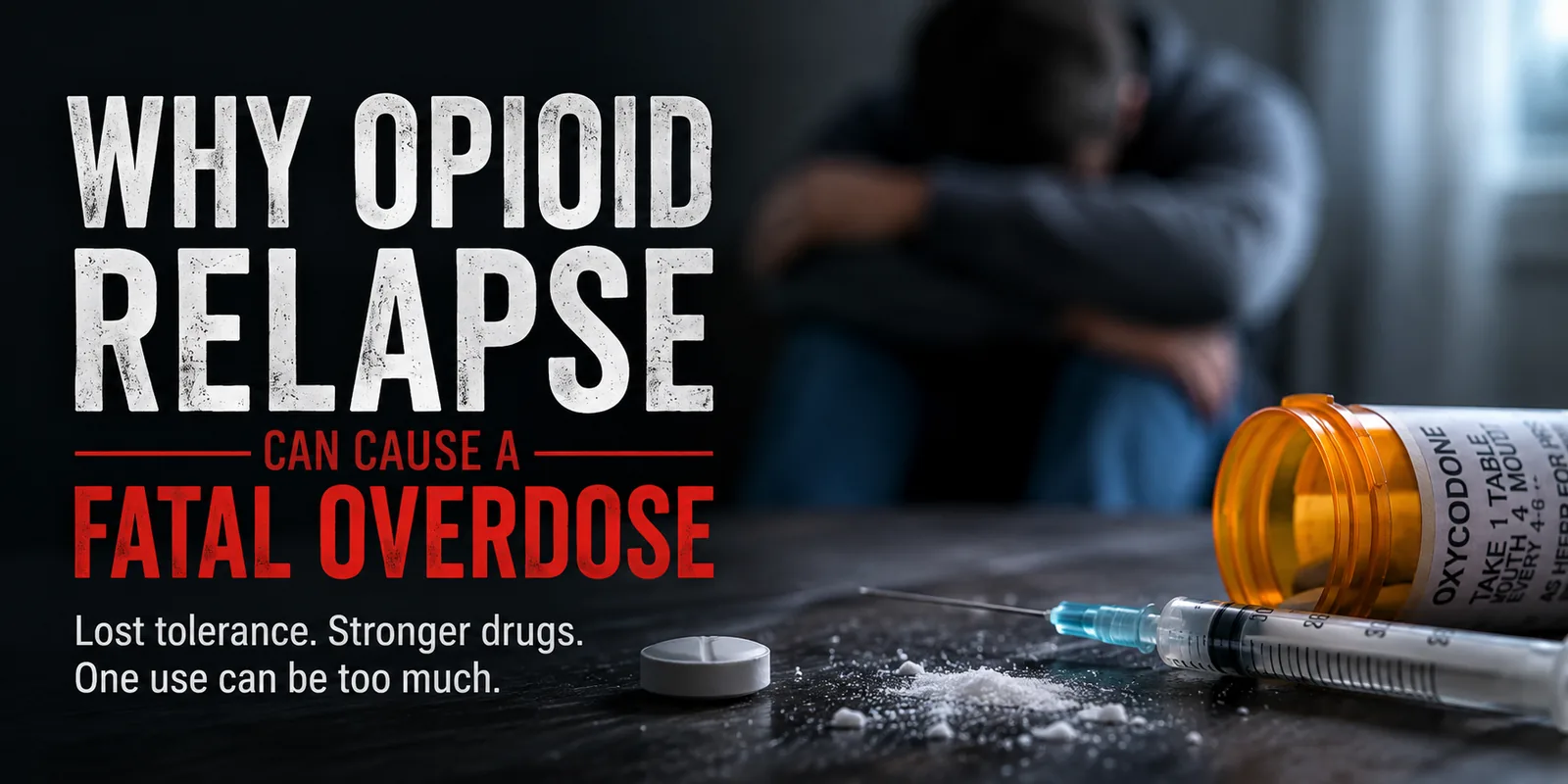


An opioid relapse can cause a fatal overdose, even if a person uses an amount that once felt normal. After days, weeks, or months without opioids, the body may lose tolerance. When someone returns to heroin, fentanyl, oxycodone, or another opioid at their previous dose, their breathing can slow or stop before they realize they are in danger.
This risk is especially high after detox, rehab, hospitalization, incarceration, or any other period of abstinence. The CDC warns that returning to a previously used opioid dose after tolerance has decreased increases the risk of overdose.
Relapse is not a moral failure, but opioid relapse is a medical emergency waiting to happen. Understanding the danger can help people in recovery and their families prepare before a crisis occurs.
Lost Tolerance Makes the Old Dose Dangerous
Tolerance develops when the body becomes used to repeated opioid exposure. Over time, a person may need larger amounts to feel the same effects. Tolerance can make someone believe they know how much their body can handle.
That can change quickly during recovery.
After a period without opioids, the body may become more sensitive to them. The amount used before treatment may now be strong enough to suppress breathing. The person may think they are returning to a familiar dose, but their body is no longer responding in the same way.
Even a brief period of abstinence can reduce tolerance and increase overdose risk if someone relapses and returns to the same amount.
This is one reason the days and weeks after leaving treatment or incarceration can be so dangerous. The person may still experience strong cravings while having less physical tolerance. CDC guidance recommends prioritizing naloxone for people following abstinence and during transitions when tolerance may have decreased.
Fentanyl Makes Opioid Relapse Less Predictable
The illegal drug supply has changed. Illicitly manufactured fentanyl is involved in most overdose deaths in the United States, according to SAMHSA. Fentanyl may be sold as heroin or mixed into counterfeit pills and other substances without the person knowing.
This means someone returning to opioid use may not know what they are taking or how strong it is. Two pills that look identical may contain very different amounts of fentanyl. A bag sold as heroin may be much more powerful than what the person used before entering recovery.
Fentanyl can cause breathing to slow rapidly. Because of its potency, an overdose may develop before the person or anyone nearby understands what is happening. CDC reports have linked illicitly manufactured fentanyl with rapid increases in overdose deaths and emphasize the importance of community access to naloxone.
Using alone increases the danger because no one may be present to give naloxone or call 911. Mixing opioids with alcohol, benzodiazepines, or other sedating substances can make breathing problems even more dangerous. The CDC also identifies polysubstance use as an important overdose risk.
How to Recognize and Respond to an Opioid Overdose
An opioid overdose can resemble deep sleep. Do not assume someone will simply “sleep it off.”
Warning signs may include:
- The person cannot be awakened.
- Breathing is slow, irregular, or stopped.
- The body becomes limp.
- Lips or fingernails turn blue, gray, or pale.
- Pupils become extremely small.
- The person makes choking, snoring, or gurgling sounds.
Call 911 immediately when an overdose is suspected. Give naloxone when it is available, follow the product instructions, and remain with the person until emergency help arrives. If normal breathing does not return within two to three minutes, another dose may be needed. Naloxone will not harm someone who is overdosing from a substance other than opioids, so it is better to use it when opioid involvement is possible.
Do not leave the person alone after naloxone is given. Its effects may wear off while opioids remain in the body, allowing overdose symptoms to return. Emergency medical evaluation is still necessary, particularly when fentanyl or multiple substances may be involved.
Families, friends, and people in recovery should keep naloxone where it can be reached quickly. Make sure others know where it is and how to use it. Naloxone is available over the counter at pharmacies in the United States.
Treatment Can Lower the Risk of Another Overdose
Surviving an overdose or opioid relapse should lead to immediate treatment—not shame or punishment. Contact an addiction treatment provider, doctor, or opioid treatment program as soon as possible.
Medications for opioid use disorder can help reduce cravings and support continued recovery. Methadone, buprenorphine, and extended-release naltrexone are approved treatment options. The appropriate medication depends on the person’s health, recent opioid use, treatment history, and recovery goals.
Buprenorphine can be prescribed in medical offices and is designed to support treatment for opioid use disorder. When taken as prescribed, it is considered safe and effective.
Treatment may also include counseling, residential care, intensive outpatient treatment, peer support, recovery housing, and a revised overdose-prevention plan. The person should leave treatment with naloxone, information about reduced tolerance, and a clear plan for what to do when cravings or relapse warning signs appear.
An opioid relapse does not mean recovery is impossible. It means the person needs immediate protection and renewed support. Because lost tolerance and fentanyl can turn one episode of use into a fatal overdose, there may not be another chance to ask for help later.
Act early. Keep naloxone nearby. Call 911 during an overdose. Most importantly, help the person reconnect with evidence-based opioid treatment before another relapse occurs.


