



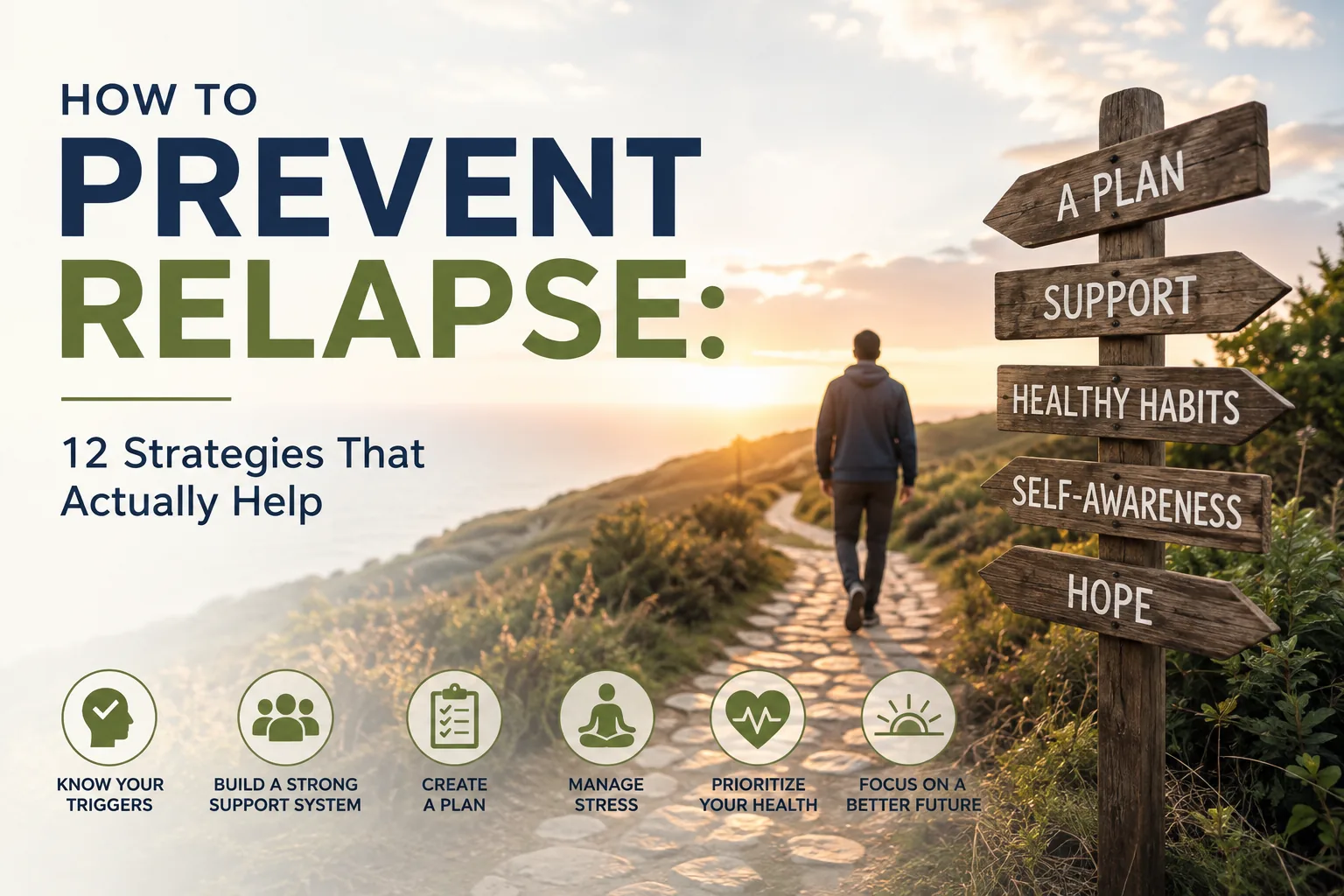


Learning how to prevent relapse is not about becoming perfect or never having a difficult day. It is about noticing danger early, responding quickly, and building a life in which drugs or alcohol are no longer the only way to cope. Effective relapse prevention strategies combine professional treatment, daily structure, honest support, and a practical plan for handling cravings.
Relapse can happen during recovery, but it does not mean treatment failed or that recovery is impossible. Substance use disorders can affect habits, emotions, relationships, and the brain’s response to stress and rewards. The goal is not to live in fear of relapse. It is to recognize the warning signs and take action before substance use begins.
12 Relapse Prevention Strategies for Lasting Recovery
1. Identify your personal triggers
Triggers may include people, places, emotions, memories, pain, conflict, boredom, celebrations, or contact with people who still use. Write down your strongest triggers and how you will respond to each one. Awareness creates space between an urge and an action.
2. Create a written relapse prevention plan
Do not rely on memory when you are overwhelmed. List your warning signs, coping tools, reasons for staying sober, emergency contacts, treatment providers, and safe places. Keep the plan in your phone and share it with someone you trust. Written recovery plans can help people recognize triggers and prepare healthier responses.
3. Build support before you need it
Recovery becomes harder in isolation. Choose several people you can contact honestly, such as a sponsor, peer, family member, counselor, or recovery coach. In Michael’s recovery story, making late-night phone calls and reaching out to people in his recovery circle when he was struggling became an important part of staying sober.
4. Stay connected to treatment
Detox or residential care may begin recovery, but continuing care helps protect it. Counseling, cognitive behavioral therapy, peer support, medication management, and outpatient treatment can strengthen coping skills. Keep appointments even when you feel better. Feeling stable may mean your recovery plan is working—not that you no longer need it.
5. Use the HALT check
When cravings appear, ask whether you are hungry, angry, lonely, or tired. These basic needs can make stress feel more intense. Eat, rest, call someone, or step away from conflict before making a decision. A brief pause can prevent an impulsive choice.
6. Delay and distract during cravings
A craving can feel powerful, but it is not a command. Wait 20 minutes before taking action. Walk, shower, exercise, attend a meeting, call a safe person, or change locations. Cravings can weaken when you respond without drinking or using drugs. Each craving you survive helps strengthen a new recovery habit.
7. Avoid high-risk situations
Early recovery is not the time to test yourself around bars, parties, drug-using friends, or homes where substances are available. Remove alcohol, drugs, and paraphernalia from your environment. Block unsafe contacts and leave situations that feel risky. Avoidance is protection, not weakness.
8. Follow a consistent daily routine
Build your day around sleep, meals, work, treatment, exercise, meetings, and healthy recreation. Structure reduces boredom and decision fatigue. It also makes warning signs easier to notice. Staying up all night, skipping meals, withdrawing from normal activities, or missing appointments may signal that additional support is needed.
9. Care for your mental and physical health
Depression, anxiety, trauma, chronic pain, and poor sleep can weaken recovery when left untreated. Tell your care team when symptoms return or worsen. Exercise, nutritious meals, mindfulness, medical care, and healthy sleep habits can support recovery, but they should not replace professional treatment.
10. Build a meaningful sober life
Removing substances leaves an empty space. Fill it with family, volunteering, faith, hobbies, education, exercise, creative work, or helping others. Meaningful activities do more than pass the time. They rebuild identity, confidence, connection, and a reason to protect your progress.
11. Consider medications when appropriate
Some medications can reduce cravings or support treatment for alcohol or opioid use disorder. Medication does not make recovery less real. Speak with a qualified medical professional about options that fit your health, substance-use history, and recovery goals. Never stop prescribed medication without medical guidance.
12. Act quickly when warning signs appear
Relapse often begins before a person drinks or uses drugs. Secrecy, isolation, romanticizing past use, skipping treatment, and reconnecting with unsafe people may signal rising risk. Tell someone immediately. Increase your support, schedule an appointment, attend a meeting, or return to a higher level of care.
What to Do If a Relapse Happens
A return to substance use should be taken seriously, but shame can make it harder to seek help. Contact your treatment provider, tell a trusted person, remove access to substances, and review what led to the episode. A relapse can reveal where the recovery plan needs more support. It does not erase every healthy choice you made before it.
For people returning to opioids after abstinence, reduced tolerance can sharply increase the risk of a fatal overdose. Keep naloxone available and call 911 immediately if an overdose is suspected. A previous dose should never be assumed to be safe after a period without opioid use.
You do not have to prevent relapse through willpower alone. Lasting recovery grows through preparation, treatment, human connection, and repeated healthy choices. Ask for help early, continue doing the work, and remember that one difficult moment does not erase the progress you have already made.


