



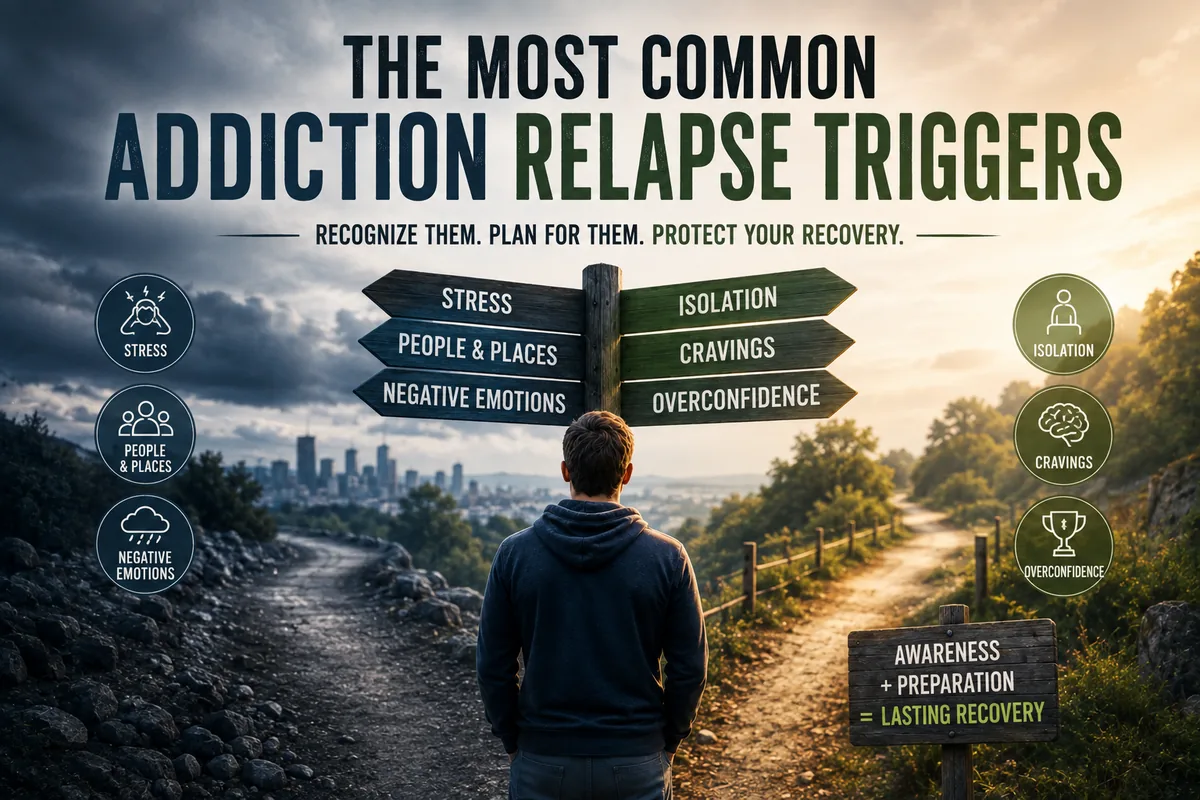


Addiction relapse triggers are people, places, emotions, thoughts, or physical conditions that increase the urge to drink or use drugs. Some triggers are obvious, such as seeing a former dealer. Others are easy to miss, including poor sleep, loneliness, pain, boredom, or feeling overly confident in recovery.
A trigger does not guarantee that someone will relapse. It is a warning that the person may need to use coping skills, leave a risky situation, or ask for support.
Research shows that drug-related cues and cravings are meaningfully connected with later substance use and relapse. Recognizing personal triggers is therefore an important part of relapse prevention.
Stress and Difficult Emotions
Stress is one of the most common addiction relapse triggers. Financial problems, relationship conflict, work pressure, legal trouble, grief, and major life changes can leave someone feeling desperate for relief.
Substances may have previously provided a temporary escape from these emotions. During recovery, the brain may still connect stress with alcohol or drug use. Research has linked stress-related disruptions with increased cravings, compulsive substance use, relapse risk, and difficulty remaining in treatment.
Emotional triggers may include:
- Anger
- Anxiety
- Depression
- Shame
- Loneliness
- Rejection
- Guilt
- Boredom
- Grief
- Feeling overwhelmed
Positive emotions can also become triggers. Someone may feel tempted to celebrate a promotion, vacation, birthday, or wedding with alcohol or drugs. Excitement can lower caution just as stress can.
The goal is not to avoid every emotion. Recovery involves learning how to experience feelings without automatically using substances to change them.
People, Places and Drug-Related Cues
The brain can form strong associations between substance use and the environment in which it occurred. A street, apartment, hotel, bar, pharmacy, song, smell, or object may suddenly activate memories and cravings.
Environmental contexts previously connected with drug use can provoke renewed drug-seeking behavior even after a period of abstinence.
Common environmental triggers include:
- Driving through an old neighborhood
- Seeing drug equipment
- Visiting a bar or nightclub
- Passing a place where substances were purchased
- Hearing music connected with past use
- Receiving a message from a former dealer
- Keeping alcohol or unused pills at home
- Returning to a hotel, bedroom, or parking lot connected with use
People can be powerful triggers too. Spending time with former substance-using friends may create pressure, activate memories, or make alcohol and drugs easier to access.
A person may believe they can safely visit old places or reconnect with old friends to prove that they are stronger. This kind of “testing” can place recovery at unnecessary risk.
Avoiding certain people and locations is not weakness. It is a practical safety decision.
Social Pressure, Isolation and Relationship Problems
Social situations can create relapse risk in more than one way.
A person may feel direct pressure to drink at a party, work event, family gathering, or date. They may be afraid of explaining why they are not using. Someone may also worry that sobriety makes them appear different or less enjoyable.
On the other hand, isolation can be just as dangerous. Social stress and loneliness may contribute to craving and substance use vulnerability.
Relationship problems may become triggers when they involve:
- Frequent arguments
- Breakups or divorce
- Rejection
- Betrayal
- Family criticism
- Feeling misunderstood
- Caregiver stress
- Domestic conflict
- Losing contact with children
Recovery support should include relationships where the person can be honest. Counselors, peer-support groups, sponsors, recovery coaches, family members, and sober friends can help interrupt isolation.
A good plan for social events may include bringing a supportive person, driving separately, carrying a nonalcoholic drink, preparing an answer to questions, and leaving early when cravings begin.
Pain, Exhaustion and Mental Health Symptoms
Physical discomfort can weaken coping skills. Pain, illness, hunger, and exhaustion may make immediate relief feel more important than long-term recovery.
Poor sleep can increase irritability, stress, and impulsive thinking. Untreated chronic pain may be especially difficult when alcohol or drugs were previously used to numb physical symptoms.
Mental health symptoms can also become major addiction relapse triggers. Depression, trauma, anxiety, panic attacks, mania, and severe insomnia may lead someone to use substances in an attempt to feel different.
People with both a substance use disorder and a mental health condition need care that addresses both concerns. Treating only the addiction can leave important triggers untreated.
Warning signs that more support may be needed include:
- Stopping psychiatric medication
- Missing therapy appointments
- Increasing hopelessness
- Severe mood swings
- Recurring nightmares
- Panic attacks
- Suicidal thoughts
- Hearing or seeing things others do not
Suicidal thoughts, psychosis, severe confusion, or unsafe behavior require immediate professional help.
Money, Free Time and Overconfidence
Paydays, tax refunds, cash gifts, and access to credit can become triggers when money was closely connected with past substance use.
Unplanned free time may also increase risk. Long weekends, vacations, unemployment, and evenings alone can create boredom and opportunities to return to old routines.
A practical prevention plan may include automatic bill payments, limited access to cash, planned recovery activities, and regular contact with supportive people.
Overconfidence is another trigger that can be difficult to recognize. A person may begin thinking:
- “I am cured.”
- “I do not need treatment anymore.”
- “I can be around drugs without using.”
- “One drink will not hurt.”
- “I can control it this time.”
Confidence is healthy when it is supported by continued action. It becomes dangerous when it leads someone to abandon medication, treatment, boundaries, or support.
Relapse is often gradual, and the best opportunity to interrupt it may be during its early emotional and mental stages.
How to Respond to Relapse Triggers
The strongest trigger plan includes specific actions rather than promises to “be stronger.”
When a trigger appears:
- Leave the person, place, or situation when possible.
- Tell someone exactly what is happening.
- Delay any decision to use.
- Go somewhere alcohol and drugs are unavailable.
- Eat, drink water, and address exhaustion.
- Contact a counselor, sponsor, or recovery supporter.
- Review the consequences of previous substance use.
- Attend a treatment session or recovery meeting.
- Ask whether medication or a higher level of care is needed.
Treatment can help people recognize high-risk situations, build effective coping responses, and strengthen confidence in their ability to respond without using substances.
A trigger is not a personal failure. It is information. Each recognized trigger gives someone another opportunity to protect recovery.
The most important step is to speak up early. A person does not need to wait until they have used again to deserve help. Recovery becomes stronger when triggers are recognized, plans are specific, and support is available before a crisis begins.


