



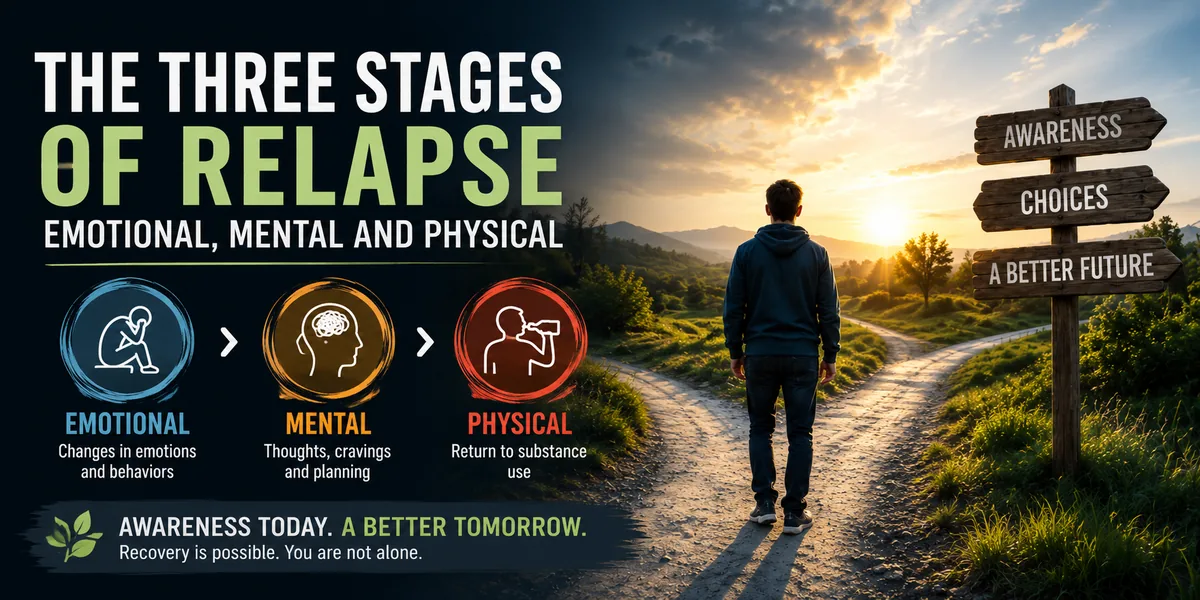


The three stages of relapse; emotional, mental and physical relapse. The return to alcohol or drugs rarely begins with the substance itself. Relapse often starts earlier through changes in mood, behavior, thinking and recovery habits.
Recognizing these early changes gives a person more time to act. Someone may be able to stop the process during emotional or mental relapse before substance use occurs.
The three-stage model is a relapse-prevention framework rather than a formal medical diagnosis. Not everyone moves through the stages in the same order or at the same speed. Still, it can help people recognize risk, ask for support and strengthen their recovery plan.
Stage One: Emotional Relapse
During emotional relapse, a person may not be thinking about drinking or using drugs. They may still feel committed to recovery. However, their emotions and behaviors begin creating conditions that make future substance use more likely.
Common signs of emotional relapse include:
- Isolating from supportive people
- Missing counseling or recovery meetings
- Keeping emotions bottled up
- Becoming defensive or easily irritated
- Sleeping too little or too much
- Eating poorly
- Ignoring medication
- Feeling anxious, angry or overwhelmed
- Focusing on other people while neglecting personal needs
Poor self-care is one of the clearest signs of emotional relapse. When someone becomes hungry, exhausted, lonely or stressed, their ability to make healthy decisions may weaken.
Negative emotions such as anger, anxiety, depression, frustration and boredom are common high-risk situations for relapse. Physical conditions such as hunger, fatigue and withdrawal symptoms can also increase vulnerability.
The best response during emotional relapse is to return to the basics. That may mean getting enough sleep, eating regular meals, attending treatment, taking prescribed medication and talking honestly with someone.
A person does not need to wait for cravings to become severe. Emotional relapse is already a reason to ask for help.
Stage Two: Mental Relapse
Mental relapse begins when part of the person wants to remain in recovery while another part begins thinking about substance use.
This internal struggle may build slowly. The person might remember how alcohol or drugs temporarily made them feel while forgetting the consequences that followed.
Signs of mental relapse can include:
- Thinking more often about drinking or using drugs
- Romanticizing past substance use
- Minimizing the damage addiction caused
- Looking up former dealers or substance-using friends
- Returning to places connected with past use
- Lying about thoughts, plans or whereabouts
- Planning opportunities to be alone
- Believing one drink or one dose will be manageable
- Thinking about how to use without being caught
- Feeling jealous of people who appear able to use normally
A person may also begin testing their recovery. They might attend a party without support, carry extra cash, drive through an old neighborhood or stop taking addiction medication.
These choices may seem harmless when viewed separately. Together, they can move someone closer to physical relapse.
Mental relapse becomes more dangerous when thoughts are hidden. Secrecy gives cravings and plans room to grow. The person should tell a counselor, sponsor, peer supporter or trusted loved one exactly what is happening.
A simple statement can interrupt the process:
“I have been thinking about using, and I need help before I act on it.”
Cravings often rise and fall rather than remaining at their strongest level. Leaving the triggering situation, delaying action, contacting support and going somewhere substances are unavailable can help someone get through the immediate urge.
Stage Three: Physical Relapse
Physical relapse occurs when someone drinks alcohol or uses a drug after a period of stopping or reducing use.
It may appear to be a sudden decision. However, the emotional and mental stages may have been developing for days or weeks.
A physical relapse may involve one episode, several days of use or a longer return to an earlier pattern. Regardless of how long it lasts, it should be taken seriously.
A return to opioid use can be especially dangerous after detox, treatment, incarceration or another period without opioids. Tolerance may decrease during abstinence. Returning to a previously used dose can increase the risk of a fatal overdose.
Naloxone can reverse an overdose involving heroin, fentanyl or prescription opioids when it is given in time. When an opioid overdose is suspected, give naloxone if available, call 911 and remain with the person until emergency responders arrive.
Possible overdose signs include:
- Slow, shallow or stopped breathing
- Inability to wake the person
- Blue, gray or pale lips
- Pinpoint pupils
- Gurgling or choking sounds
- A limp body
- Cold or clammy skin
Physical relapse does not mean every part of recovery has been lost. It does mean the current treatment and prevention plan needs immediate attention.
How to Stop the Relapse Process
Relapse prevention is strongest when it begins before a crisis.
Create a written list of personal warning signs. Include changes in sleep, mood, relationships, treatment attendance and thinking. Share the list with people who have permission to speak up.
A practical relapse plan should identify:
- The person’s strongest triggers
- Early emotional warning signs
- Thoughts that signal mental relapse
- People to call
- Safe places to go
- Steps for handling cravings
- Medication and treatment contacts
- When emergency help is needed
Treatment may include counseling, peer support, medications or a higher level of care. SAMHSA notes that medication and therapy can successfully treat substance use disorders, while peer support can help people remain involved in recovery.
After a physical relapse, the person should contact their treatment team and explain what was used, approximately how much and when. They should not remain alone while intoxicated or drive.
The goal is not punishment. It is to understand what changed and make the next relapse prevention plan stronger.
Recovery does not require perfection. It requires honesty, support and a willingness to respond when warning signs appear. Recognizing emotional and mental relapse early can prevent physical relapse. When substance use has already happened, the next healthy decision can still become the first step back toward recovery.


