





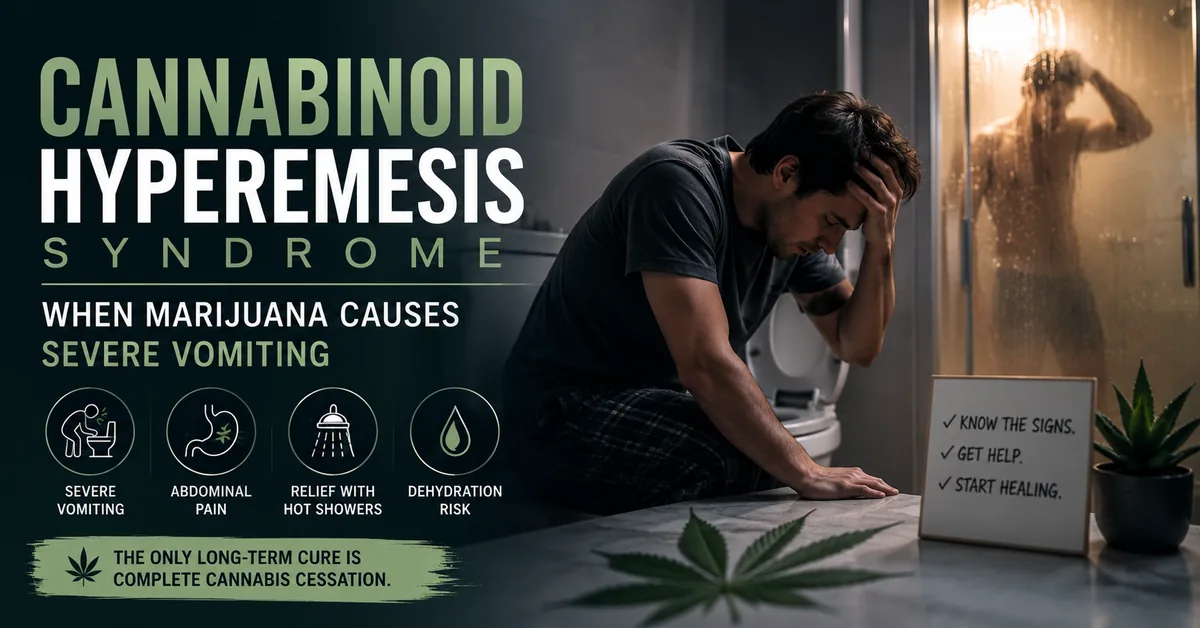
Cannabinoid hyperemesis syndrome, often called CHS, is a condition in which frequent, long-term marijuana use causes repeated attacks of severe nausea, vomiting, and abdominal pain. It can be confusing because cannabis is sometimes used to reduce nausea. Yet in certain people, continued exposure produces the opposite effect.
During a serious episode, someone may vomit repeatedly, struggle to keep down water, and become dangerously dehydrated. CHS is still frequently missed or mistaken for food poisoning, stomach flu, acid reflux, gallbladder disease, or cyclic vomiting syndrome. This can lead to repeated emergency room visits before marijuana is identified as the likely trigger.
What Causes Cannabinoid Hyperemesis Syndrome?
Doctors do not yet fully understand why some cannabis users develop CHS while others do not. The condition is believed to involve changes in the body’s endocannabinoid system, which helps control nausea, digestion, pain, temperature, stress, and other functions.
Cannabis can reduce vomiting in some medical situations. With heavy, repeated exposure, however, cannabinoids may disrupt the same systems that normally regulate nausea and digestion. The strength of modern THC products may also play a role, although researchers have not identified one dose, product, or length of use that causes CHS in everyone.
CHS is most often reported in people who use marijuana daily or nearly every day over an extended period. The American Gastroenterological Association’s clinical criteria include cannabis use more than four days per week for over a year, repeated vomiting episodes, and lasting improvement after cannabis is stopped. These criteria help doctors, but CHS cannot be confirmed through a single blood test or scan.
The Three Common Phases of CHS
Cannabinoid hyperemesis syndrome often develops in stages.
During the prodromal phase, a person may experience early-morning nausea, stomach discomfort, fear of vomiting, or a reduced appetite. This stage can last for months or longer. Because cannabis may seem to relieve the nausea temporarily, the person may use more of it without realizing that marijuana could be contributing to the problem.
The hyperemetic phase is the most severe. It involves repeated vomiting, intense nausea, abdominal pain, reduced food intake, dehydration, and sometimes weight loss. Episodes may last several days, although the duration varies. People can feel relatively normal between attacks.
The recovery phase begins after cannabis is discontinued and the vomiting stops. Appetite and normal eating gradually return. If marijuana use resumes, symptoms may eventually return as well. This pattern of improvement with abstinence and recurrence after renewed cannabis use is an important clue for doctors.
Why Do Hot Showers Help CHS?
One unusual sign of CHS is the urge to take repeated hot showers or baths. Many people report that very hot water temporarily reduces their nausea and abdominal pain.
Researchers believe heat may affect temperature regulation or activate TRPV1 receptors, which are involved in pain and nausea. This is also why emergency departments sometimes use topical capsaicin, the ingredient that makes chili peppers feel hot, as part of CHS treatment.
Hot water provides only temporary relief and does not cure the condition. Long or repeated showers can also worsen dehydration, and excessive heat can cause burns or fainting. Hot-shower relief is a clue, but it does not prove that someone has CHS because people with cyclic vomiting syndrome may report the same behavior.
When Severe Vomiting Becomes an Emergency
Repeated vomiting can quickly cause fluid loss and dangerous electrolyte changes. CHS has been associated with acute kidney injury and low levels of potassium, sodium, chloride, and bicarbonate. Rare complications can include abnormal heart rhythms, seizures, aspiration, damage to the esophagus, kidney failure, and death.
Seek urgent medical care when vomiting is constant, fluids will not stay down, urine becomes very dark or stops, or the person develops fainting, confusion, severe weakness, chest pain, blood in vomit, a racing or irregular heartbeat, or severe abdominal pain.
It is important not to assume every vomiting episode is CHS. Appendicitis, pancreatitis, bowel obstruction, gallbladder disease, kidney stones, infections, pregnancy complications, and other serious conditions can cause similar symptoms. Doctors may use blood tests, urine testing, an electrocardiogram, imaging, and other evaluations to rule out dangerous causes.
How Is Cannabinoid Hyperemesis Syndrome Treated?
Emergency treatment may include intravenous fluids, correction of electrolyte problems, and medications to control nausea. Standard anti-nausea medicines such as ondansetron do not always work well for CHS. Some emergency departments use medicines such as haloperidol or droperidol, or apply topical capsaicin under medical supervision.
Research into these treatments remains limited. A systematic review found potentially helpful results for dopamine-blocking medications and mixed evidence for capsaicin, meaning these treatments may reduce symptoms but are not guaranteed to work for everyone.
The only reliable long-term treatment is complete cannabis cessation. Cutting back, changing strains, switching from smoking to edibles, or using lower-potency products may not prevent another attack. A person using medical marijuana should speak honestly with the prescribing clinician about safer alternatives.
Stopping can be difficult, especially when marijuana is being used for sleep, anxiety, pain, trauma, or appetite. Cannabis withdrawal may bring irritability, cravings, restlessness, sleep problems, anxiety, and reduced appetite. Counseling, addiction treatment, medical support, and recovery groups can help address both withdrawal and the reasons cannabis use became important.
CHS is frightening, but recovery is possible. Recognizing the connection between marijuana and severe vomiting can end the cycle of repeated illness. Once cannabis is stopped and the body has time to heal, many people experience lasting relief—and no longer have to live in fear of the next vomiting attack.


