





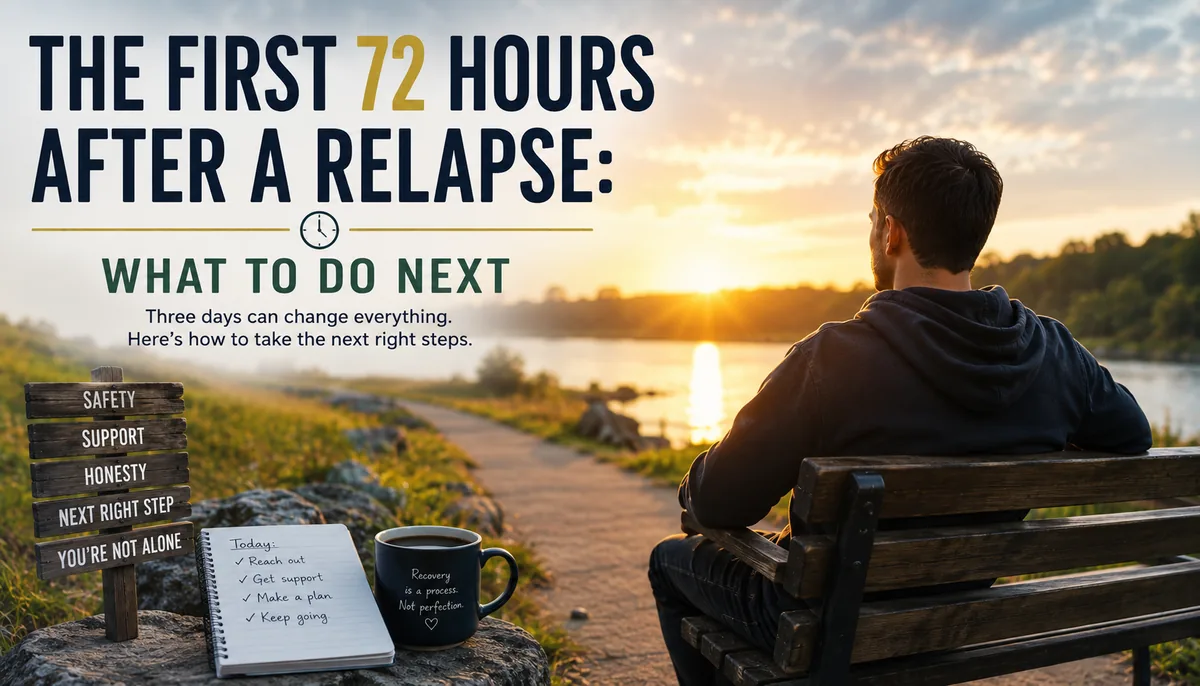
The first 72 hours after an addiction relapse can feel overwhelming. Shame, fear and disappointment may create the urge to hide what happened or continue using. However, a relapse—or return to substance use—does not erase the progress already made. It is a serious warning that the recovery plan needs immediate attention.
These first three days are not the time to decide whether recovery has failed. They are the time to prevent an overdose, stabilize physically, reconnect with support and determine whether medical treatment is needed.
Hours 0–24: Make Safety the Priority
The first step is to stop the situation from becoming more dangerous. Do not drive, operate machinery or remain alone while intoxicated. Avoid taking additional substances to “come down,” sleep or control uncomfortable symptoms. Combining opioids, alcohol, benzodiazepines, cocaine or other drugs can create unpredictable effects.
If opioids could be involved, keep naloxone nearby and tell someone where it is. Naloxone can reverse an overdose involving fentanyl, heroin and prescription opioids. Call 911 when someone cannot be awakened, is breathing slowly or not at all, has blue or gray lips, makes gurgling sounds or has pinpoint pupils. Give naloxone and provide rescue breathing or CPR when trained.
Overdose risk can be especially high after a period of abstinence. Tolerance may decrease during recovery, incarceration, hospitalization or treatment. Returning to a previous dose can therefore be fatal because the body may no longer tolerate it.
Tell at least one trustworthy person what happened. This might be a family member, sponsor, recovery coach, counselor or sober friend. A simple message is enough:
“I used again, and I do not want this to become a full return to use. I need help staying safe today.”
Remove access to remaining drugs or alcohol when this can be done safely. Delete dealer contacts, leave the location where use occurred and avoid people who encourage continued use. Do not confront anyone or place yourself in danger to remove substances.
Seek emergency care for chest pain, seizures, severe confusion, hallucinations, difficulty breathing, fainting, uncontrolled vomiting, extreme agitation or thoughts of suicide or self-harm.
Hours 24–48: Contact Treatment and Assess Withdrawal Risk
Contact the treatment provider as soon as possible. Do not wait until the next scheduled appointment or attempt to make the relapse look less serious. The treatment team needs honest information about what was used, approximately how much, when it was used and whether other substances were involved.
Treatment may need to be adjusted. Possible changes include more frequent counseling, medication, an intensive outpatient program, recovery housing, medical detoxification or residential treatment. SAMHSA notes that effective care may include medications, counseling and different levels of support based on the person’s circumstances.
People with opioid use disorder should ask about methadone, buprenorphine or naltrexone. These medications can reduce opioid use, help people remain in treatment and lower the risk of overdose death. Stopping medication because of a relapse may remove an important layer of protection; medication decisions should be made with the prescribing clinician.
Alcohol and benzodiazepines require special caution. Someone who has returned to sustained heavy drinking or regular sedative use should not assume it is safe to stop abruptly. Alcohol withdrawal can involve a rapid heartbeat, seizures and other potentially life-threatening complications. Medical guidance is especially important for anyone with a history of severe withdrawal, seizures or delirium.
During this period, focus on basic physical stabilization. Drink fluids, eat simple nutritious meals and rest in a safe environment. Do not use sleeping pills or someone else’s medication to manage discomfort. A clinician can determine whether symptoms are ordinary aftereffects, withdrawal or signs of a medical emergency.
Hours 48–72: Understand What Happened Without Attacking Yourself
Once the immediate danger has passed, examine the events that led to the relapse. The goal is not to assign blame. It is to identify where the recovery plan stopped providing enough protection.
Write down what happened during the hours or days before using:
- Were cravings increasing?
- Had sleep become worse?
- Was medication stopped or missed?
- Was there conflict, grief, loneliness or financial pressure?
- Did contact with a particular person or place trigger the urge?
- Were meetings, counseling or recovery routines becoming less frequent?
- Was there a belief that one drink, pill or hit could be controlled?
Look for the earliest change—not only the final moment when the substance was used. A relapse may begin with isolation, untreated depression, romanticizing past use or abandoning daily structure.
Turn those observations into specific changes. “I need to try harder” is not a plan. A stronger plan might include daily check-ins, restarting treatment medication, attending an IOP, avoiding cash, changing phone numbers, staying temporarily with supportive family or scheduling an urgent mental health appointment.
Do Not Let Shame Turn One Episode Into a Longer Relapse
After using, people sometimes think, “I already ruined everything, so I might as well keep going.” That belief can turn one episode into days or weeks of escalating use.
Recovery is not measured only by an unbroken count of sober days. It is also measured by how quickly someone recognizes danger, asks for help and returns to treatment. NIDA describes addiction as a treatable condition and notes that a return to use can signal the need to restart, modify or intensify treatment—not that treatment is pointless.
The first 72 hours should end with a written safety plan, treatment appointment and at least one person who knows what happened. For opioid risk, that plan should include naloxone and avoiding solitary use. For alcohol or sedative risk, it may include a medical withdrawal assessment.
A relapse is serious, but it does not have to become a fatal overdose or a permanent return to addiction. The next decision matters more than the last one. Reaching for help quickly can turn these first 72 hours into the beginning of a stronger recovery plan.


