



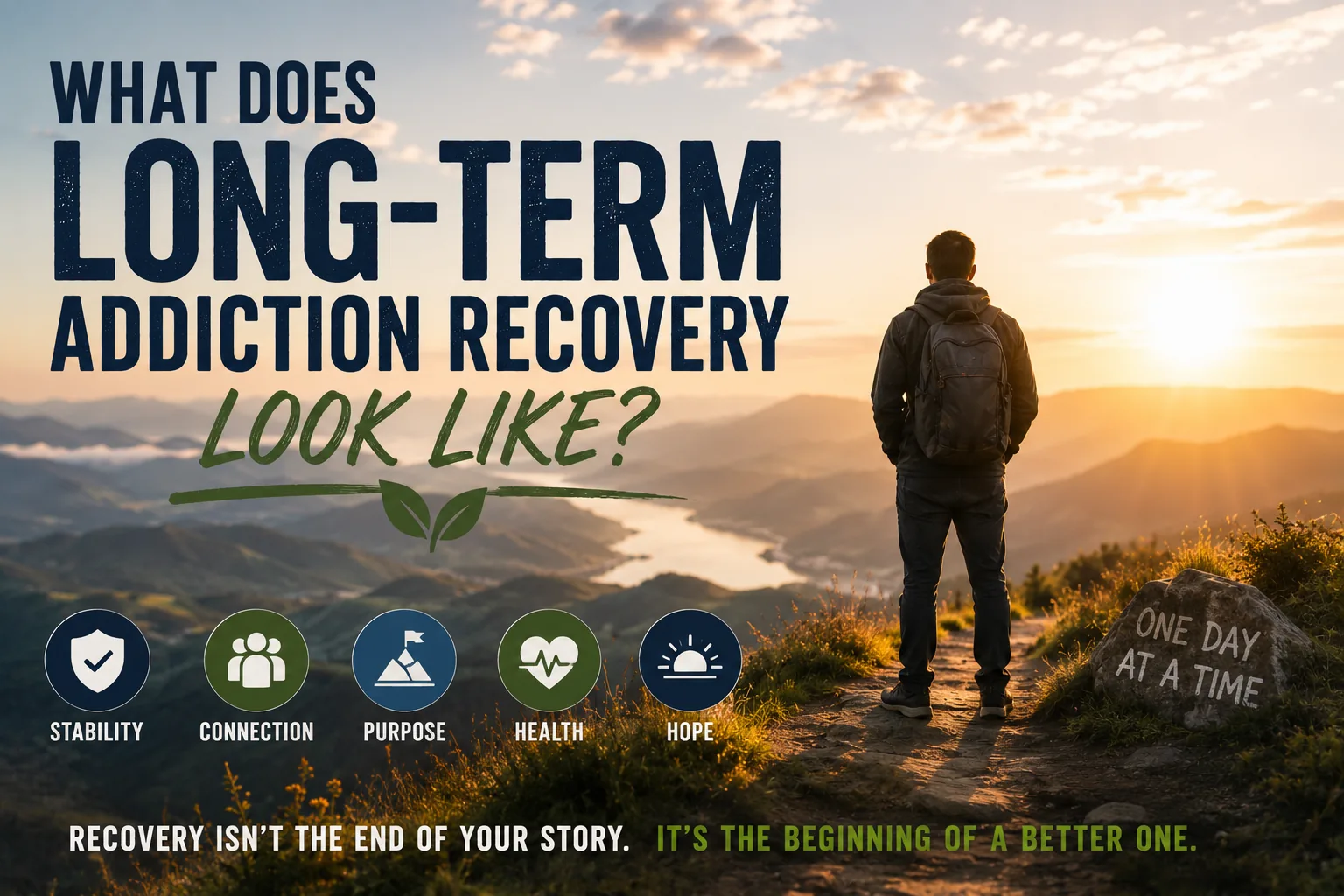


Long-term addiction recovery is what happens when staying sober becomes less about surviving each day and more about building a life that supports continued health, stability, and purpose. Early recovery may focus heavily on cravings, treatment, triggers, and avoiding relapse. Over time, the focus often shifts.
Recovery begins to look more like living.
Someone may be working, raising children, rebuilding relationships, managing money, taking care of their health, traveling, pursuing goals, or helping others. Drugs or alcohol may no longer dominate every thought.
That does not mean addiction is forgotten.
It means recovery has become stronger.
For many people, long-term recovery from addiction is not about reaching a finish line. It is about creating a lifestyle that makes returning to substance use less appealing and less likely.
Long-Term Recovery Looks More Stable
One of the biggest changes in long-term recovery is stability.
During active addiction, life may have been unpredictable.
Jobs were lost.
Relationships changed quickly.
Money disappeared.
Sleep was inconsistent.
Appointments were missed.
Recovery gradually replaces chaos with routine.
Someone in long-term recovery may have stable housing, steady employment, regular sleep, healthier relationships, and predictable responsibilities.
That may not sound exciting.
But after addiction, ordinary life can feel extraordinary.
Paying bills on time.
Showing up for work.
Remembering birthdays.
Keeping promises.
Being trusted.
These are often some of the clearest signs that recovery is becoming part of everyday life.
Cravings May Become Less Powerful
Cravings can be intense during early recovery, but for many people they become less frequent and easier to manage over time.
Someone may go days, weeks, or months without thinking seriously about using.
That does not mean triggers disappear completely.
Stress, grief, relationship problems, celebrations, certain places, or unexpected memories can still bring up thoughts about alcohol or drugs.
The difference is experience.
A person in long-term recovery often knows what to do.
They may call someone in their recovery support system, attend a meeting, speak with a counselor, exercise, leave a risky situation, or return to strategies in their relapse prevention plan.
A craving that once felt like an emergency may eventually feel like something temporary that can be handled.
That is progress.
Relationships Often Begin to Heal
Addiction can damage trust.
Recovery gives people the opportunity to rebuild it.
That process can take time.
Family members may have been lied to, disappointed, frightened, or hurt repeatedly during active addiction. One month of sobriety may not erase years of pain.
Long-term recovery allows actions to speak.
You keep showing up.
You do what you said you would do.
You apologize when you are wrong.
You stop expecting immediate forgiveness.
You learn how to communicate instead of disappearing.
Over time, relationships may become healthier and more honest than they were before addiction.
Some relationships will not survive.
That can be painful.
But long-term recovery sometimes requires accepting that certain people, environments, or dynamics no longer belong in the life you are building.
Recovery Becomes About More Than Addiction
In the beginning, recovery can feel like a full-time job.
There may be treatment appointments, meetings, counseling, medication visits, recovery assignments, and daily conversations about sobriety.
That level of focus can be necessary.
But eventually, life can become bigger.
You start thinking about your career.
Your children.
Your health.
Your home.
Education.
Travel.
Relationships.
Retirement.
You may discover hobbies that have nothing to do with recovery.
You may begin asking questions such as:
What do I want to accomplish?
What kind of parent or partner do I want to be?
Where do I want to live?
What gives my life purpose?
This is part of rebuilding your life after addiction.
Recovery stops being only about what you are avoiding.
It becomes about what you are creating.
Support Still Matters Years Later
One common mistake is assuming that feeling better means support is no longer necessary.
Long-term recovery usually involves knowing what keeps you healthy.
For one person, that may include weekly recovery meetings.
Another may stay connected to a sponsor, counselor, faith community, or sober friends.
Someone else may continue medications or behavioral healthcare.
The exact support can change over time.
What matters is maintaining enough recovery capital to handle difficult periods.
Recovery capital includes things such as stable housing, employment, healthy relationships, coping skills, community support, and access to healthcare.
These resources create layers of protection.
If one area of life becomes difficult, everything else does not have to collapse with it.
Long-Term Recovery Still Includes Difficult Days
Long-term recovery does not make someone immune to life.
People still experience death, divorce, illness, financial problems, stress, disappointment, loneliness, and failure.
The difference is how those experiences are handled.
During addiction, substances may have been the automatic response to discomfort.
Recovery creates other options.
Talk.
Exercise.
Pray.
Ask for help.
Go to counseling.
Take a walk.
Attend a meeting.
Spend time with people who understand.
These skills become stronger with practice.
A difficult day no longer has to become a reason to return to an old life.
Helping Others May Become Part of Recovery
Many people eventually discover that helping others strengthens their own recovery.
That might mean sponsoring someone, volunteering, speaking at meetings, working in behavioral health, supporting a newly sober friend, or simply answering the phone when someone is struggling.
There is something powerful about becoming the person you once needed.
It can create purpose.
It can also serve as a reminder of how far you have come.
But helping others should not replace taking care of your own recovery.
Healthy long-term recovery includes boundaries.
Long-Term Recovery Can Become a New Normal
So, what does long-term addiction recovery look like?
It often looks less dramatic than people expect.
It looks like stability.
Connection.
Responsibility.
Purpose.
It looks like waking up without panic.
Making plans months in advance.
Being someone others can depend on.
Handling stress without needing to escape.
It looks like a life that no longer revolves around addiction.
Recovery may always remain part of your story.
But it does not have to remain the center of it.
At first, recovery may mean getting through one day without using.
Years later, it may mean something much bigger.
A career.
A family.
A home.
A purpose.
A future.
That is what long-term recovery can become.


