



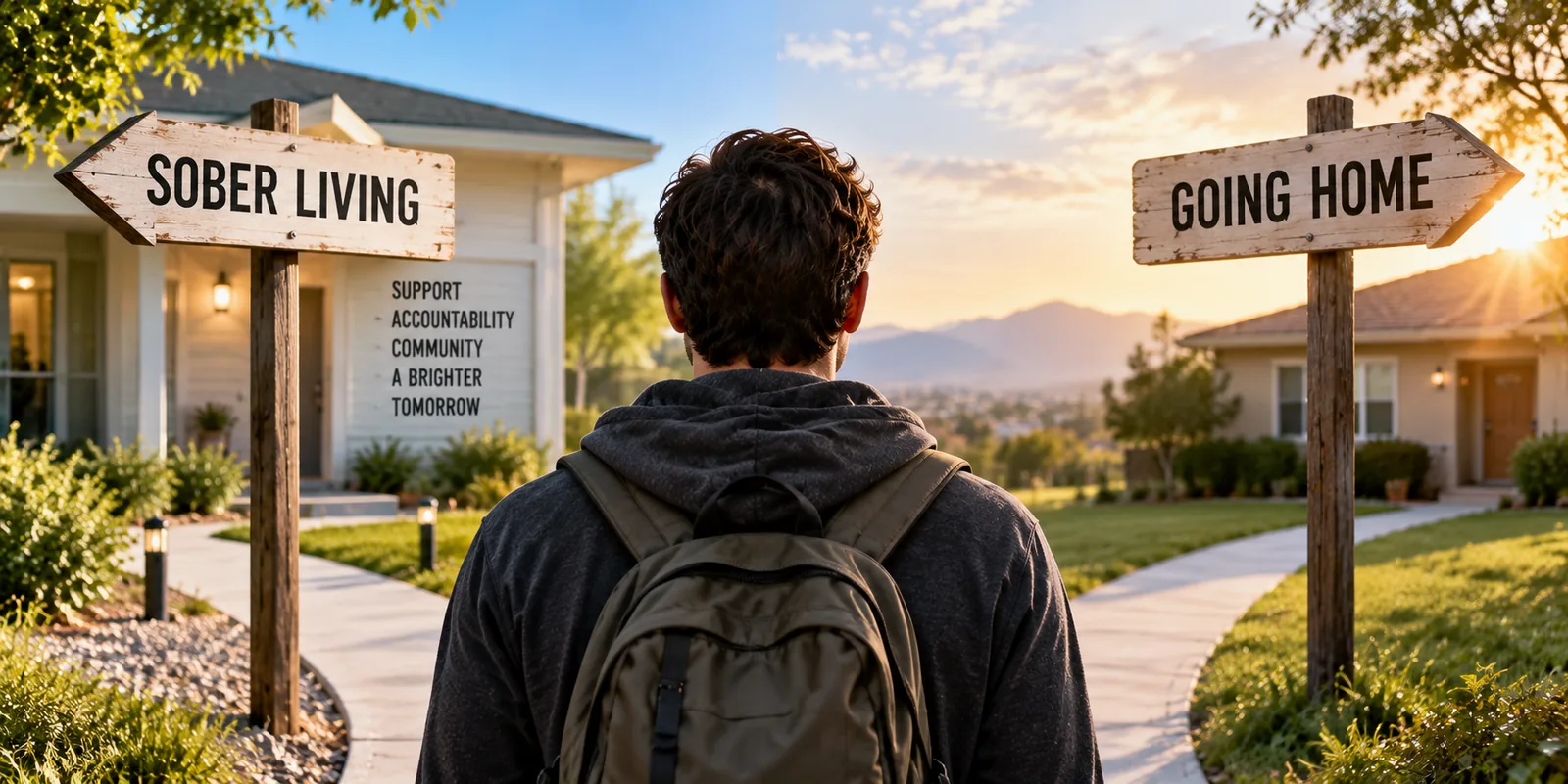


Finishing rehab is a major accomplishment, but walking out the door can also be one of the most vulnerable moments in recovery. Suddenly, the structure of treatment is gone. That raises an important question: sober living vs. going home after rehab—which is the better choice?
There is no answer that fits everyone. Some people have a safe, supportive home where returning makes sense. Others would be walking straight back into the people, places, conflicts, and routines connected to their addiction.
For them, going directly into a sober living home after rehab may provide the breathing room needed to build a stronger foundation before returning to completely independent living.
The goal is not to stay protected forever. The goal is to give recovery enough time and support to become part of everyday life.
Why the First Living Environment After Rehab Matters
Residential treatment creates structure. There may be scheduled meals, counseling, recovery groups, medication management, drug testing, exercise, and regular contact with people who understand addiction.
Then treatment ends.
As we discuss in our guide to life after rehab and what happens when treatment ends, recovery continues long after someone leaves a treatment facility. The first weeks and months can involve rebuilding relationships, finding employment, dealing with financial problems, managing cravings, and learning how to handle stress without drugs or alcohol.
Where you live can make all of those things easier—or much harder.
Imagine leaving rehab and returning to a home where people are drinking every night. Maybe an old friend who uses drugs lives down the street. Perhaps family arguments were always a major trigger. Your former dealer may still have your number.
Being motivated to stay sober does not automatically make those triggers disappear.
This can be especially important for someone recovering from powerful stimulant use. People working through crack addiction recovery, for example, may find that old neighborhoods, people, money, stress, and familiar routines can trigger intense memories and cravings.
Changing the environment can give recovery a chance to become stronger.
When Sober Living May Be the Better Choice
Sober living is designed to provide a middle ground between residential treatment and completely independent living.
You are no longer living inside a treatment center, but you are also not immediately returning to your old lifestyle.
Depending on the home, residents may have curfews, chores, drug and alcohol testing, house meetings, employment expectations, recovery meetings, and rules about visitors.
That structure can be valuable.
Sober living may deserve serious consideration when:
- Drugs or alcohol are regularly used at home.
- Your household is unstable or unsafe.
- You do not have supportive people nearby.
- You previously used substances with people you live with.
- Your neighborhood contains strong addiction triggers.
- You have relapsed shortly after treatment before.
- You need time to find work or rebuild finances.
- You benefit from daily accountability.
- You are nervous about suddenly living alone.
- You want to build a stronger sober community.
One of the biggest advantages is connection. Instead of trying to rebuild everything alone, you are surrounded by other people working toward similar goals.
That should be combined with a broader recovery support system involving healthy family members, peers, sponsors, treatment professionals, recovery groups, and other supportive relationships.
Sober living is not about hiding from real life. Done well, it is practice for real life.
When Going Home After Rehab Can Work
Going home is not automatically the dangerous choice.
For some people, home is exactly where they should be.
A person may have a supportive spouse, parents who understand recovery, stable housing, transportation, employment, and few substances or addiction triggers in the household.
Returning home may also allow someone to reconnect with children, return to work, attend school, and rebuild responsibilities more quickly.
The important question is not simply, “Do I want to go home?”
Ask, “Will this home support the person I am trying to become?”
Before returning, consider removing alcohol, unused prescription medications, drug paraphernalia, and anything strongly connected with past substance use.
Family members should understand that recovery continues after treatment. They should know major warning signs and understand what to do when the person begins struggling.
Returning home should also include an addiction aftercare plan. That may involve outpatient treatment, recovery meetings, medication, peer support, medical appointments, family involvement, or other continuing care.
Going home without a plan is very different from going home with one.
How to Decide Which Option Is Safer
Try to remove pride from the decision.
Sometimes people reject sober living because they believe they should be able to handle life on their own after rehab.
Recovery is not a test of toughness.
Ask yourself:
Are drugs or alcohol present at home?
Do people there respect my recovery?
Will I have accountability?
Do I have transportation to treatment and meetings?
Will I spend long periods alone?
Are old substance-using friends nearby?
Did I relapse in this environment before?
What will I do during a serious craving?
Who can I call at 10 p.m. when I am struggling?
Your treatment team may also see risks you are overlooking. Listen to their recommendations, especially if they have watched how you respond to stress, cravings, conflict, and increased independence.
The Goal Is Long-Term Recovery
The debate over sober living vs. going home after rehab is really about creating the strongest possible transition into everyday recovery.
Sober living may provide more structure, accountability, community, and distance from old triggers. Going home may provide family support, familiarity, financial stability, and an opportunity to rebuild everyday responsibilities.
Neither choice guarantees sobriety.
What matters is whether the environment supports the work required for long-term addiction recovery.
You do not receive extra credit for making recovery harder than it needs to be.
If going home places you directly back into chaos, substance use, or isolation, spending additional time in sober living may be one of the smartest decisions you make. If your home is stable, supportive, substance-free, and connected to continuing care, returning home may be an appropriate next step.
Rehab helps you stop living the old life.
The next environment should help you build the new one.


