



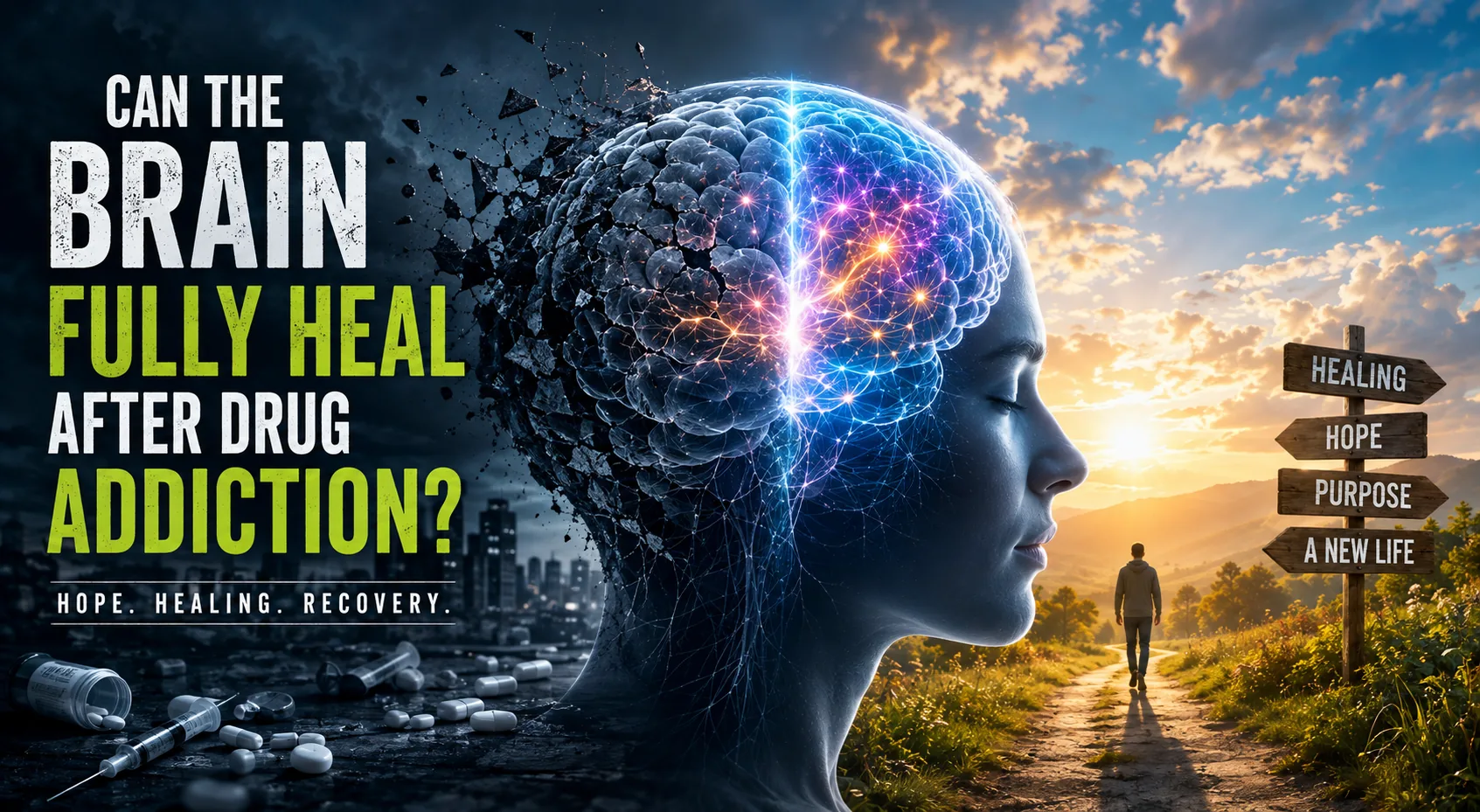


Can the brain fully heal after drug addiction? For many people entering recovery, this question carries a lot of fear. Drugs can affect memory, motivation, judgment, mood, sleep, and the ability to feel pleasure. After months or years of substance use, it is reasonable to wonder whether those changes are permanent.
The encouraging answer is that the brain can recover significantly after drug addiction.
Some changes may begin improving within weeks of stopping drugs. Other parts of brain recovery can take months or years. In some cases, certain effects may not completely reverse.
There is no exact healing timeline.
The substance used, amount and length of use, age, genetics, nutrition, sleep, mental health, overdoses, head injuries, and overall physical health can all influence recovery.
What we do know is important:
The brain is capable of change, and recovery gives it the opportunity to change again.
How Drug Addiction Changes the Brain
Addiction affects more than behavior.
Repeated drug use can change brain systems involved in:
- Reward and pleasure
- Motivation
- Memory
- Learning
- Stress
- Decision-making
- Impulse control
- Emotional regulation
- Sleep
The brain naturally rewards behaviors that help us survive and connect with others. Eating good food, exercising, accomplishing something, or spending time with people we love can produce feelings of satisfaction.
Many addictive drugs create much stronger chemical signals.
Over time, the brain adapts.
Ordinary activities may begin feeling less rewarding while the drug becomes increasingly important.
Someone may know that using is destroying their health, relationships, finances, or career and still experience an overwhelming urge to use.
That is one reason addiction is not simply a matter of weak willpower.
The brain has learned powerful patterns.
Recovery involves gradually teaching it new ones.
What Happens When Drug Use Stops?
When someone stops using drugs, the brain does not immediately return to the way it functioned before addiction.
First, it has to adjust to the absence of the substance.
During early recovery, someone may experience:
- Strong cravings
- Anxiety
- Depression
- Irritability
- Brain fog
- Poor concentration
- Sleep problems
- Low energy
- Difficulty feeling pleasure
- Mood swings
Depending on the drug, withdrawal symptoms may appear within hours or days.
Some withdrawal syndromes require medical care. Alcohol and benzodiazepine withdrawal, for example, can become dangerous. Opioid withdrawal can be extremely uncomfortable, while stimulant withdrawal may involve profound fatigue, depression, or loss of motivation.
Getting through withdrawal is only the beginning.
After detox, the brain continues adjusting.
That is why someone can be several weeks sober and still wonder:
“Why don’t I feel normal yet?”
The answer may simply be that healing is still happening.
How Long Does Brain Healing Take?
There is no universal brain recovery timeline after addiction.
Some people notice improvements in sleep, concentration, and mood within several weeks.
By the first few months, thinking may feel clearer and cravings may become less constant.
Around six months or a year, healthy routines may feel more natural and emotional regulation may improve.
For other people, certain symptoms continue much longer.
Recovery from heavy methamphetamine use, long-term alcohol use, opioids, or multiple substances may involve different timelines.
This is why statements such as “your brain will be completely healed after 90 days” should be viewed cautiously.
Ninety days can be an important milestone.
So can six months.
So can one year.
But the brain does not follow a calendar.
Our broader sobriety timeline shows how physical, emotional, and behavioral recovery can continue from the first 24 hours through years of sobriety.
The Brain Can Relearn How to Enjoy Normal Life
One of the hardest parts of early recovery can be feeling like nothing is enjoyable anymore.
This happens because addiction can affect the brain’s reward system.
Drugs may have provided an intense chemical reward. Once they are removed, everyday experiences can initially seem flat.
Food may not taste exciting.
Hobbies may feel boring.
Exercise may seem pointless.
Socializing may take effort.
This can be frightening because someone may think:
“Is this how sober life is going to feel forever?”
Usually, early recovery is not a good prediction of what long-term recovery will feel like.
As the brain adjusts, normal rewards can become meaningful again.
Music.
Exercise.
Relationships.
Sex.
Food.
Travel.
Work.
Nature.
Accomplishments.
Even a peaceful morning.
The ability to enjoy these things again can be one of the most powerful signs that recovery is progressing.
Neuroplasticity Gives the Brain a Chance to Change
The brain has an ability called neuroplasticity.
This means the brain can change and reorganize in response to experiences.
Drug addiction takes advantage of neuroplasticity by strengthening behaviors associated with getting and using drugs.
Recovery can use the same ability in a healthier direction.
Every time someone experiences a craving and does not use, they practice a different response.
Every time stress leads to a phone call instead of drug use, another healthier behavior is reinforced.
Every sober celebration matters.
Every sober argument matters.
Every ordinary day matters.
Over time, these experiences can help healthier responses become more familiar.
This is why a daily recovery routine, treatment, counseling, exercise, and a strong recovery support system can matter so much.
Recovery is not simply waiting for the brain to repair itself.
It is actively giving the brain healthier experiences to learn from.
Can Some Brain Changes Be Permanent?
Possibly.
Not every person will completely reverse every neurological effect associated with long-term drug use.
Severe substance use may occur alongside strokes, oxygen deprivation during overdose, traumatic brain injuries, infections, nutritional deficiencies, or other medical conditions that can cause lasting damage.
Some cognitive or emotional problems may persist even after long periods of sobriety.
That is why ongoing symptoms deserve medical attention.
Memory problems, severe depression, persistent confusion, major personality changes, or significant problems with concentration should not simply be dismissed as “part of recovery.”
A healthcare professional can help determine whether another medical or mental health condition needs treatment.
What Helps the Brain Recover?
There is no miracle supplement that instantly repairs an addicted brain.
The basics matter more:
Stay away from harmful substance use.
Sleep consistently.
Eat regularly.
Exercise.
Treat mental health conditions.
Stay connected to addiction treatment when needed.
Take prescribed medications correctly.
Build healthy relationships.
Reduce chronic stress.
Learn new coping skills.
These behaviors create an environment where recovery can continue.
They also strengthen relapse prevention.
If a relapse occurs, it should be taken seriously, but it does not mean all previous healing has disappeared. It may mean that treatment, support, or the recovery plan needs to change.
A Healing Brain Can Build a New Life
So, can the brain fully heal after drug addiction?
For many people, substantial healing is absolutely possible.
Some changes can improve dramatically.
Others take longer.
Certain effects may remain.
But brain recovery is only one part of the bigger picture.
People in long-term recovery rebuild careers.
They repair families.
They return to school.
They become parents.
They start businesses.
They help other people.
They laugh again.
They make plans years into the future.
The goal is not necessarily to prove that your brain is exactly the same as it was before addiction.
The goal is to become healthier than you were yesterday.
The brain learned addiction over time.
Recovery gives it time—and thousands of new experiences—to learn another way to live.


