



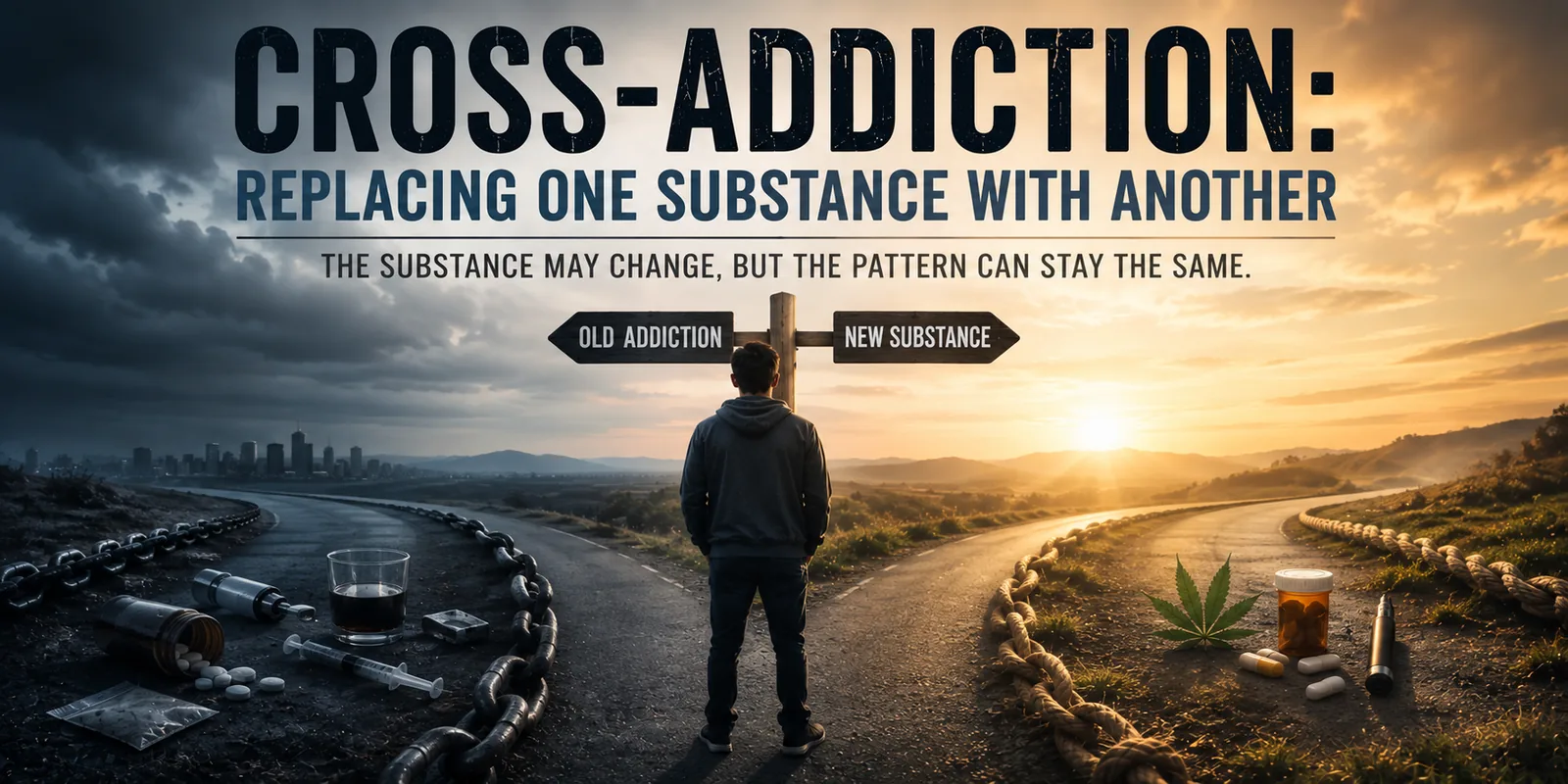


A person quits drinking but starts using marijuana every night.
Someone stops using opioids but begins misusing Xanax.
Another person gives up cocaine and starts taking prescription stimulants to get through the day.
At first, this can feel like success.
“At least I’m not using my drug of choice anymore.”
But sometimes the substance changes while the underlying addictive pattern stays the same.
This is often called cross-addiction, substance substitution, or addiction transfer. It is not a separate medical diagnosis, but the idea is important in recovery. If someone begins using a new substance to escape stress, numb emotions, chase intoxication, or recreate the effects they once depended on, the risk of addiction relapse can increase.
A relapse does not always begin with the exact substance that originally caused the problem.
Sometimes it begins with the belief that another drug is safe.
What Is Cross-Addiction?
Cross-addiction happens when a person stops or reduces one addictive substance but begins misusing another.
The new substance may seem completely different.
Someone recovering from alcohol addiction may begin using sedatives.
A person recovering from heroin addiction may start drinking heavily.
Someone who stopped methamphetamine may begin misusing prescription stimulants.
A person recovering from cocaine use may start using marijuana throughout the day because they believe it is less dangerous.
The important question is not simply:
“Is this my old drug?”
It is:
“Am I starting to use this substance the same way I used the old one?”
Warning signs can include using the new substance to cope with every bad day, needing more to get the same effect, hiding how much is being used, using despite consequences, or feeling unable to relax or function without it.
The substance may be different.
The behavior can look very familiar.
How Cross-Addiction Can Lead Back to the Original Drug
One of the biggest dangers of cross-addiction is that it can weaken the boundaries that protect recovery.
Imagine someone who stopped using cocaine.
They decide alcohol is different.
At first, they have one or two drinks occasionally.
Then they start drinking every weekend.
Eventually, they become intoxicated at a party where someone offers cocaine.
Their judgment is impaired.
Their old cravings return.
The thought becomes:
“Just this once.”
That is how using one substance can become a pathway back to another.
Alcohol and other drugs can lower inhibitions, increase impulsive behavior, and place someone back around people, places, and situations connected to past substance use.
Cross-addiction may therefore create two problems at once:
The new substance begins causing harm, and the original addiction becomes easier to return to.
“It Wasn’t My Drug of Choice” Can Be a Dangerous Thought
People in recovery sometimes divide substances into two groups.
The “bad” drug.
And everything else.
Someone might say:
“Alcohol was never my problem.”
“I was addicted to pills, not marijuana.”
“I used heroin, so drinking doesn’t count.”
“Prescription medication is different because it comes from a pharmacy.”
This kind of thinking can create a blind spot.
The issue is not whether a substance was historically your favorite.
The issue is whether it begins changing your behavior, judgment, priorities, or ability to control use.
A new substance does not need to produce the exact same high to become part of an addictive cycle.
Sometimes people are not even trying to get intoxicated.
They are trying to sleep.
Calm anxiety.
Increase energy.
Escape boredom.
Forget a breakup.
Stop feeling lonely.
Those reasons may sound understandable, but repeatedly relying on a substance to manage emotions can recreate an old coping pattern.
That is why cross-addiction is closely connected to relapse prevention.
Medication Is Not Automatically Cross-Addiction
This distinction matters.
A person in recovery may still need medications that have misuse potential.
Someone may need treatment for pain.
Someone may have ADHD.
Someone may require medication for anxiety, sleep, or another medical condition.
Taking an appropriately prescribed medication under medical supervision is not automatically cross-addiction.
The concern is when medication begins being taken differently than prescribed or for reasons other than its intended treatment.
Examples might include taking extra doses to feel different, mixing medications with alcohol, borrowing someone else’s prescription, hiding use, or repeatedly trying to recreate intoxication.
People in recovery should be honest with their healthcare providers about their substance use history.
That allows the provider to consider risks, monitor treatment, discuss alternatives when appropriate, and help prevent a medication from becoming another source of addiction.
Warning Signs You May Be Replacing One Addiction With Another
Cross-addiction can develop gradually, so the person experiencing it may not recognize the change immediately.
A few questions can help.
Are you thinking about the new substance throughout the day?
Are you using more than you originally planned?
Do you become anxious when you cannot use it?
Are you hiding your use?
Are family members worried?
Are you using it mainly to escape emotions?
Have you started skipping recovery meetings or treatment?
Are you spending more time with people who use drugs or drink heavily?
Are you telling yourself that your recovery rules no longer apply because this is a different substance?
These can be signs that recovery is beginning to shift toward another addictive pattern.
Pay attention before the consequences become severe.
Protect Recovery From Cross-Addiction and Relapse
Recovery is not simply about avoiding one specific substance.
It is about changing your relationship with substances and developing healthier ways to cope with life.
Stress still happens.
Relationships still hurt.
Boredom still exists.
Sleep may be difficult.
Some days will feel uncomfortable.
The goal is to develop ways of handling those experiences that do not depend on intoxication.
That may include counseling, peer support, exercise, medication management, hobbies, recovery meetings, healthy relationships, sleep routines, and honest conversations with people who understand addiction.
If you notice yourself relying heavily on a new substance, do not wait until everything falls apart.
Talk about it.
Tell your counselor.
Speak with your doctor.
Talk with someone in your recovery network.
The earlier the pattern is recognized, the easier it may be to address.
Changing substances is not always the same thing as changing the addiction.
Long-term recovery means protecting yourself not only from the drug that caused the original crisis, but also from the behaviors, thinking patterns, and coping strategies that made addiction possible.
A different substance may look like a safer road.
If it leads back to loss of control, secrecy, consequences, or the original drug, it may simply be another route toward relapse.


