



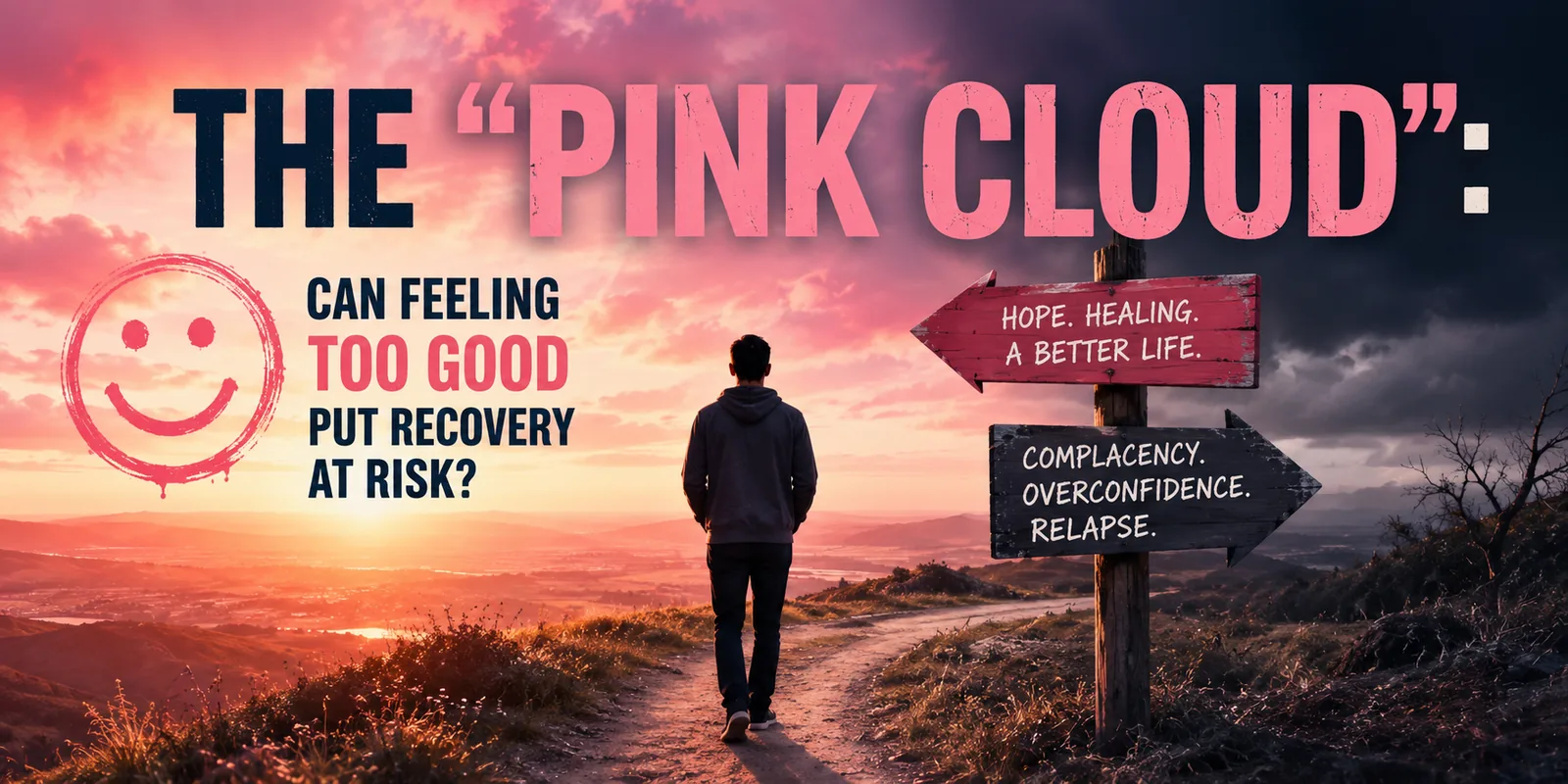


Early recovery is often described as difficult, uncomfortable, and emotional. But sometimes the opposite happens.
A person stops drinking or using drugs and suddenly feels incredible.
Their mind feels clearer.
They are sleeping better.
Relationships begin improving.
They have more energy.
They feel hopeful about the future for the first time in years.
They may think:
“I finally figured this out.”
In recovery communities, this intense period of optimism is sometimes called the “pink cloud.”
Feeling good in recovery is not a problem. Hope, excitement, gratitude, and confidence can be powerful reasons to keep going. The danger begins when feeling good turns into overconfidence.
Someone may start believing addiction is completely behind them. Treatment seems unnecessary. Recovery meetings feel repetitive. Old friends no longer seem dangerous.
The thought changes from:
“Recovery is working.”
to:
“I don’t really need recovery anymore.”
That is where the pink cloud can create relapse risk.
What Is the Pink Cloud in Recovery?
The “pink cloud” is an informal recovery term, not a medical diagnosis.
It generally describes a period—often during early sobriety—when someone experiences unusually strong optimism, excitement, confidence, or emotional relief.
After months or years of addiction, simply waking up sober can feel amazing.
Money stops disappearing.
Arguments decrease.
Physical health may begin improving.
Family members start trusting you again.
You remember conversations from the night before.
You start making plans instead of cleaning up yesterday’s damage.
It can feel like life changed almost overnight.
And in many ways, it has.
There is nothing wrong with enjoying this stage.
The challenge is remembering that feeling better and being fully prepared for long-term recovery are not the same thing.
Overconfidence Can Become a Relapse Warning Sign
Confidence is useful in recovery.
Overconfidence can be dangerous.
A person may begin thinking:
“I don’t even crave drugs anymore.”
Then:
“I probably don’t need counseling every week.”
Soon:
“Maybe I can hang out with my old friends. I won’t use.”
Eventually:
“Maybe I could have one drink. Alcohol wasn’t even my main problem.”
Recovery boundaries slowly disappear.
This may be particularly risky because nothing feels wrong.
There is no major crisis.
No depression.
No overwhelming craving.
The person feels so strong that they stop doing the things that helped them become strong.
That can include:
- Missing counseling appointments
- Stopping recovery meetings
- Talking less with a sponsor or recovery coach
- Spending time around active substance use
- Returning to bars or parties
- Neglecting sleep
- Taking on too many responsibilities
- Believing relapse prevention is no longer necessary
- Assuming one substance is safe because another was the “real problem”
The pink cloud itself is not causing the relapse.
The problem is complacency.
Life Eventually Becomes Normal Again
Another challenge occurs when the excitement of early recovery fades.
At first, sobriety may feel like a major transformation every day.
Then it becomes normal.
You go to work.
Pay bills.
Do laundry.
Deal with traffic.
Argue with your partner.
Have bad days.
Get bored.
Recovery stops feeling exciting and starts feeling like everyday life.
This can surprise someone who expected the early happiness to continue forever.
They may think:
“Why don’t I feel as good as I did three months ago?”
Nothing may actually be wrong.
Life simply stopped feeling new.
But if someone believed sobriety would always produce constant happiness, the change can feel disappointing.
That disappointment can create its own relapse risk.
Someone may start searching for excitement again.
And they already know one fast way to create an intense feeling:
Drugs or alcohol.
Do Not Confuse Feeling Better With Being Cured
One of the most dangerous ideas during early recovery is:
“I don’t have an addiction problem anymore.”
Recovery may dramatically improve someone’s life, but feeling better does not mean old triggers, behaviors, or vulnerabilities have disappeared.
Think about someone who begins exercising after years of inactivity.
After three months, they feel much stronger.
That does not mean they no longer need exercise.
They feel stronger because they have been exercising.
Recovery can work the same way.
You may feel emotionally stable because you are attending counseling.
You may have fewer cravings because you are avoiding high-risk environments.
Your relationships may be healthier because you are communicating honestly.
You may feel hopeful because you have supportive people around you.
Removing those protections simply because they are working can create problems.
Use the Pink Cloud Instead of Fighting It
You do not need to be suspicious every time you feel happy in recovery.
Enjoy it.
Celebrate milestones.
Be proud of your progress.
Use the extra energy to build something that will still be there when life becomes harder.
Create healthy routines.
Exercise.
Repair relationships.
Build friendships with sober people.
Find hobbies.
Work on finances.
Develop a relapse-prevention plan.
Continue treatment.
Learn what your triggers are even if you are not experiencing them today.
Recovery is easier to strengthen while things are going well than during a crisis.
Think of the pink cloud as an opportunity to build the foundation before the storm comes.
Watch for the “I Can Handle It Now” Thought
One thought deserves particular attention:
“I can probably control it now.”
Someone may have several months sober and begin believing time away from the substance changed their relationship with it.
They decide they can have one drink.
Use marijuana occasionally.
Take a pill recreationally.
Go to the old party but “just watch.”
For someone with a history of addiction, testing recovery this way can be dangerous.
You do not need to prove that you can stand next to your biggest trigger without using.
You already proved something much more important:
You can live without the substance.
Protect that.
Recovery Needs to Work on Good Days Too
Many people know how to ask for help when everything is falling apart.
The harder skill can be continuing recovery when everything feels great.
That is when someone says:
“Why do I need treatment? I’m doing fine.”
Maybe you are doing fine because treatment is helping.
You do not need to spend every moment worrying about relapse.
But recovery habits should not disappear simply because cravings have.
Keep checking in with yourself.
Am I staying connected?
Am I taking care of myself?
Am I becoming overconfident?
Am I testing old boundaries?
Am I starting to believe addiction was not really that serious?
Those questions can keep optimism from turning into complacency.
Feeling Good Is Something to Protect
The pink cloud is not something you need to fear.
Feeling hopeful in recovery is valuable.
The goal is to enjoy the good feelings without convincing yourself that the work is finished.
Recovery is not only what you do when you feel terrible. It is what you continue doing when life feels great.
Enjoy the clarity.
Enjoy the relationships coming back.
Enjoy waking up without regret.
Just remember what helped you get there.
Feeling good does not mean you can forget recovery.
It means recovery is giving you something worth protecting.


