



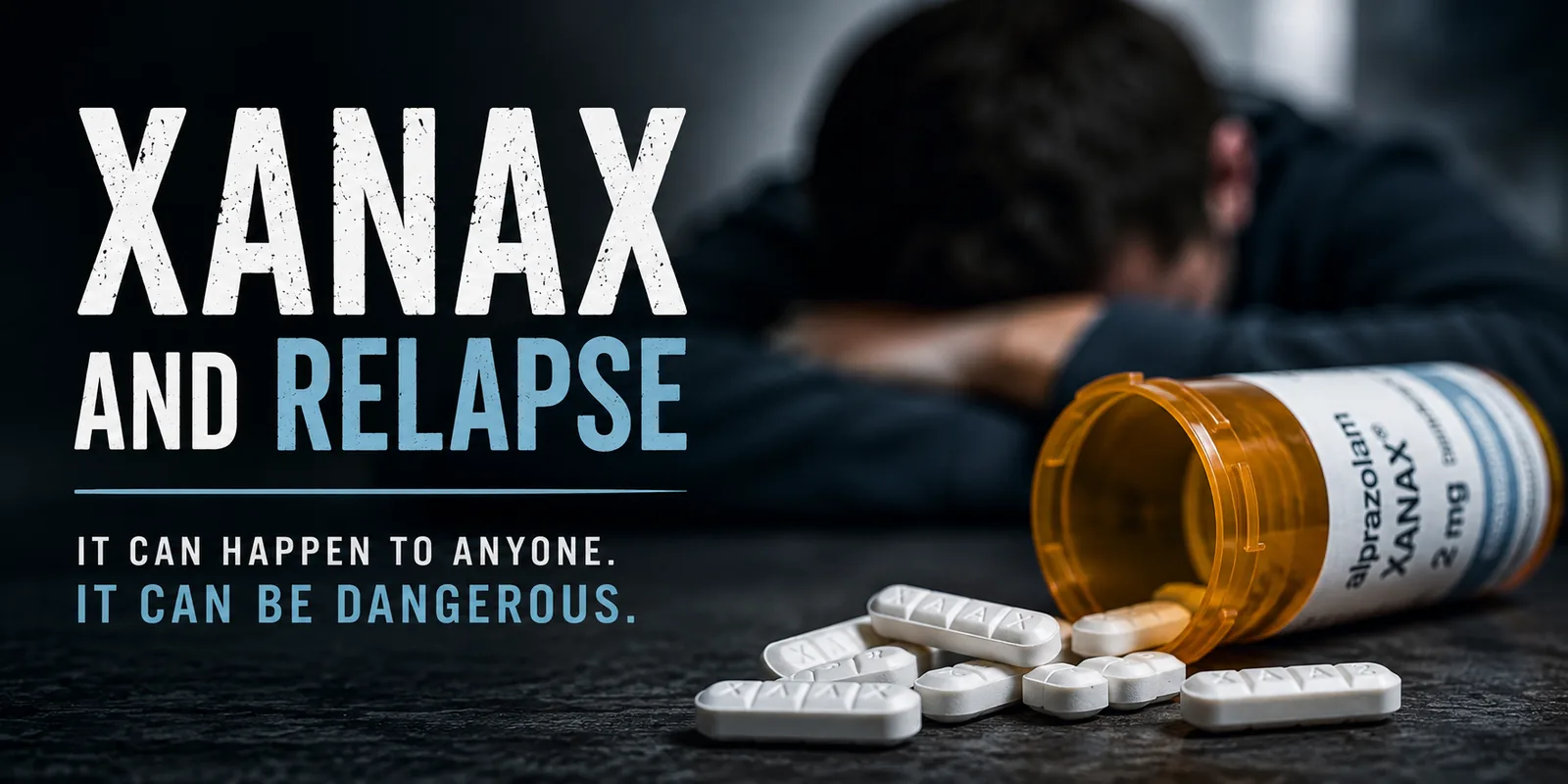


A Xanax relapse can happen to anyone who has struggled with benzodiazepine misuse or addiction. It does not matter how long someone has been sober, how successful they are, how supportive their family is, or how much they understand about addiction. Stress, panic attacks, insomnia, grief, trauma, or simply having access to pills can bring back an old urge for relief.
Xanax is the brand name for alprazolam, a benzodiazepine prescribed for certain anxiety and panic disorders. When used appropriately under medical supervision, it can have legitimate medical benefits. But the FDA requires benzodiazepines such as alprazolam to carry strong warnings about abuse, misuse, addiction, physical dependence, and withdrawal.
For someone in recovery, a return to Xanax should be taken seriously. What begins as one pill during a difficult night can sometimes become repeated use, dependence, dangerous drug combinations, or a full return to old substance-use patterns.
Why Xanax Relapse Can Happen So Quickly
Xanax can provide rapid relief from intense anxiety.
That relief may be exactly what makes returning to it so tempting.
Someone may have been sober for a year and then experience a major crisis. Their thoughts will not slow down. They cannot sleep. Their heart is racing. They remember how quickly Xanax once made those feelings disappear.
The thought may be:
“I just need one tonight.”
A few days later:
“I only take it when my anxiety gets really bad.”
Eventually, the person may find themselves thinking about Xanax before anxiety even begins.
That does not mean everyone who takes prescribed Xanax becomes addicted. It means people with a history of benzodiazepine problems should recognize how easily old coping patterns can return.
Warning signs may include:
- Taking Xanax more often than intended
- Taking larger amounts
- Running out of pills early
- Thinking frequently about the next dose
- Hiding use from family or treatment providers
- Looking for additional prescriptions
- Buying pills outside a pharmacy
- Using Xanax specifically to become intoxicated or emotionally numb
- Drinking alcohol while taking Xanax
- Returning to people associated with previous drug use
- Missing counseling or recovery meetings
The earlier these changes are recognized, the better the opportunity to interrupt the relapse.
Xanax Relapse Can Lead Back to Physical Dependence
One of the biggest dangers is that benzodiazepine dependence can develop faster than someone realizes.
The FDA warns that physical dependence can develop even when benzodiazepines are taken as prescribed. Dependence means the nervous system has adapted to the medication and may react when the drug is suddenly removed.
Someone may notice that they feel anxious, restless, shaky, or unable to sleep when they miss a dose.
Their response may be:
“See? I really do need Xanax.”
But those feelings may sometimes be related to withdrawal or rebound symptoms rather than simply the original anxiety returning.
This can create a difficult cycle:
Anxiety leads to Xanax. Xanax use leads to dependence. Missing Xanax creates symptoms. Taking Xanax makes the symptoms disappear.
Before long, someone may be taking the medication partly to avoid feeling sick.
That is why a return to regular benzodiazepine use should be discussed honestly with a healthcare professional.
Do Not Suddenly Stop Regular Xanax Use
A person may recognize the relapse and immediately decide to throw away every pill.
That can be dangerous if physical dependence has returned.
Abruptly stopping benzodiazepines can cause serious withdrawal reactions. Severe withdrawal can include extreme anxiety, agitation, confusion, hallucinations, and seizures. The FDA warns against abruptly discontinuing benzodiazepines in physically dependent patients, and current ASAM guidance recommends gradual, individualized tapering under clinical supervision when dependence is present.
If you have returned to regular Xanax use, tell a healthcare professional:
How much you take, how often you take it, how long you have been using again, whether you use alcohol or other drugs, and whether you have ever experienced benzodiazepine withdrawal or seizures.
Do not create your own taper based on advice from friends or social media.
Some people may be able to taper safely while living at home. Others may require more intensive medical supervision.
Xanax, Alcohol and Opioids Can Be a Deadly Combination
A Xanax relapse becomes particularly dangerous when other depressant drugs become involved.
Alcohol and benzodiazepines both affect the central nervous system. Combining them can increase sedation, memory problems, poor coordination, impaired judgment, and other dangerous effects.
Opioids create an even greater overdose concern.
Benzodiazepines such as Xanax and opioids can both suppress breathing. Combining them can result in profound sedation, respiratory depression, coma, and death.
This is especially important for someone with a history of fentanyl, heroin, or prescription opioid addiction.
A person may never intend to combine the drugs.
They take Xanax.
Their judgment becomes impaired.
They begin drinking.
Later, they accept an opioid pill.
The situation can become life-threatening quickly.
Call 911 if someone cannot be awakened, has very slow or stopped breathing, collapses, experiences a seizure, or becomes severely confused.
Fake Xanax Adds Another Serious Danger
There is also a major difference between Xanax obtained from a licensed pharmacy and pills purchased from friends, dealers, social media, or illegal websites.
DEA warns that counterfeit pills are manufactured to resemble legitimate alprazolam or Xanax tablets. Some fake pills contain fentanyl or methamphetamine instead of the medication the person believes they are taking.
That means someone experiencing a Xanax relapse may believe they are taking a benzodiazepine while unknowingly taking fentanyl.
This can lead to a fatal opioid overdose.
Never assume a pill is legitimate because it has the right color, shape, or markings. Pills obtained outside a licensed pharmacy carry additional uncertainty and risk.
A Xanax Relapse Does Not Mean Recovery Is Over
Perhaps the most dangerous thought after relapse is:
“I ruined everything.”
You did not.
The time you spent in recovery still happened. The relationships you rebuilt still matter. The coping skills you developed are still there.
But the relapse is information.
Ask what happened before you returned to Xanax.
Did anxiety become overwhelming?
Were you unable to sleep?
Did something traumatic happen?
Were you isolated?
Did you stop treatment?
Were pills easily available?
Did you start believing you could control Xanax this time?
Then bring that information into treatment.
A stronger recovery plan may involve addiction counseling, psychiatric care, treatment for anxiety or panic, cognitive behavioral therapy, peer support, relapse-prevention planning, or a higher level of treatment.
Xanax relapse can happen to people from every kind of background. It is not a sign that someone is weak or hopeless. But because dependence, withdrawal, overdose, and counterfeit pills can make benzodiazepine relapse dangerous, it should never be ignored.
Get help early. Be honest about what you are taking. Do not abruptly stop regular benzodiazepine use without medical guidance.
One relapse does not have to become a return to addiction.


