



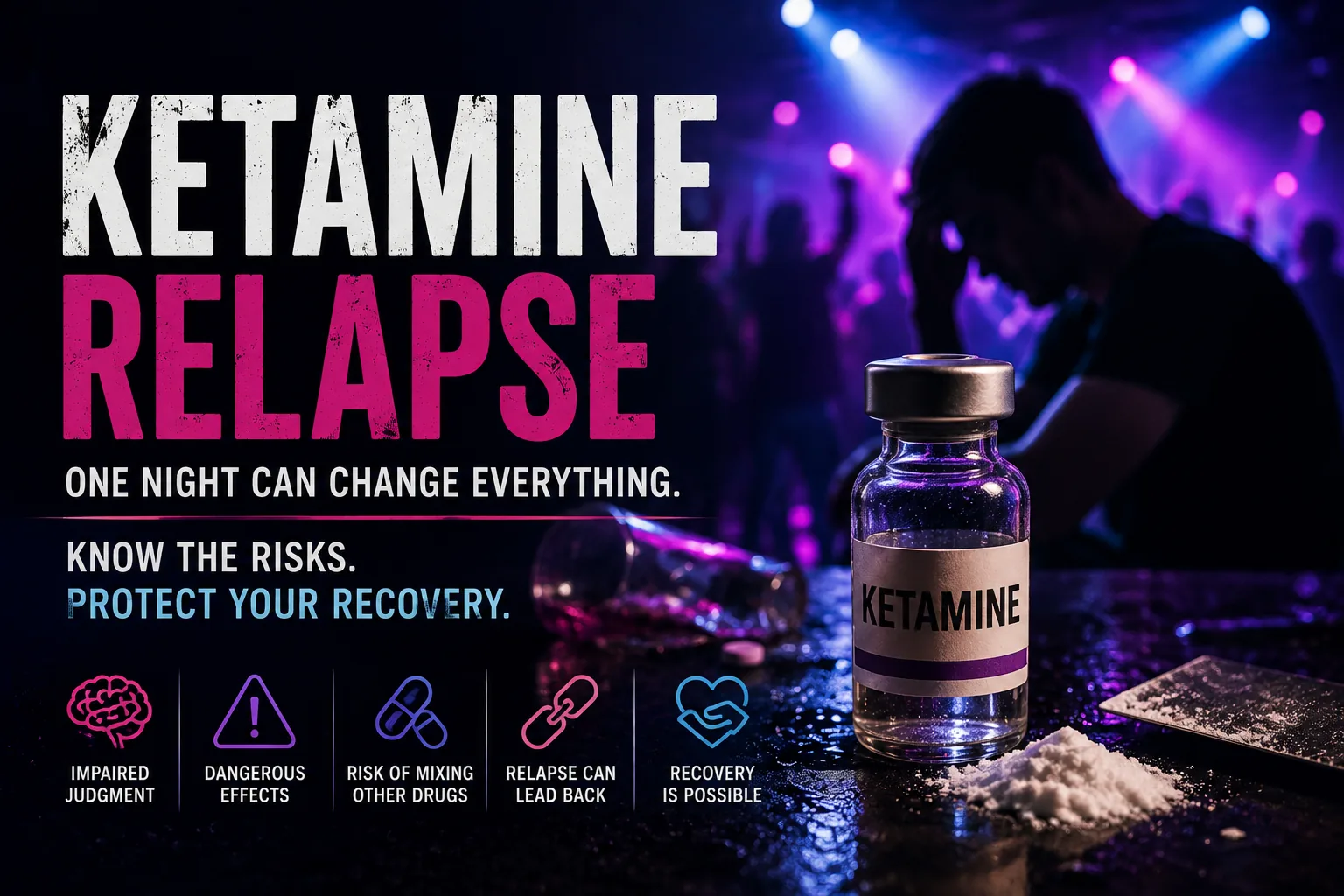


A ketamine relapse can be easy to minimize, especially when ketamine is connected with nightlife, concerts, festivals, or parties rather than daily drug use. Someone may tell themselves they are only using for one night, that ketamine is safer than the drugs they previously struggled with, or that it does not really “count” as a relapse.
That thinking can be dangerous.
Ketamine is a powerful dissociative drug. It can distort perception, impair judgment, cause memory problems, and make someone feel detached from their body or surroundings. At higher amounts, it can cause severe confusion, unconsciousness, and dangerous breathing problems.
For someone in recovery, returning to ketamine can also reopen old patterns of Club drug use. It may put them back around alcohol, cocaine, ecstasy, marijuana, benzodiazepines, or other substances they had worked hard to leave behind.
The danger is not just the ketamine itself. It is what can happen after the first decision to use again.
Why a Ketamine Relapse Can Be Easy to Justify
Ketamine is different from many substances commonly associated with addiction because it also has legitimate medical uses.
It is used in medicine as an anesthetic, and ketamine-related treatments are also used in some carefully monitored mental health settings.
That medical use can create a false sense of safety around recreational ketamine.
Someone may think:
“Doctors use ketamine, so it cannot be that dangerous.”
Or:
“This was never my main drug, so using it does not really matter.”
But recreational use and medically supervised treatment are very different.
Medical treatment involves controlled dosing, professional monitoring, screening, and emergency support if something goes wrong.
Illicit ketamine does not come with those protections.
A person may not know exactly how strong the drug is, what it contains, or whether another substance has been mixed into it.
For someone with a history of addiction, there is another problem.
Returning to ketamine may bring back the habit of using a substance to change how you feel.
That can quickly reopen old patterns of escaping stress, anxiety, boredom, trauma, loneliness, or uncomfortable emotions through intoxication.
Ketamine Can Cause Serious Physical and Mental Effects
Ketamine produces dissociation.
A person may feel disconnected from their body, surroundings, emotions, or reality.
At lower amounts, that may feel strange or dreamlike.
At higher amounts, someone may become extremely confused, unable to move normally, or barely aware of what is happening around them.
Possible effects include:
- Severe disorientation
- Memory loss
- Poor coordination
- Nausea and vomiting
- Hallucinations
- Agitation
- Anxiety
- Sedation
- Loss of consciousness
- Dangerous changes in breathing
A person who is heavily intoxicated may fall, wander into traffic, become injured, or be unable to protect themselves.
They may also take more ketamine because they forget how much they already used.
In nightlife settings, this becomes even more dangerous because someone may already be tired, dehydrated, drinking alcohol, or surrounded by other drugs.
Call 911 if someone using ketamine cannot be awakened, has difficulty breathing, collapses, has a seizure, or appears dangerously confused.
Do not assume they simply need to sleep it off.
Mixing Ketamine With Other Party Drugs Raises the Risk
Ketamine is frequently associated with settings where multiple substances are available.
Someone may begin the night drinking alcohol.
Later, someone offers ketamine.
Then cocaine or ecstasy appears.
Marijuana, benzodiazepines, or another drug may be added before the night is over.
The more substances involved, the harder it becomes to predict how the body will respond.
Ketamine already affects coordination, awareness, memory, and judgment. Alcohol and other sedating substances can make those problems worse.
Someone may have planned:
“I am only doing ketamine tonight.”
But once intoxicated, that boundary may disappear.
A person recovering from cocaine addiction may decide cocaine sounds harmless.
Someone with a history of opioid addiction may accept a pill.
A person recovering from alcohol addiction may begin drinking heavily again because they feel they have already crossed one recovery boundary.
Ketamine does not automatically cause someone to use other drugs.
The real danger is that intoxication can lower judgment and bring someone back into environments where old substances are easily available.
Warning Signs Ketamine Use Is Becoming a Bigger Problem
A single relapse does not necessarily mean someone has returned to full addiction.
But the pattern after the relapse matters.
Watch for warning signs such as:
- Thinking about ketamine frequently
- Planning social events around getting high
- Increasing the amount used
- Using ketamine alone
- Using more often than intended
- Spending increasing amounts of money on drugs
- Hiding use from family or treatment providers
- Returning to friends connected with past drug use
- Mixing ketamine with alcohol or other substances
- Missing work, school, or treatment appointments
- Continuing despite health problems
- Feeling unable to enjoy music, parties, or social events without getting high
Another major warning sign is the thought:
“I already relapsed, so I might as well keep going.”
That thought can turn one night of ketamine use into a much larger return to substance use.
What to Do After a Ketamine Relapse
Do not wait until things become worse.
Tell someone what happened.
Call your counselor, sponsor, recovery coach, treatment program, doctor, or another trusted person.
Then identify the trigger.
Ask yourself:
Why did I want ketamine again?
Was it:
- A party or festival?
- Old friends?
- Loneliness?
- Stress?
- Curiosity?
- Alcohol lowering your judgment?
- Missing nightlife?
- Wanting to escape your thoughts?
- Thinking ketamine was safer than your old drug?
The answer helps reveal what needs to change in your recovery plan.
You may need to avoid clubs, festivals, after-parties, or people who regularly use drugs for a while.
Treatment may also need to become more structured through counseling, outpatient treatment, peer support, relapse-prevention planning, or a higher level of addiction care.
Medical Ketamine Treatment Is Not the Same as Recreational Relapse
This distinction is important.
Someone receiving ketamine or esketamine in a legitimate medical program should not automatically assume they have relapsed.
Medically supervised treatment involves professional evaluation, controlled dosing, and monitoring for side effects.
Recreational ketamine use is very different.
Someone with a history of substance use disorder should still be honest with their medical provider about that history so the risks and benefits of treatment can be considered carefully.
One Ketamine Relapse Does Not Have to Become a Full Return to Addiction
Ketamine may be associated with music, nightlife, festivals, and parties.
That does not make it harmless.
Like ecstasy and other party drugs, ketamine can impair judgment, expose someone to dangerous situations, and make returning to other substances easier.
If ketamine has returned to your life after a period of recovery, take it seriously.
Tell someone.
Identify what triggered the relapse.
Step away from people and environments connected with drug use.
Reconnect with treatment before the situation grows.
One night of ketamine use does not erase your recovery. But ignoring the relapse can allow old addiction patterns to return. What you do next matters.


