



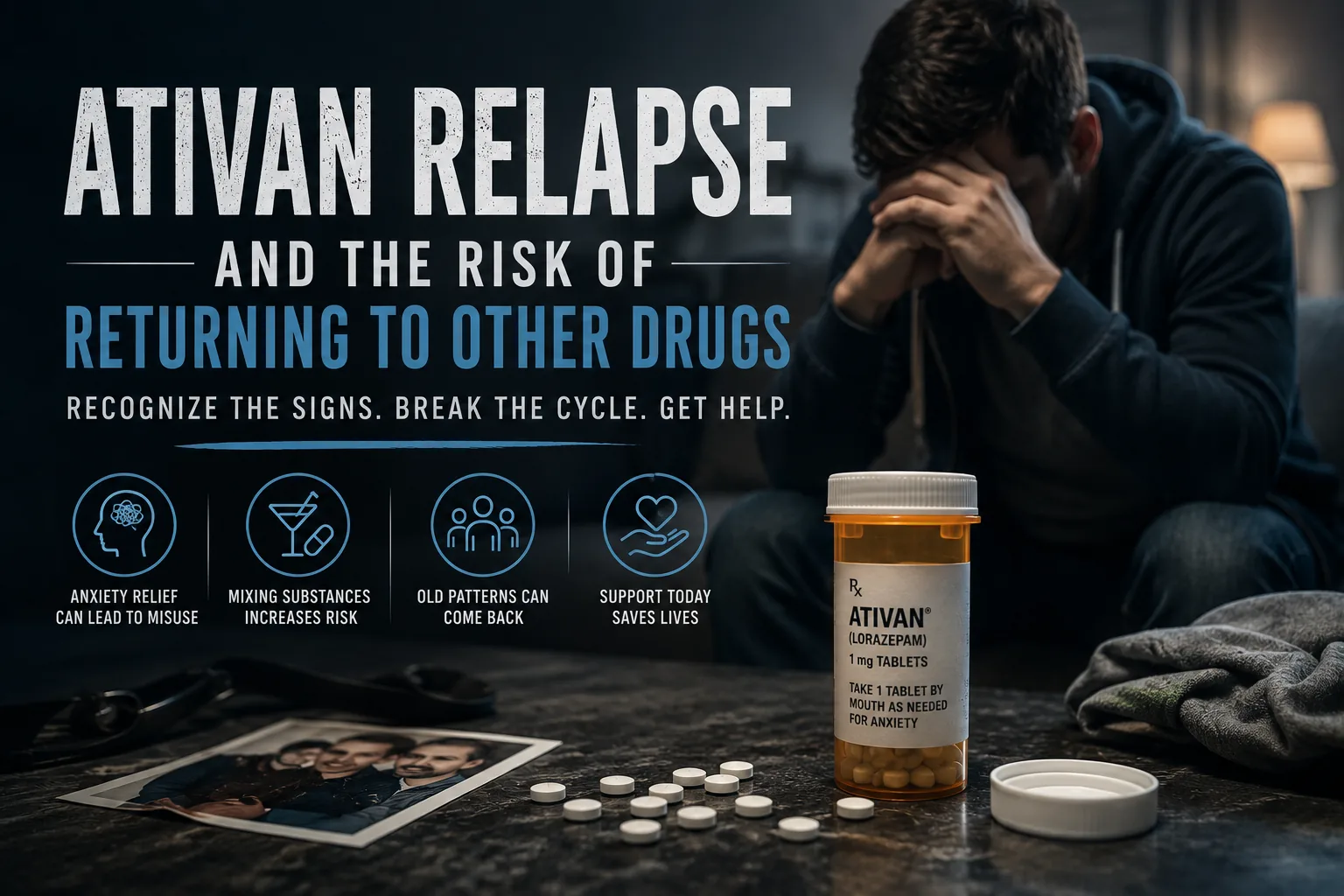


An Ativan relapse can become more than a return to one medication. For someone with a history of addiction, taking lorazepam again may bring back old habits, old contacts, and the kind of thinking that once surrounded alcohol, opioids, stimulants, or other drugs.
That does not mean Ativan automatically causes someone to move on to other substances. Many people take lorazepam exactly as prescribed and never develop an addiction. But Ativan is a benzodiazepine, and benzodiazepines can be misused, can cause physical dependence, and can become dangerous when combined with alcohol, opioids, or other sedatives.
For someone already in recovery, the bigger concern is often what happens after the first return to use.
One pill may become several. Anxiety about the relapse may lead to taking more Ativan. Alcohol may be added to increase the calming effect. Someone with a previous opioid addiction may reconnect with people who still have pills or street drugs available.
The problem is not simply Ativan itself. It is the possibility that an old pattern of polysubstance use begins again.
Why an Ativan Relapse Can Reactivate Old Addiction Patterns
Ativan is the brand name for lorazepam. It is a benzodiazepine commonly prescribed for anxiety and related conditions.
It slows activity in the central nervous system and can produce relaxation, sedation, and relief from intense anxiety.
For someone with a history of addiction, that immediate change in how they feel may be important.
If drugs were previously used to escape anxiety, trauma, stress, insomnia, or uncomfortable emotions, returning to Ativan may bring back the familiar experience of using a substance to quickly change those feelings.
The thinking may start quietly:
“It is prescribed, so this is different.”
Then:
“I took Ativan and nothing bad happened. Maybe I can have a few drinks too.”
Or:
“If I can handle this, maybe using something else once would not be a big deal.”
This progression does not happen to everyone. But people with a history of substance use disorder may be more vulnerable to returning to old drug-seeking behaviors once they begin using a mood-altering substance again.
The issue is not that Ativan acts as a guaranteed gateway to other drugs. It is that it can sometimes reopen an old pattern of using substances to manage emotions, sleep, stress, or cravings.
Ativan, Alcohol and Opioids Can Be a Dangerous Combination
One of the biggest dangers of an Ativan relapse is the possibility of mixing substances.
Ativan and alcohol both depress the central nervous system.
Together, they can cause:
- Extreme sedation
- Poor coordination
- Memory problems
- Impaired judgment
- Confusion
- Increased risk of accidents
- Loss of consciousness
The risk becomes even more serious when opioids are involved.
Benzodiazepines and opioids can both slow breathing. When combined, the chance of severe respiratory depression and overdose can increase.
Someone may not plan to combine the drugs.
A person might begin taking Ativan again because of anxiety. A few days later, they start drinking. Their judgment becomes impaired, and they contact someone they used to buy pills from.
That one night can quickly become much more dangerous than expected.
This is why a benzodiazepine relapse should be addressed early, before other substances become part of the picture.
Warning Signs the Relapse Is Spreading
Families and people in recovery should pay attention to changes beyond simply taking Ativan.
Possible warning signs include:
- Taking more Ativan than prescribed
- Running out of medication early
- Looking for additional prescriptions
- Taking Ativan to get high or feel emotionally numb
- Drinking alcohol while using Ativan
- Reconnecting with people associated with past drug use
- Looking for Xanax, pain pills, or other sedatives
- Returning to opioid or stimulant use
- Hiding medication
- Becoming increasingly secretive
- Missing counseling or recovery meetings
- Sleeping excessively
- Appearing heavily sedated
- Experiencing memory gaps
- Losing interest in work, family, or recovery activities
- Thinking about drugs more frequently
Another dangerous thought is:
“I already relapsed, so it does not matter what I take now.”
It does matter.
A return to Ativan does not have to become a return to alcohol, heroin, fentanyl, cocaine, meth, or any other drug.
Stopping the pattern early can prevent a brief relapse from becoming a full return to active addiction.
What to Do After an Ativan Relapse
The first step is to tell someone.
Contact an addiction counselor, doctor, sponsor, recovery coach, treatment center, or trusted family member.
You can simply say:
“I started taking Ativan again, and I am worried it is pulling me toward other drugs.”
You do not need to wait until the situation gets worse before asking for help.
Next, look at what triggered the return to Ativan.
Was it:
- Anxiety?
- Panic attacks?
- Insomnia?
- Trauma?
- Relationship stress?
- Work pressure?
- Strong cravings?
- Easy access to medication?
- Stopping treatment?
The reason matters.
If anxiety drove the relapse, anxiety needs treatment.
If insomnia caused it, sleep needs to be addressed.
If loneliness or stress brought back cravings, the recovery plan may need more support and structure.
Treatment may include counseling, psychiatric care, cognitive behavioral therapy, peer support, intensive outpatient treatment, residential treatment, or changes to the relapse-prevention plan.
Do Not Suddenly Stop Regular Ativan Use Without Medical Guidance
There is another important safety concern.
If someone has returned to regular benzodiazepine use and developed physical dependence, suddenly stopping can be dangerous.
Benzodiazepine withdrawal can cause severe anxiety, agitation, insomnia, tremors, confusion, and, in some cases, seizures.
Do not create your own withdrawal plan if you have been taking Ativan regularly.
Talk with a healthcare professional about whether a medically supervised taper is needed.
If opioids have also entered the picture, tell the treatment provider immediately.
Naloxone should be available whenever opioid overdose risk exists.
Call 911 if someone cannot be awakened, has very slow or stopped breathing, experiences a seizure, collapses, or becomes severely confused.
One Ativan Relapse Does Not Have to Become a Return to Everything
One of the most important moments in recovery can be realizing:
“This is starting again.”
You do not have to wait until Ativan becomes alcohol.
You do not have to wait until alcohol becomes pain pills.
You do not have to wait until pills become fentanyl, heroin, cocaine, meth, or another full return to substance use.
An Ativan relapse is a reason to strengthen recovery, not abandon it.
Be honest about what you are taking. Avoid mixing substances. Tell someone early. Get medical guidance if regular benzodiazepine use has resumed. Most importantly, address the anxiety, insomnia, trauma, or stress that made Ativan appealing in the first place.
Ativan does not automatically lead to other drugs. But for someone with a history of addiction, returning to benzodiazepines can reopen old patterns that took a long time to change. Getting help early can stop that pattern before it grows.


