



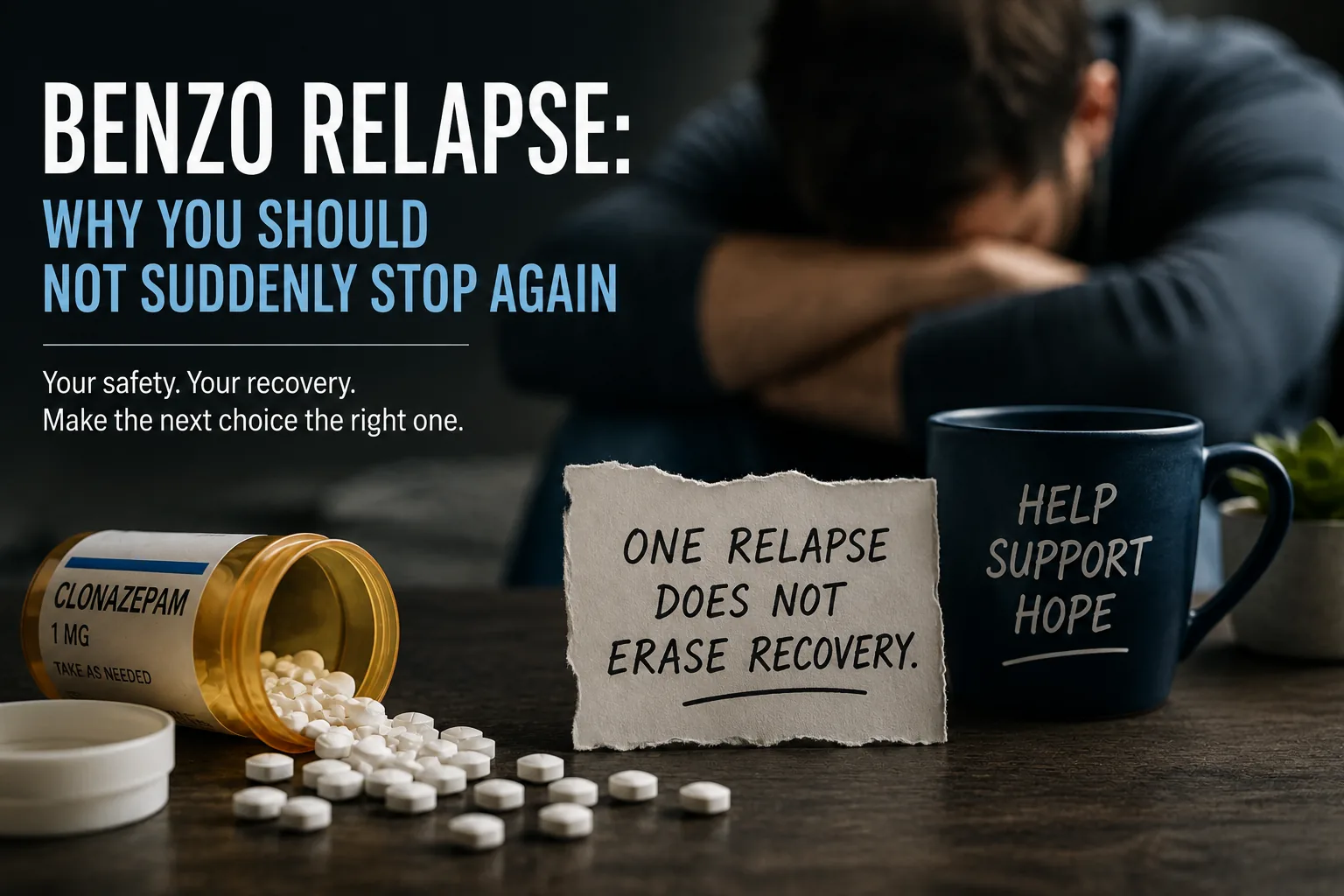


A benzo relapse can be frightening, especially if you worked hard to stop taking medications such as Xanax, Klonopin, Ativan, or Valium and then started using them again. Your first instinct may be to throw the pills away and stop immediately.
That can sometimes be dangerous.
Unlike many drugs, benzodiazepines can cause potentially life-threatening withdrawal when someone who has developed physical dependence suddenly stops or reduces the dose too quickly. The FDA specifically warns that abrupt benzodiazepine discontinuation can cause serious withdrawal reactions, including seizures.
This does not mean everyone who takes a benzodiazepine once after months of sobriety will experience severe withdrawal. The risk depends on how much you have been taking, how frequently you are using it, how long the relapse has lasted, your previous benzodiazepine history, and other health factors.
But if a benzo relapse has become repeated or regular use, do not assume that quitting cold turkey is safe.
Why Benzodiazepine Withdrawal Can Be Dangerous
Benzodiazepines slow activity in the central nervous system. With repeated use, the brain begins adapting to their presence.
This process is called physical dependence.
Physical dependence is not exactly the same thing as addiction. Someone can become physically dependent while taking a benzodiazepine exactly as prescribed. ASAM’s benzodiazepine tapering guidance notes that people who take these medications regularly for more than a month are likely to develop physical dependence.
When benzodiazepines are suddenly removed, the nervous system can become extremely overactive.
Withdrawal symptoms may include:
- Severe anxiety or panic
- Insomnia
- Irritability and agitation
- Tremors
- Sweating
- Nausea
- Heart palpitations
- Sensitivity to light or sound
- Muscle pain or spasms
- Confusion
- Paranoia
- Hallucinations
In severe cases, withdrawal can cause seizures or delirium. The 2025 Joint Clinical Practice Guideline on Benzodiazepine Tapering warns that rapid dose reductions can cause life-threatening withdrawal, particularly in people who have developed significant physical dependence.
That is why simply deciding, “I’m done again tomorrow,” may not be the safest approach.
What to Do After a Benzo Relapse
First, be honest about how much you have been using.
A single episode after a long period without benzodiazepines is different from returning to daily Xanax use for several weeks. Do not minimize your use when talking with a healthcare professional because the amount, frequency, and duration help determine your withdrawal risk.
Contact a doctor, addiction treatment provider, detox program, or other qualified medical professional and explain:
- Which benzodiazepine you have been taking
- Your approximate dose
- How often you take it
- How long you have been using again
- Your previous benzodiazepine use
- Whether you have experienced withdrawal before
- Whether you have ever had a withdrawal seizure
- Whether you also use alcohol, opioids, or other drugs
A clinician can determine whether you can safely stop or whether you need a gradual taper.
Current ASAM guidance emphasizes that benzodiazepine tapering should be individualized. For some patients, clinicians may begin with a relatively small reduction and adjust the pace based on withdrawal symptoms. There is no single taper schedule that is appropriate for everyone.
Do not create your own taper by guessing doses, borrowing medication, or switching benzodiazepines without medical supervision.
Some people can taper safely in an outpatient setting. Others may need medically managed detox or residential care, especially when there is a history of severe withdrawal, seizures, heavy use, complicated medical conditions, or other substance use.
Alcohol and Opioids Make Benzo Relapse More Dangerous
Another major concern after a benzodiazepine relapse is mixing substances.
Benzodiazepines are central nervous system depressants. Alcohol and opioids also depress the nervous system.
Combining benzodiazepines with opioids can cause profound sedation and dangerously slow breathing. The FDA warns that benzodiazepine misuse can result in overdose or death, particularly when combined with opioids, alcohol, or other drugs.
This includes prescription opioids as well as fentanyl or heroin.
Do not try to control benzo withdrawal by drinking alcohol. Likewise, do not take extra opioids, sleeping medications, or other sedatives to make yourself more comfortable unless a healthcare professional has specifically instructed you to do so.
Call 911 for severe symptoms such as:
- A seizure
- Difficulty breathing
- Loss of consciousness
- Severe confusion
- Hallucinations or psychosis
- Extreme agitation
- Inability to stay awake
These symptoms require medical care.
A Benzo Relapse Does Not Erase Your Recovery
One of the most damaging thoughts after a relapse is:
“I’m back where I started, so why bother?”
You are not back where you started.
You still have everything you learned during recovery. You may now know more about your triggers, your response to stress, and the weaknesses in your relapse-prevention plan.
Ask what happened before you returned to benzodiazepines.
Was anxiety getting worse?
Were you unable to sleep?
Did you experience a major loss or stressful event?
Did you stop attending treatment?
Were benzodiazepines still easily available?
Did you convince yourself that you could safely use them occasionally?
The goal is not to punish yourself. It is to find out what needs more support.
Treatment after a benzo relapse may include medically supervised tapering, addiction counseling, cognitive behavioral therapy, treatment for anxiety or insomnia, psychiatric care, peer support, or a higher level of addiction treatment.
ASAM also recommends addressing the condition that benzodiazepines were originally being used to treat rather than simply removing the medication and leaving the underlying problem untouched.
A benzo relapse deserves attention, but panic and abrupt withdrawal are not the answer.
Talk with a medical professional. Be honest about what you have been taking. Get help managing withdrawal safely. Then strengthen the treatment plan that supports your long-term recovery.
You can return to recovery without putting yourself through a dangerous withdrawal alone.


